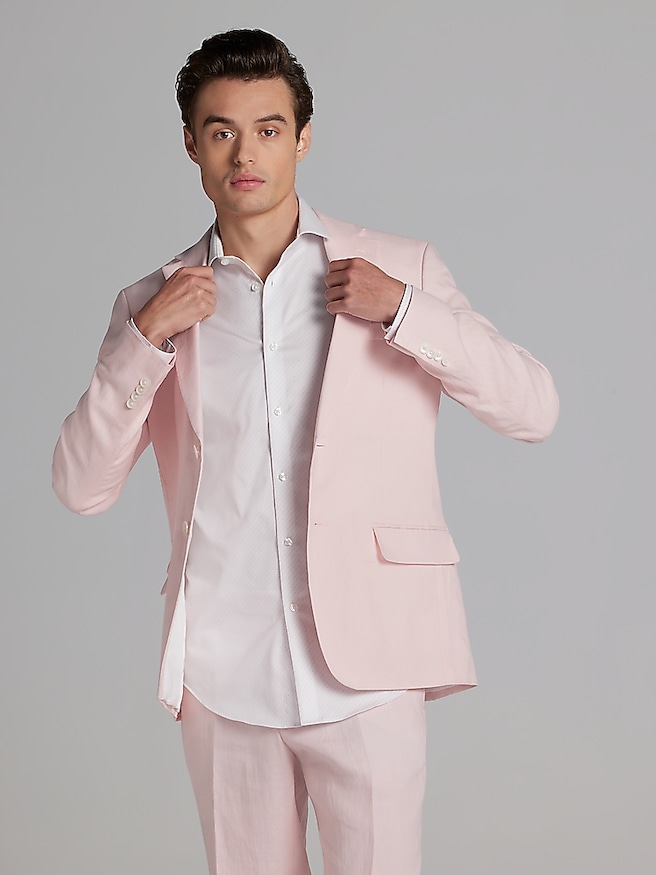
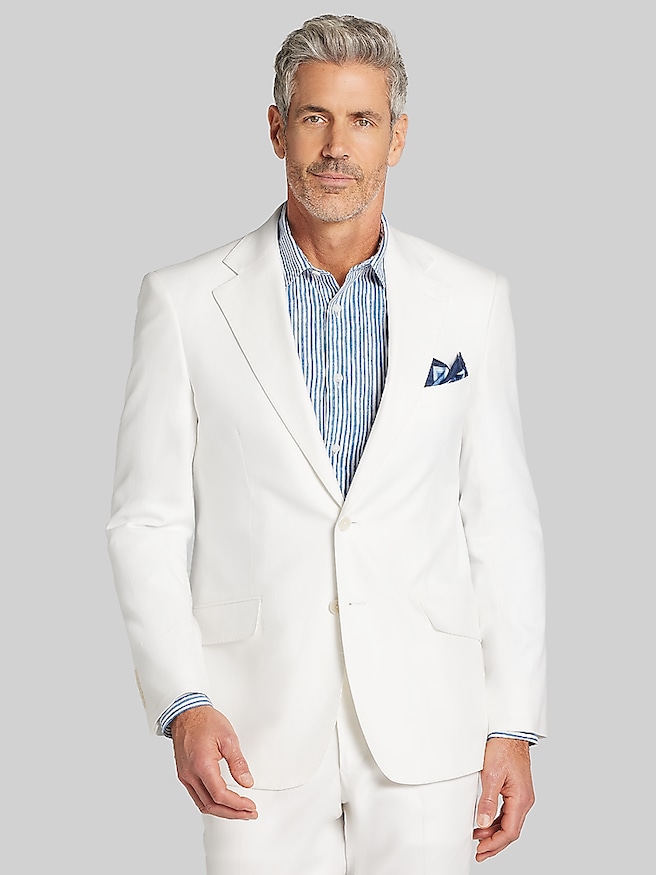
White suits have a distinctive presence: clean lines, a bright finish, and enough visual impact to make even a simple shirt-and-shoe combination feel deliberate. They can suit a groom’s wedding look, an anniversary celebration, a performance, or a special event where expressive tailoring belongs. The appeal comes partly from contrast. Against a dark shirt, white tailoring looks graphic and dramatic; with a pale shirt and restrained accessories, it creates a softer, tonal effect. Color deserves attention, because brilliant white, ivory, and cream each have a different character. A crisp white can feel sharp and architectural, while an off-white shade introduces a gentler contrast with the face and surrounding clothing. When a jacket and trousers are intended to function as a suit, matching fabric and shade help keep the outfit cohesive, especially under event lighting and in photographs. Material influences the result just as much as color. Wool can provide a smooth drape and natural resilience, with the exact feel depending on its weave and weight. Cotton often gives tailoring a more defined, matte appearance, while linen contributes visible texture and a relaxed character that includes natural creasing. Blended fabrics can combine qualities such as softness, structure, or stretch, but the fiber label and care instructions provide a better picture than appearance alone. The weave also affects how opaque a white fabric looks. Pocket bags, lining, and layers underneath may be more noticeable through a lighter cloth, making thoughtful construction particularly important. A lined jacket can help establish a clean outline, while the amount and placement of trouser lining can influence comfort and coverage. White suits are not all meant to make the same statement: a softly constructed design can feel easygoing, while a more structured shoulder and defined waist create a distinctly dressed-up silhouette. That range allows the same color family to serve very different occasions without relying on elaborate decoration. The most convincing choice connects the fabric’s character with the setting, rather than treating every white suit as interchangeable.
Fit is especially noticeable in white tailoring because the eye readily catches folds, pulling, and changes in the silhouette. A well-balanced jacket rests neatly across the shoulders, with sleeves that fall cleanly instead of twisting or bunching. The collar should sit close to the shirt collar, and the front should close without a pronounced X-shaped pull around the button. Slim fits follow the body more closely, while classic fits allow additional room through the chest and waist; neither needs to look tight or oversized to appear polished. Ease of movement matters during a seated dinner, an extended reception, or time spent greeting guests. A little room through the upper back and arms can make a meaningful difference without disturbing the jacket’s shape. Trouser fit completes that balance. A smooth waistband, comfortable seat, and clean line through the thigh help the fabric hang as intended. Hem length changes the mood: little or no break produces a sharper outline, while a slight break gives the trousers a more traditional finish. Excess fabric pooling over the shoes can distract from the clean effect that makes white suiting appealing. Jacket length, sleeve length, and trouser proportions should work together, rather than being considered separately. A narrow trouser leg generally pairs well with a similarly streamlined jacket, while a fuller cut benefits from balanced volume throughout. With the foundation in place, a white designer suit can be styled with very little added ornament. A pale blue shirt introduces subtle color, a white shirt creates a continuous light palette, and a black shirt adds strong contrast. A textured tie can give a smooth fabric some depth, while a simple pocket square keeps attention on the tailoring. Footwear anchors the outfit: polished black shoes create a defined finish, brown leather adds warmth to ivory tones, and understated loafers can support a less formal dress code. A close color match between belt and shoes also helps keep the overall effect composed.
The occasion ultimately determines how a white suit should be worn. For a groom, it can establish a clear focal point while coordinating with the wedding’s palette and level of formality. For a guest, white requires more care: some couples reserve the color for the people getting married, so an explicit dress code or confirmation from the hosts matters more than a styling preference. At galas and other formal gatherings, a white suit should not automatically be treated as a substitute for black-tie attire. A tuxedo has its own construction and conventions, and the invitation remains the best starting point for deciding what is appropriate. Beyond the event itself, keeping white tailoring looking considered depends on sensible care. Light fabric makes small marks and discoloration easier to see, particularly around cuffs, collars, pocket openings, and trouser hems. Prompt attention to a spill is helpful, but vigorous rubbing can spread the mark or affect the fabric’s surface. Blotting gently and following the garment’s care label is a safer approach; persistent stains are best assessed by a professional familiar with tailored clothing. Bleach is not a universal solution for white fabric and may damage fibers, finishes, or lining. Between cleanings, a suitable garment brush can lift surface dust, and a broad, shaped hanger helps support the jacket’s shoulders. Trousers stored without crowding are less likely to develop unwanted folds. Any steaming or pressing should suit the fabric and follow its care requirements, since excessive heat can leave shine or damage delicate components. Durability also depends on fit: seams and pocket openings face less strain when the garment allows comfortable movement. As a gift, a white suit is most meaningful for someone who enjoys distinctive tailoring or has a specific celebration ahead. Knowing the recipient’s measurements, preferred silhouette, and likely dress code makes the choice more personal. With appropriate fit, thoughtful styling, and consistent care, white tailoring can remain a purposeful part of an occasion wardrobe rather than a look reserved for a single photograph.