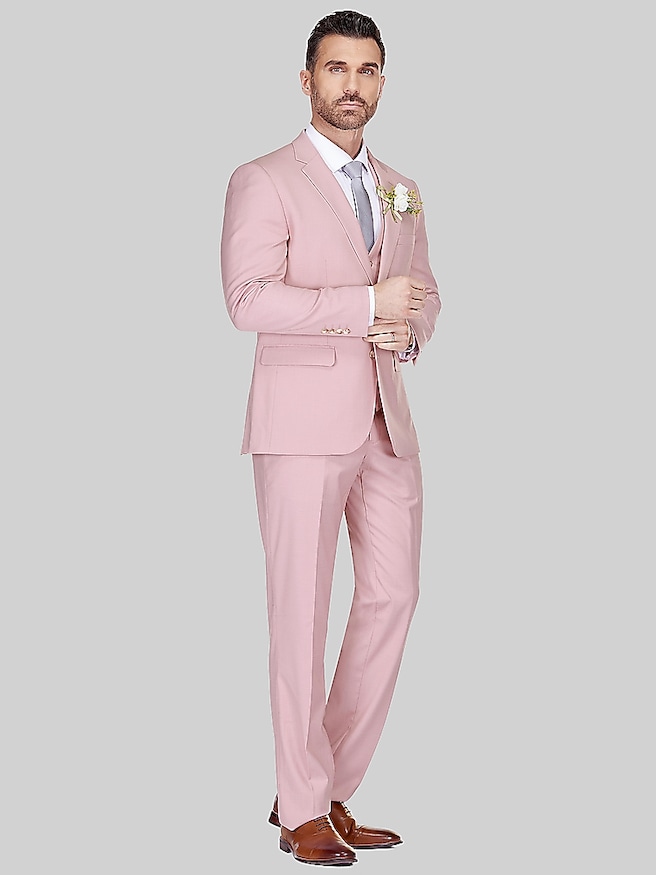
Pink suits for men bring a distinctive color to familiar tailoring, with shades ranging from pale blush and dusty rose to saturated magenta and hot pink. The effect depends as much on the depth of the color as on the shape of the suit: a muted rose two-piece can feel understated with a white shirt and dark shoes, while a vivid pink jacket and matching trousers create a more expressive look. These suits can suit weddings, prom, graduation celebrations, cocktail parties, and other occasions where the dress code leaves room for personality. For wedding guests, the invitation and the couple’s preferences should set the level of formality; for a groom or wedding party, coordinating pink tones can create a cohesive look without requiring every accessory to match. A crisp white dress shirt gives pink a clean backdrop and keeps the outfit easy to coordinate. Light blue can also work, especially with softer rose shades, while a black shirt creates stronger contrast with a brighter suit. Accessories tend to look most balanced when they support the color rather than compete with it. A navy tie, a subtly patterned pocket square, or a dark burgundy accent can add depth without making the outfit feel crowded. Brown or tan leather shoes complement many blush and dusty pink shades, while black footwear gives the look a sharper edge. The shoe style matters, too: polished lace-ups make the outfit more formal, and streamlined loafers create a less structured impression when the occasion allows. A three-piece pink suit adds the visual detail of a matching vest and keeps the outfit coordinated even when the jacket comes off. For a celebration with a more relaxed dress code, an open-collar shirt can soften the presentation. Pink is the focal point in all of these combinations, so clean lines, restrained accessories, and well-kept footwear help the overall look feel deliberate rather than costume-like.
Fabric and construction influence how a pink suit drapes, moves, and holds its shape. Wool and wool blends are often associated with tailored structure and a smooth fall through the jacket and trousers, though the feel varies with the weave and fabric weight. Cotton can give tailoring a more relaxed texture, and linen has a distinctive surface with creasing that is part of its character. Synthetic fibers may contribute wrinkle resistance or durability, depending on the blend, while a small amount of stretch can make sitting, reaching, and walking more comfortable. No single fiber tells the whole story: the lining, fabric density, internal construction, and finishing all affect how the suit feels during a full event. A matte fabric makes the color look different from a fabric with noticeable sheen, an important distinction for photographs and formal settings. Fit is equally influential. A slim-fit pink suit generally follows the body more closely, while classic-fit tailoring offers more room through the chest, waist, seat, and thighs. The right silhouette should feel comfortable rather than tight or oversized. Jacket shoulders should sit cleanly without extending noticeably past the natural shoulder, and the collar should rest against the shirt instead of leaving a visible gap. When the jacket is buttoned, strong pulling across the front can indicate that more room is needed. Sleeves that reveal a small amount of shirt cuff keep the proportions tidy, while trousers should sit securely at the waist without relying on an overtightened belt. A slight break at the shoe gives the trouser leg a traditional finish; a cleaner, shorter hem can look more contemporary. For someone who expects to dance at prom or spend several hours greeting guests, ease through the seat, thighs, and upper back matters just as much as the appearance in a mirror. Alterations can refine sleeve length, trouser length, and some aspects of the silhouette, but they have limits, particularly around the shoulders. Neat stitching, smooth seams, a lining that does not pull, and comfortably positioned pockets are useful details to consider alongside color and cut.
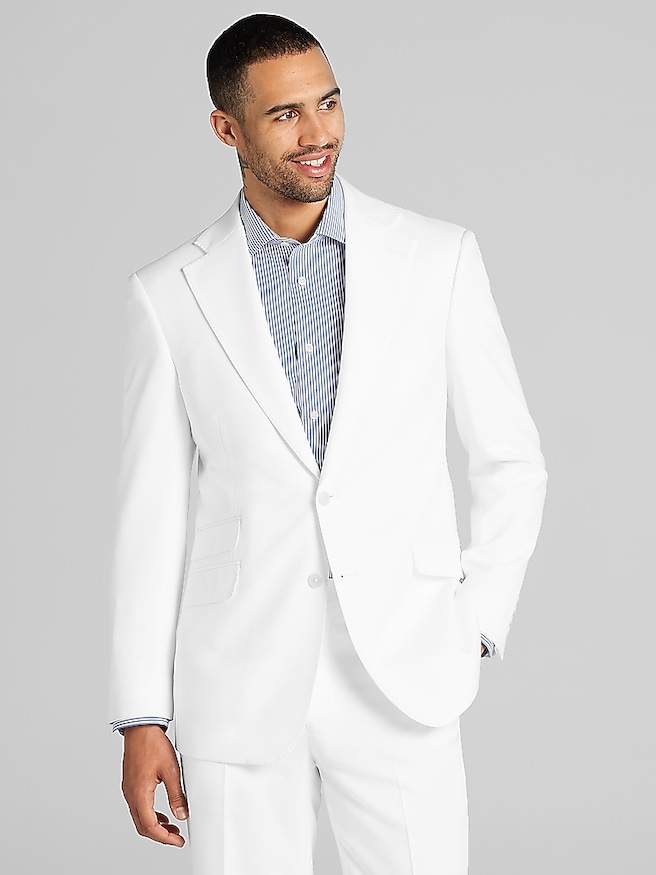
The versatility of a pink suit extends beyond wearing the full matching set. A rose jacket with navy trousers can work for a dinner or social gathering, while pink trousers with a white shirt and a neutral jacket offer a different balance of color. When separating the pieces, the fabrics should have a compatible level of formality: a sharply tailored suit jacket can look out of place with heavily distressed denim, whereas clean dark jeans may work with a softer, less structured jacket. Keeping texture and proportions consistent helps the combination look intentional. For a similarly distinctive approach built around a neutral color, White Suits provide another point of comparison when considering occasion-ready tailoring. Pink suits can also make meaningful gifts for someone who enjoys expressive clothing or has a milestone celebration ahead, although knowing the recipient’s measurements, preferred fit, and comfort with color is more useful than guessing from a usual shirt size. Care helps preserve both the tailoring and the appearance of the fabric. The garment’s care label should determine the cleaning method; a suit marked for professional dry cleaning should not be treated like washable everyday clothing. Light brushing with a suitable garment brush can remove surface dust, and a broad, supportive hanger helps the jacket retain its shoulder shape between wears. Trousers benefit from being hung neatly rather than folded into a crowded drawer. After wearing, allowing the suit to air before placing it in a garment bag can help it stay fresh without unnecessary cleaning. Spills deserve prompt attention, but rubbing or applying an untested cleaner may spread a mark or affect the color. Wrinkle removal should follow the fabric’s care requirements, since excessive heat or careless pressing can leave shine on tailored cloth. With thoughtful care, a well-fitting pink suit can remain a distinctive part of a wardrobe, ready for occasions that call for polished tailoring with a personal point of view.