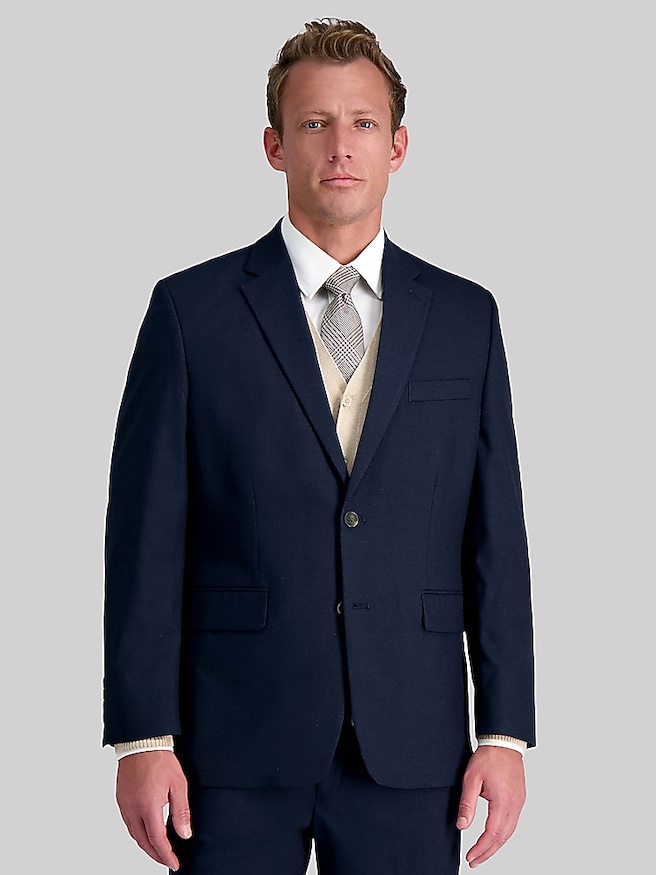
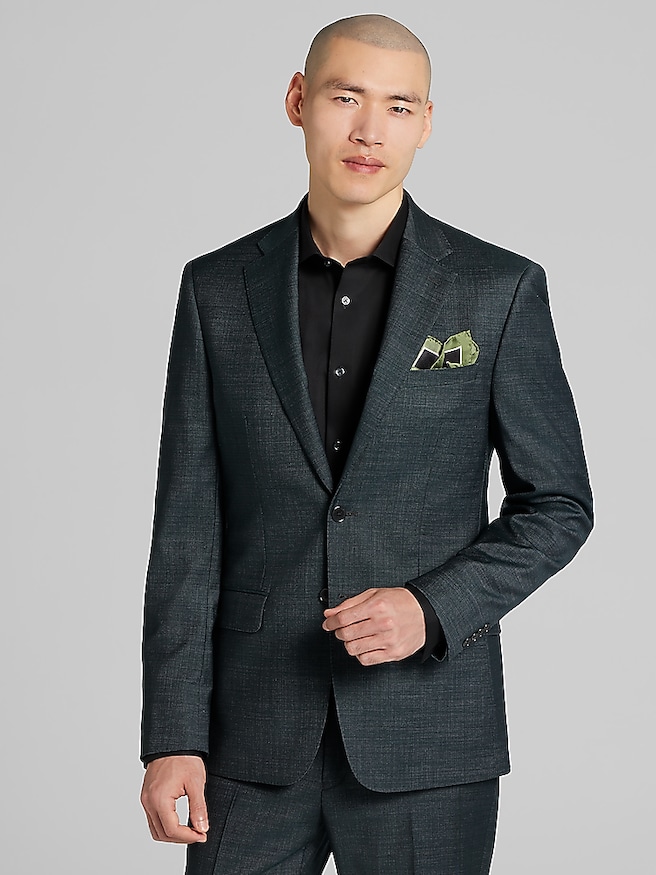
Colored suits bring personality to tailored clothing through shades that range from muted blue and earthy green to burgundy, lavender, blush, and vivid jewel tones. Their defining feature is color across the jacket and matching pants, creating a coordinated look with more visual impact than a bright tie or pocket square alone. A deep wine-colored suit can feel polished and understated, while an emerald or saturated blue suit makes a stronger impression without relying on an elaborate pattern. Softer shades offer another direction, with a gentler contrast that works especially well when the rest of the outfit stays simple. For a more expressive take on tailoring, Bold Color Suits make color the focal point rather than a small accent. These looks have a place at weddings, prom, milestone celebrations, cocktail receptions, and other occasions where personal style belongs alongside a dress code. A groom might choose a rich green suit to complement the wedding palette, while a guest could wear muted burgundy with a white shirt for an outfit that feels festive without competing with the wedding party. At prom, a distinctive suit color can coordinate with a companion’s outfit through a shared accent rather than an exact head-to-toe match. Color also has a place in professional wardrobes, particularly in creative settings or workplaces that welcome expressive tailoring. A restrained shade with minimal accessories usually reads differently from a bright hue paired with contrasting details. The event’s expectations still matter: a colorful suit does not automatically satisfy a black-tie requirement, which generally calls for a tuxedo. Within an appropriate dress code, the best color is one that feels comfortable to wear and works with the overall setting. Someone new to colorful tailoring may gravitate toward a darker shade that feels familiar, while an experienced suit wearer might prefer a lighter or more saturated color that becomes the centerpiece of the outfit.
Fabric, construction, and fit give colored suits their character beyond the shade itself. Wool often offers a balanced combination of drape, breathability, and natural resilience, helping a jacket hang smoothly and pants maintain a clean line. Wool blends vary according to their fiber content; some include fibers chosen for added strength, easier wrinkle recovery, or stretch. Cotton can produce a more relaxed texture, while linen has a distinctive surface and develops visible creases that are part of its character. Fabrics with a subtle sheen reflect light differently from matte cloth, so the same general color can look sleek and dressy in one fabric and softer or more casual in another. Texture matters in photographs, too: a smooth solid presents a clear field of color, while a woven pattern adds depth without necessarily creating a strong contrast. Stretch can make sitting and reaching more comfortable, but it does not replace a well-proportioned fit. The jacket should sit neatly across the shoulders, with lapels that lie flat and a collar that rests close to the shirt rather than pulling away. When the jacket is buttoned, pronounced tension around the closure can indicate that the body needs more room. Pants should sit comfortably at the waist and allow movement through the seat and thighs without excess fabric obscuring their shape. Slim, tailored, and roomier silhouettes create different effects; none requires tightness to look polished. Trying the suit while seated is especially useful for occasions that involve a ceremony, dinner, or a long program. Sleeve length, trouser length, and waist adjustments can refine the appearance, while shoulder fit deserves particular attention because it is harder to alter. Durable tailoring also depends on sound seams, a suitable lining, and fabric that supports the intended frequency of wear. A suit worn regularly for work faces different demands from one reserved for occasional celebrations, making comfort and construction as important as its first visual impression.
Styling a colored suit is often most effective when the surrounding pieces give the color room to stand out. A crisp white shirt creates a clear contrast with burgundy, green, or blue, while a softer neutral shirt can keep a pale suit from looking overly stark. A tie may echo a small detail in the suit’s color family or introduce a controlled contrast, but matching every accessory exactly can flatten the look. A pocket square with a subtle pattern can connect two colors without duplicating the tie. Shoe choice changes the overall mood: polished black leather tends to sharpen the outfit, while brown leather can add a more relaxed character when it complements the suit’s undertone. The depth of each shade matters as much as its name, since a dark green suit and a pale green suit may call for different supporting colors. For an event with professional photography, it helps to consider the outfit as a whole, including the shirt visible at the collar, the tie against the jacket, and the break of the pants over the shoes. Colored suits can also earn a place beyond a single occasion when their components work with existing clothing, although a jacket’s fabric and construction determine how naturally it functions as a separate. Care preserves both the color and the shape. Following the garment’s care label, addressing stains promptly, and avoiding unnecessary cleaning help protect the fabric. A broad, supportive hanger maintains the jacket’s shoulders, and properly hanging the pants helps limit unwanted creases. Airing the suit after wear and storing it away from prolonged direct sunlight can help keep it fresh and reduce fading. Repeated abrasion at pockets, cuffs, and the seat may affect appearance over time, so careful handling matters. As a gift for a graduate, partner, or someone celebrating a career milestone, a colored suit feels personal when the shade reflects the recipient’s taste and the fit can be refined. Its lasting appeal comes from that combination of distinctive color, comfortable tailoring, and usefulness across meaningful occasions.