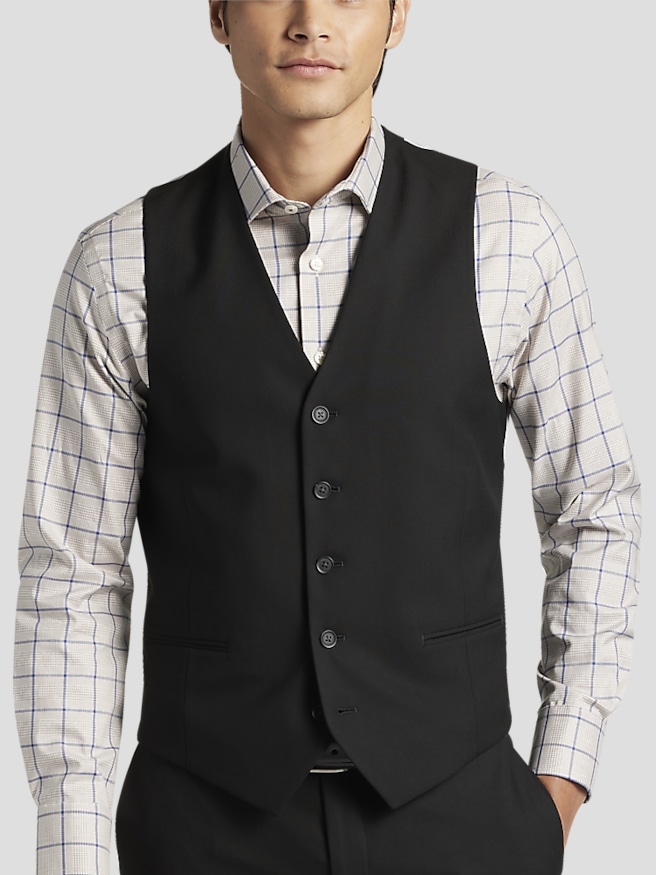
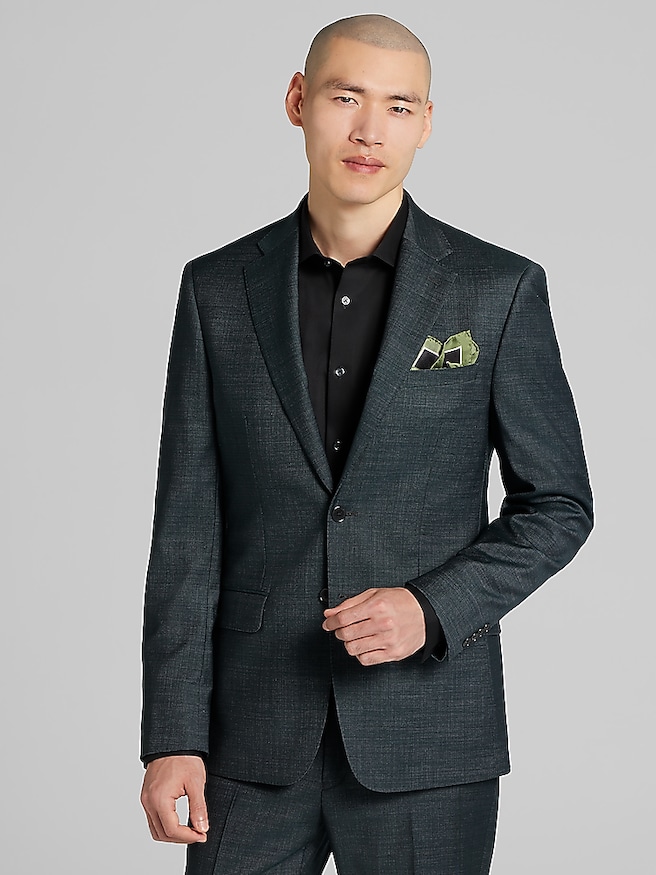
Multi-color suits are men’s tailored outfits that feature two or more visible colors through plaid, checks, stripes, woven patterns, or contrasting sections of fabric. They range from understated combinations of navy, gray, and burgundy to vivid designs with strong contrast, so the category includes much more than novelty dressing. A fine blue windowpane over a charcoal background has a distinctly different presence from a large check in red, cream, and black, even though both bring multiple colors into a tailored look. Pattern size, color contrast, and the amount of each shade all influence how noticeable a suit feels across a room or in a photograph. Smaller patterns often blend visually from a distance, while broad checks and sharply defined blocks of color make a stronger impression. That flexibility makes multi-color suits relevant to wedding guests, prom attendees, performers, hosts, and anyone whose occasion welcomes expressive tailoring. A muted plaid can feel appropriate at a creative workplace or a daytime reception; a high-contrast design makes more sense at a celebration where distinctive clothing is part of the atmosphere. The invitation and setting still matter, since colorful tailoring does not replace a tuxedo when black tie is required. For someone who enjoys a distinctive look without an elaborate pattern, Bold Color Suits offer a related approach built around a more unified palette. Within multicolor tailoring, the background shade often provides the easiest starting point for the rest of an outfit. A deep blue base can keep a colorful check grounded, while a pale background gives the same pattern a lighter visual effect. The result depends as much on balance as brightness: a suit with several closely related shades can appear quieter than a two-color design with dramatic contrast. The most wearable combinations give each color a clear role rather than making every element compete for attention.
Fabric and fit determine whether that visual impact translates into a suit that feels comfortable and looks composed throughout an event. Wool is valued in tailoring for its drape, resilience, and ability to recover from ordinary creasing, although the weight and weave influence its feel. Wool blends can combine those qualities with added softness, texture, or stretch, depending on their composition. Cotton tends to create a more relaxed surface, while linen has a naturally textured appearance and develops visible creases that are part of its character. Polyester and other synthetic fibers can contribute wrinkle resistance and durability, but fiber content alone does not establish how well a suit is made or how comfortably it wears. The lining, seam construction, fabric density, and finishing also matter. A smooth, fluid cloth lets a busy pattern settle neatly against the body; a more structured fabric gives checks and stripes a crisp outline. With multicolor designs, fit deserves particular attention because a strong pattern can draw the eye toward pulling, bunching, or uneven proportions. Jacket shoulders should sit close to the natural shoulder line, and the front should button without forming pronounced tension lines across the waist. The collar should rest against the shirt rather than leaving a visible gap. Sleeves that allow a small amount of shirt cuff to show create a clean finish, while trousers need enough room through the seat and thighs for sitting, walking, and dancing. A slim silhouette can look sharp without feeling restrictive, and a roomier cut can still look intentional when the jacket length and trouser hem are balanced. Stretch may improve ease of movement, but it does not correct an unsuitable size. Alterations can refine sleeve length, trouser length, and some areas of shaping, though major changes may disturb pockets or pattern placement. Consistent checks across prominent seams and well-finished edges can contribute to a polished appearance, especially where contrasting colors make construction details easy to notice.
The strongest outfits usually allow a multi-color suit to remain the focal point. A solid shirt drawn from one of the quieter colors in the fabric creates a connection without repeating the whole pattern. For example, a white or pale blue shirt can bring clarity to a navy suit crossed with burgundy lines, while a simple dark knit can give a colorful check a more relaxed character when the occasion permits. A patterned tie can work, but the scale should be noticeably different from the suit’s pattern so the two do not blur together. A small repeating motif against a broad windowpane often feels more deliberate than two nearly identical checks. Pocket squares are most effective when they echo a shade rather than duplicate the tie exactly. Brown leather shoes can soften some blue and earth-tone combinations, while black shoes provide a crisp anchor for many darker palettes. Keeping the belt and shoes in a compatible color family helps the outfit feel finished without adding another competing detail. For occasions with group photographs, color coordination matters more than exact matching; a shared accent can connect a suit with a companion’s outfit while preserving each person’s style. Care also plays a role in keeping contrasting colors and tailored shapes looking their best. The garment’s care label should govern cleaning, since fabric, lining, and construction can call for different treatment. Prompt attention to spills helps prevent stains from setting, and rubbing a mark aggressively can damage the surface or spread it. Between cleanings, a gentle clothing brush and time on a broad, supportive hanger can help remove surface debris and restore the jacket’s shape. Trousers stored neatly along their crease are less likely to need repeated pressing. A breathable garment bag protects against dust without trapping moisture. As a gift, a multi-color suit is a personal choice best suited to someone whose preferred palette, measurements, and event needs are known; involving the recipient in fit decisions helps make a distinctive gesture genuinely wearable.