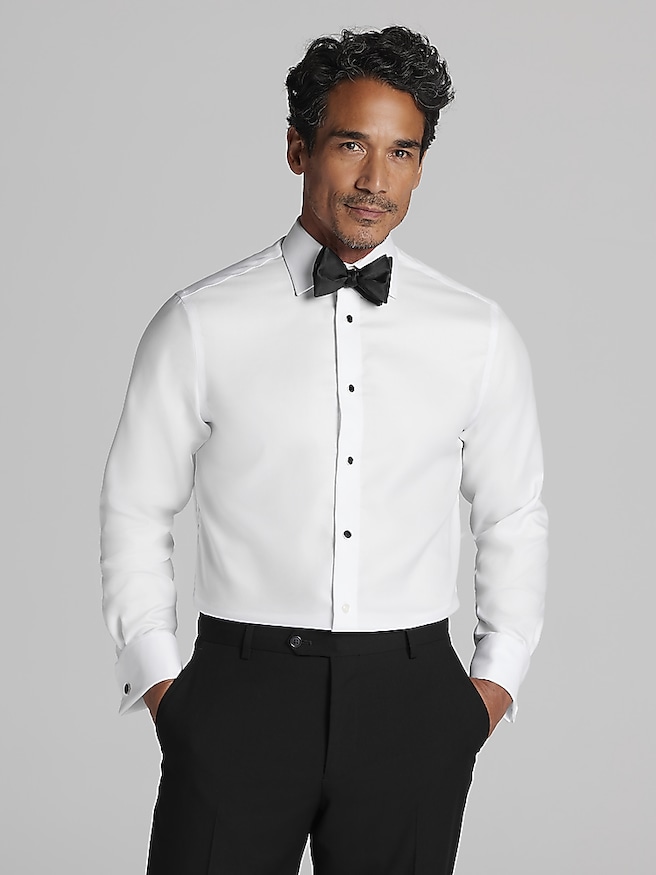
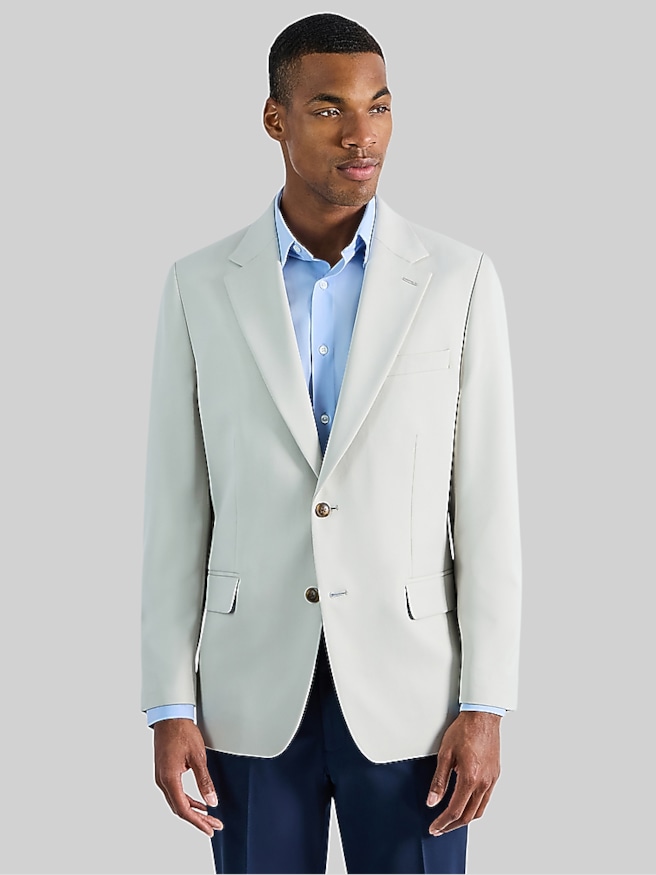
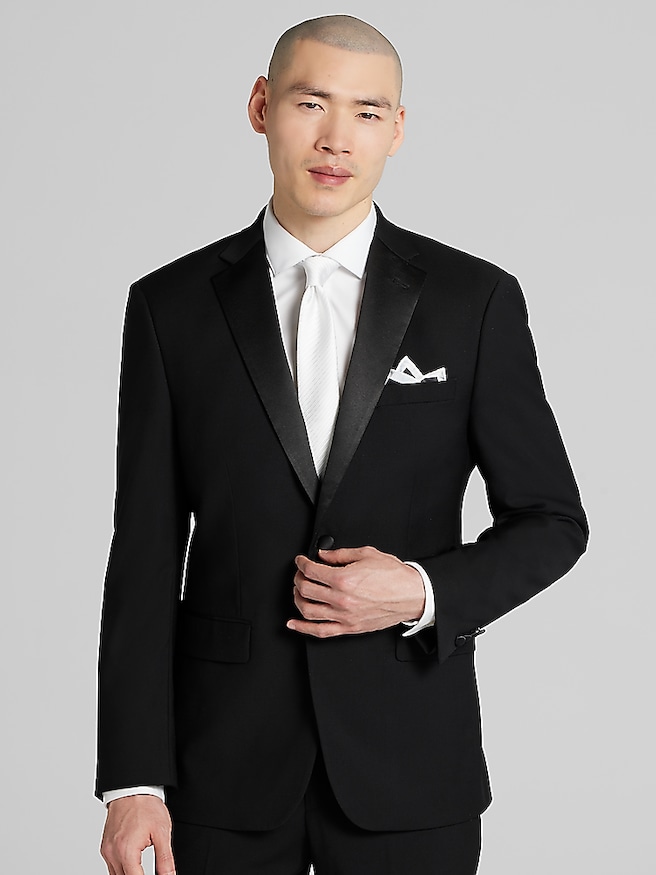
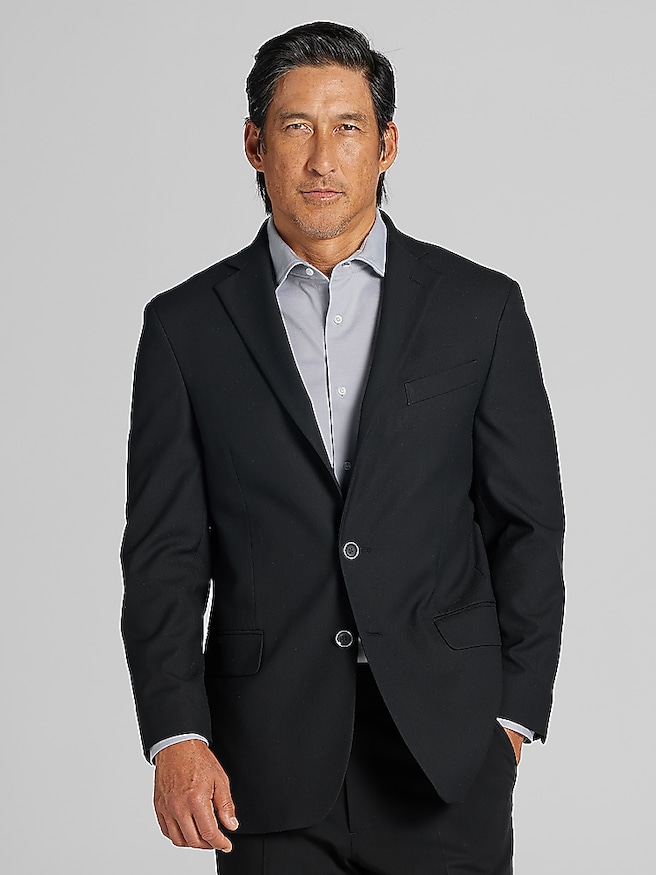
White formal coats bring a crisp, refined finish to occasion dressing, especially when a regular suit jacket or tuxedo needs an additional layer. Their clean color catches the light in a way that feels polished without looking overly complicated, whether the coat is worn over a dark tuxedo, a tailored suit, or a streamlined evening outfit. A white or ivory outer layer can be an especially effective choice for weddings, galas, formal dinners, milestone celebrations, proms, and other events where presentation matters from the moment you arrive. Long overcoat silhouettes create a classic, composed impression with their extended length and structured shoulders, while shorter car-coat proportions offer a little more ease for moving between the car, venue, and reception. Double-breasted fronts and peak lapels add traditional formality, while a single-breasted cut with notched lapels feels versatile and understated. A belted design can define the waist and create a more sculpted silhouette, particularly when worn over lighter layers. For a closer look at related styles and color variations, explore Men's White Fashion Coats. White formal coats can also range from bright optic white to soft ivory, cream, and winter white, making it useful to compare the coat with the rest of the outfit before choosing. A bright white coat creates a sharper contrast against black trousers and a black bow tie, while ivory can blend more naturally with warm-toned accessories, tan footwear, or an off-white wedding palette. At an outdoor ceremony as the weather warms, a lighter formal coat can serve as a sophisticated layer over eveningwear; during the cooler months, a longer, more substantial style provides both presence and practical coverage.
Fabric has a major influence on the way a white formal coat looks, feels, and performs. Wool and wool-blend constructions are popular for their smooth drape, natural warmth, and ability to hold a tailored shape through a long evening. Blends that include cashmere can feel especially soft against a suit jacket, with a refined surface that suits formal settings without appearing flashy. Heavier fabrics are helpful when an event includes time outdoors, a chilly arrival, or a walk between venues, while lighter blends may be more comfortable for indoor receptions and transitional weather. Bouclé and tweed introduce visible texture to a pale color, giving the coat dimension and preventing a winter white shade from appearing flat. Velvet offers a distinctly evening-focused finish, with a soft pile that catches the light as you move and works beautifully for dressier celebrations, formal parties, and statement-making entrances. The right fabric depends on more than temperature. Consider how often the coat will be worn, how it will be transported, and whether it needs to coordinate with several types of formal clothing. A smooth, structured fabric may be the most adaptable choice for weddings and professional occasions, while textured or plush materials can make a memorable addition to a special-event wardrobe. White shows detail clearly, so careful finishing matters: look for an even surface, neat seams, secure buttons, a clean collar, and a lining that allows the coat to slip comfortably over tailored layers. Practical features such as interior pockets, a secure closure, and enough room through the chest and shoulders can make a noticeable difference when the coat is worn for several hours. It should feel comfortable when buttoned, but not so loose that the shoulders collapse or the sleeves cover the hands.
Fit is the foundation of a polished formal coat. The shoulder seam should sit close to the natural edge of the shoulder, and the collar should rest neatly against the shirt or suit collar without gaping. Sleeves generally look most balanced when they reach the wrist and leave only a small amount of shirt cuff visible, while the body should allow comfortable movement without pulling across the buttons. A longer coat often looks best when its hem falls evenly and maintains a clean line over the trousers, whereas a shorter coat can be easier to wear when sitting, driving, or navigating crowded gatherings. Take measurements over the layers that will be worn underneath, since a coat intended for a tuxedo or heavier suit needs more room than one worn over a dress shirt. When between sizes, pay close attention to the shoulders and chest; sleeve length and minor adjustments are usually easier for a tailor than a coat that is fundamentally too narrow across the upper body. A white formal coat can make a thoughtful gift for a groom, wedding party member, graduate, or someone building a wardrobe for frequent formal occasions, particularly when chosen with the recipient’s usual suit size and preferred silhouette in mind. It can also be a memorable option for a style-conscious partner or family member preparing for a gala, formal cruise, reception, or celebratory evening. Encourage proper care from the start: check the garment’s care label, use a sturdy hanger with shaped shoulders, give the fabric room to breathe between wears, and arrange professional cleaning when needed. Store the coat in a breathable garment bag rather than compressing it in plastic, and handle spills promptly so the pale fabric remains fresh. With thoughtful attention to fit, fabric, length, and styling, white formal coats offer a distinctive layer that feels elegant in photographs, comfortable at the venue, and appropriate across a wide range of formal occasions.