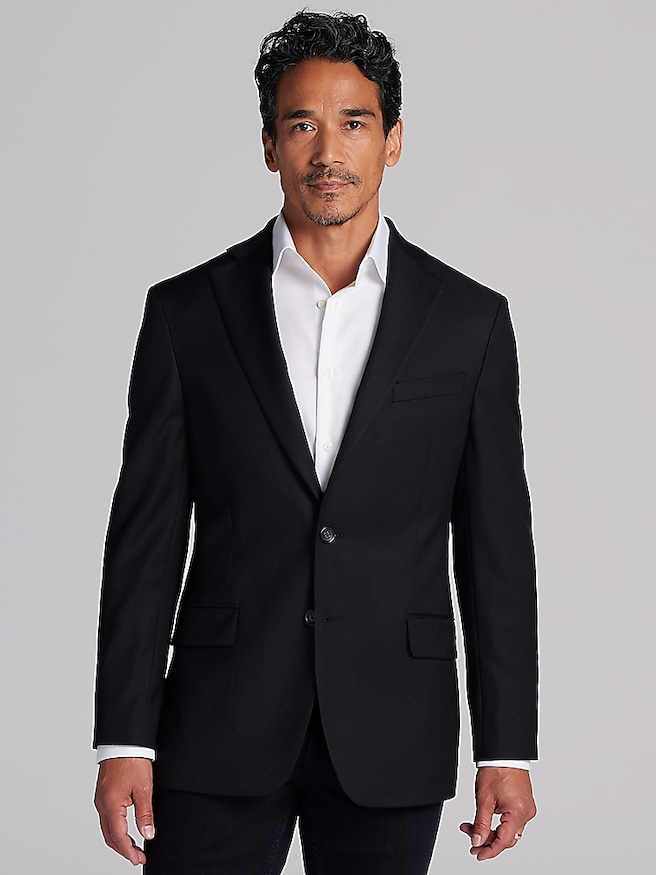
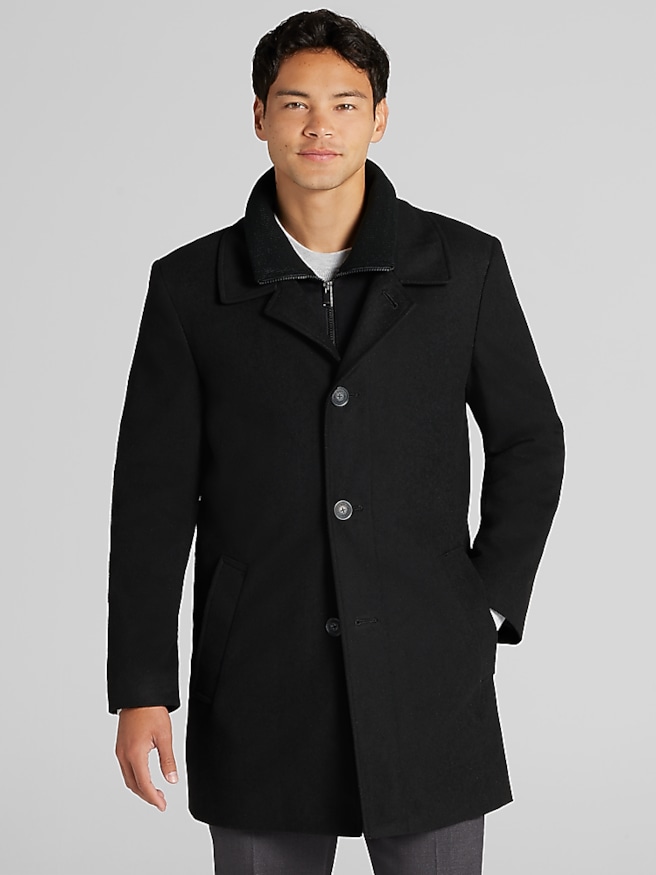
Black formal coats bring a clean, composed finish to dressed-up clothing, framing a suit or evening ensemble without competing with it. Their appeal comes from proportion, texture, and restraint: a well-shaped shoulder, a lapel that lies flat, and a length that gives the outfit a continuous line. Black also makes subtle construction details more noticeable. The edge of a collar, the placement of a pocket, and the way the cloth falls below the waist can distinguish a sharply tailored silhouette from a softer, more relaxed one. For wedding guests, members of a wedding party, concertgoers, and anyone attending a formal reception, a dress coat serves as the outermost part of the outfit during arrivals and departures. It should look intentional over what sits beneath it, rather than like an afterthought added to an otherwise finished ensemble. Single-breasted designs tend to create an uncluttered front, while double-breasted construction gives the chest more definition and lends the overall shape a more pronounced sense of formality. Notched lapels offer a familiar tailored appearance; peaked lapels can create a stronger upward line toward the shoulders. Neither detail determines the entire character of a coat on its own, since fabric, length, and fit work together to establish the effect. A restrained black coat can complement charcoal tailoring, frame a crisp white shirt, or sit quietly over a tuxedo without introducing another competing color. For black-tie occasions, it functions as an outer layer rather than a substitute for the evening jacket specified by the dress code. Longer proportions often pair naturally with formal clothing because they cover the jacket beneath and keep its hem from interrupting the silhouette. Those comparing dress-focused shapes with a broader range of outerwear can explore Men's Black Coats, keeping the intended occasion and the clothing underneath central to the choice. The result should feel polished at the venue entrance and comfortable enough for the journey there.
Fabric gives a black formal coat much of its personality, even when the design is deliberately simple. Wool is valued in tailored outerwear for its resilience, substantial drape, and ability to hold a shaped silhouette. A closely finished surface can appear especially crisp, while a lightly brushed texture creates a softer visual effect without requiring decorative details. Cashmere, whether used alone or blended with other fibers, contributes a supple hand and a less rigid appearance; its softness also calls for thoughtful handling in areas exposed to repeated friction. Blended fabrics vary considerably, so the fiber content and care label provide more useful information than a broad material name alone. Some combinations emphasize shape retention or abrasion resistance, while others prioritize softness and fluid movement. Lining matters as well. A smooth lining helps the coat slide over a suit jacket without catching at the sleeves or pulling the jacket out of place, and neatly finished internal seams can make repeated wear more comfortable. Fit deserves the same attention as cloth. A formal coat needs room for tailoring underneath, but excess volume can obscure the clean line that makes it useful in the first place. Trying one on over the type of jacket it will accompany gives a more accurate sense of the shoulder position, sleeve clearance, and chest space than trying it over a shirt alone. With the front fastened, the lapels should rest naturally rather than bow outward, and the fabric should not form pronounced pulling lines around the closure. Reaching forward to greet someone or sitting briefly can reveal tightness that is easy to miss while standing still. Sleeves should cover the jacket sleeves beneath without extending so far that they crowd the hands. The collar should sit close enough to look connected to the outfit, not hover behind the neck. A back vent provides room through the stride, particularly in longer cuts, helping the coat move naturally instead of bunching around the legs.
The most useful black formal coat is one whose proportions and upkeep suit the way it will actually be worn. Someone attending frequent professional dinners may value a straightforward silhouette that works over several suits, while a person dressing for occasional ceremonies may prefer an equally restrained shape that remains easy to coordinate over time. At a wedding, a smooth black outer layer can keep a patterned tie or textured suit from making the complete outfit feel too busy. For an evening performance or formal celebration, understated accessories preserve that clarity: polished footwear, a neatly arranged scarf when appropriate, and leather gloves can complement the coat without distracting from the tailoring. Texture is especially important when several black garments appear together, since black fabrics do not always share the same undertone or reflect light in the same way. A matte dress coat over an evening jacket can look deliberate even when the fabrics are not identical; the aim is a harmonious outfit, not a forced match between unrelated materials. Long-term appearance depends on small habits as much as occasional cleaning. A broad, supportive hanger helps maintain the shoulders, and enough space around the garment prevents lapels and sleeves from being compressed. Emptying the pockets after wear reduces strain and helps preserve the front line. A gentle clothing brush, used as the fabric permits, can remove surface dust, while careful lint removal keeps dark cloth looking tidy. Cleaning should follow the sewn-in instructions, particularly for wool, cashmere, and structured garments whose shaping can be affected by unsuitable treatment. Loose buttons and small lining tears are worth addressing early, before ordinary movement places more stress on the surrounding fabric. For storage, a clean coat and a breathable garment bag help protect the finish without crushing its shape. As a gift for a graduate, a partner, or someone marking a professional milestone, a black formal coat can be a thoughtful addition to a dress wardrobe, provided sizing and personal preferences are understood. Its lasting value lies in dependable construction, comfortable movement, and a silhouette that feels at home whenever the occasion calls for greater formality.