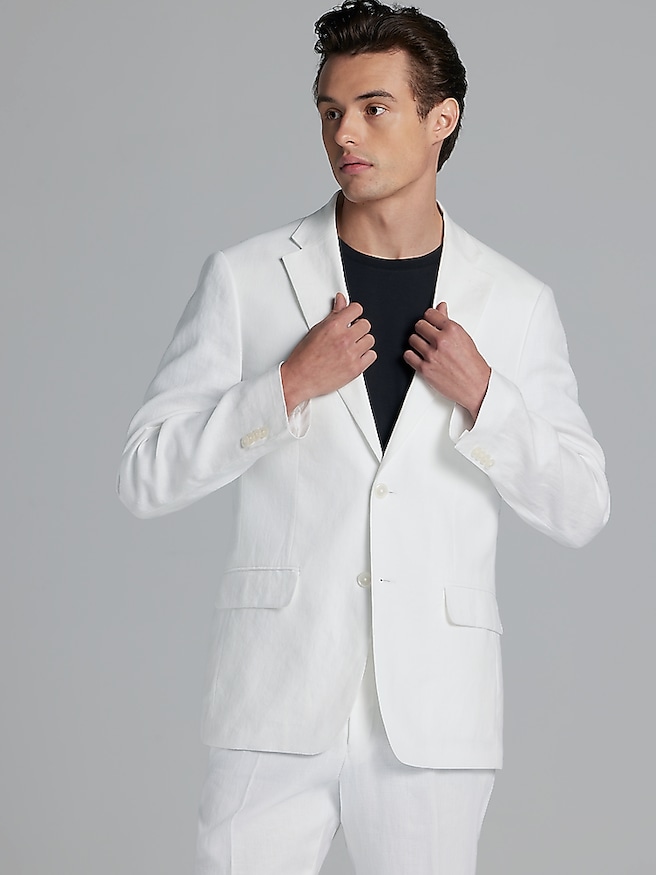
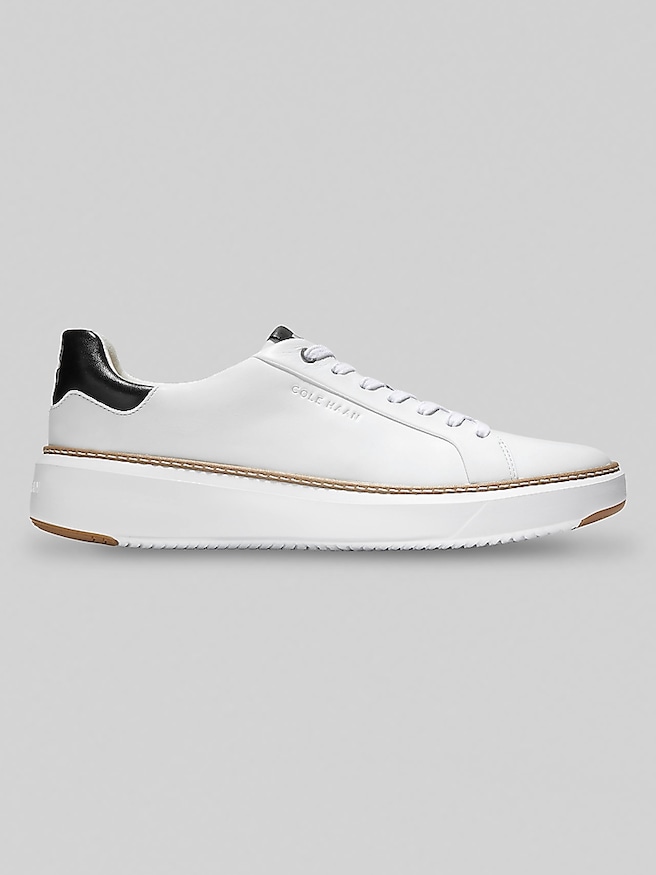
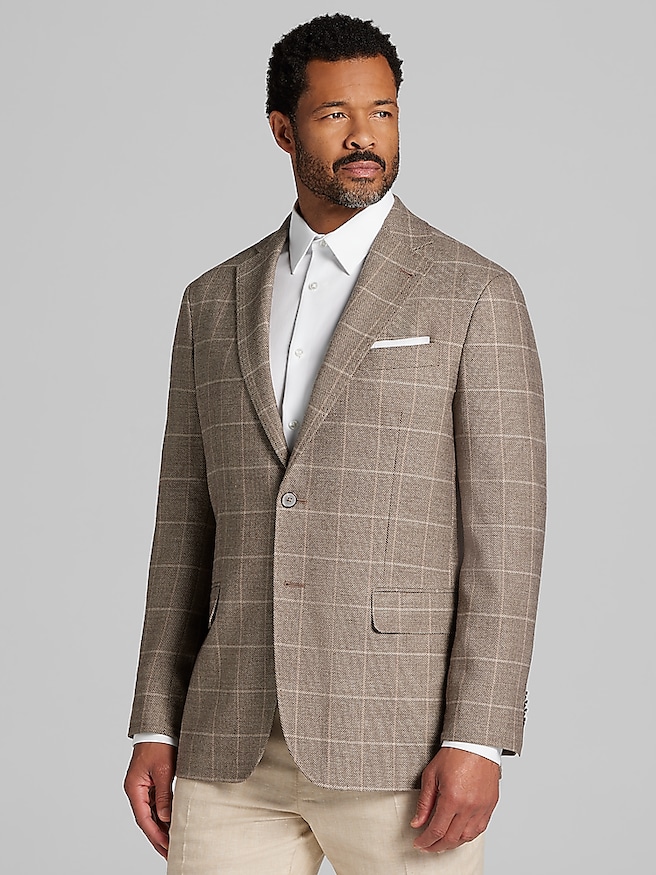
Men's white fashion coats bring a distinctive focal point to an outfit, combining the presence of outerwear with a color that makes shape, texture, and tailoring especially noticeable. A long, structured coat creates a strong vertical line over dress trousers, while a shorter jacket gives denim or chinos a more relaxed finish. Between those silhouettes, details such as lapels, stand collars, concealed closures, and patch pockets help establish whether a coat feels dressy, understated, or casual. White is not limited to one exact shade: crisp white has a sharp graphic quality, while ivory, cream, and off-white offer softer contrast with the rest of an outfit. Those subtle distinctions become particularly visible beside a white shirt, so coordinating shades intentionally can make the combination look considered rather than slightly mismatched. With charcoal trousers and a black knit shirt, a white coat creates clear contrast without requiring elaborate accessories. Over tan chinos and a textured sweater, an off-white style produces a quieter effect built around closely related tones. Dark denim and simple leather sneakers give a shorter white coat an easy everyday setting, while a tailored silhouette can provide a polished outer layer for a dinner reservation, theater visit, or special celebration. For dressier occasions, the coat should complement the clothing underneath rather than compete with it; restrained hardware and a neat collar often make that balance easier. A patterned scarf or richly colored knit can add depth, but an outfit does not need several statement details when the coat already draws attention. Men who usually wear navy, gray, or black may find white an approachable way to change the character of familiar clothing without replacing an entire wardrobe. The strongest combinations give the coat enough visual space to stand out, with deliberate proportions and a limited color palette keeping the overall appearance grounded. Even a straightforward outfit can feel more defined when its outer layer has a clear silhouette and a finish that suits the occasion.
Fabric and fit determine much of how a white fashion coat looks in person and feels through repeated wear. Wool and wool-blend fabrics often give tailored coats body and a substantial drape, while cotton twill can provide a more casual surface with visible weave and structure. Synthetic fibers may contribute resilience or help a blend retain its shape, although the finished garment's behavior depends on its full fiber content and construction. A brushed surface softens the appearance of white, whereas a smooth finish emphasizes seams, edges, and the outline of the coat. On pale fabrics, lining and fabric density also deserve attention because pocket bags, seam allowances, or dark clothing underneath can sometimes show through a thinner shell. A lining can help the coat slide over shirts and knitwear, but the shoulders and armholes still need enough room for comfortable movement. A close fit should not mean pulling across the upper back when reaching forward, and a relaxed fit should still look intentional rather than oversized by accident. Shoulder seams generally sit near the natural shoulder on traditionally tailored designs; dropped shoulders create a different, deliberately roomier shape. Coat length changes the balance, too. A longer hem can frame a tailored outfit, while a shorter cut leaves more of the trousers visible and works naturally with casual separates. When worn over a suit jacket, the coat should accommodate the jacket's shoulders and cover its hem for a cohesive appearance. Sleeve length is best assessed with the clothing likely to be worn underneath, rather than with a thin shirt alone. The streamlined proportions associated with Men's Modern Coats can be particularly effective in white, where a simple silhouette allows texture and construction to stand out. Secure buttons, even stitching, smoothly finished pocket openings, and a collar that lies neatly all contribute to a well-made impression. Pockets should hold small essentials without distorting the front, and closures should fasten without creating diagonal tension lines across the body.
White outerwear benefits from thoughtful care because everyday marks are more noticeable against a pale background. The care label is the starting point: some fabrics require professional cleaning, while others permit washing under specific conditions. White does not automatically mean bleach-safe, and aggressive stain treatment can affect fibers, trim, or the consistency of the color. Promptly blotting a fresh spill with a clean cloth, rather than rubbing it into the fabric, can help limit spreading before the appropriate treatment. Any cleaning product should be compatible with the garment's instructions and tested discreetly when appropriate. Collars, cuffs, and pocket edges tend to receive the most handling, so those areas deserve an occasional check before small marks become harder to address. Dark leather bags, strongly dyed denim, and other saturated materials may transfer color through repeated contact; taking care with shoulder straps and crossbody bags helps protect the coat's surface. Durability also depends on habits beyond cleaning. A supportive hanger helps preserve the shoulders, while emptying pockets prevents unnecessary strain and sagging. A coat should be fully dry before storage, with enough space around it to avoid persistent creasing. Breathable garment storage can help protect a clean coat from dust without compressing its shape. For someone who regularly travels between appointments, attends dinners, or enjoys putting together distinctive casual outfits, these details make white a more practical wardrobe choice than its striking appearance might suggest. A white fashion coat can also be a thoughtful gift for a man who already enjoys lighter neutrals or expressive outerwear. Familiarity with his preferred coat length, usual fit, and existing wardrobe is more useful than choosing by color alone. Someone who favors tailored trousers may appreciate a defined shoulder and clean lapel, while someone who mostly wears denim may prefer simpler construction and easier proportions. Matching the fabric's care requirements to the recipient's routine matters as well. With suitable construction, comfortable layering room, and consistent upkeep, a white coat can become a distinctive part of an established personal style rather than an outfit reserved for a single occasion.