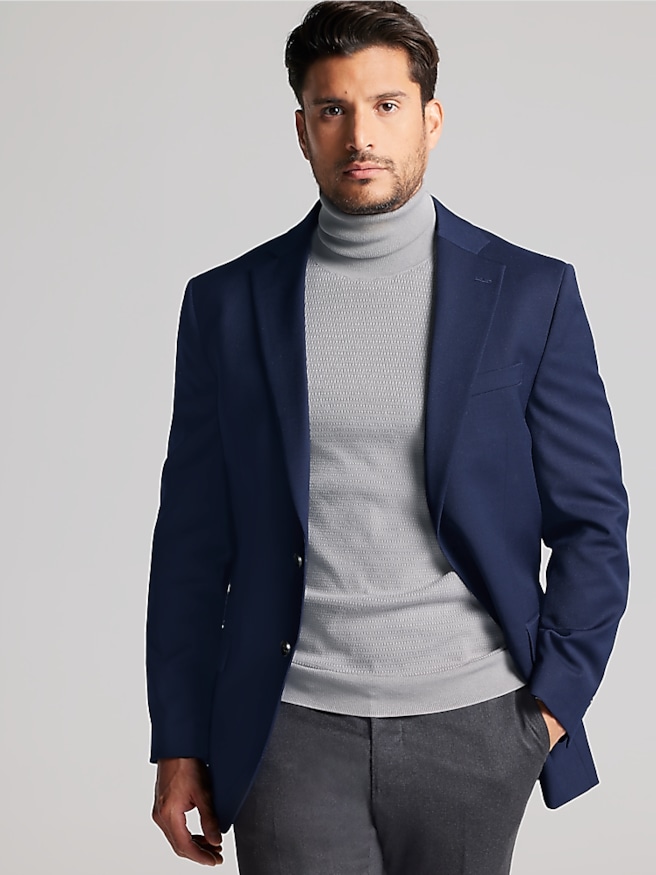
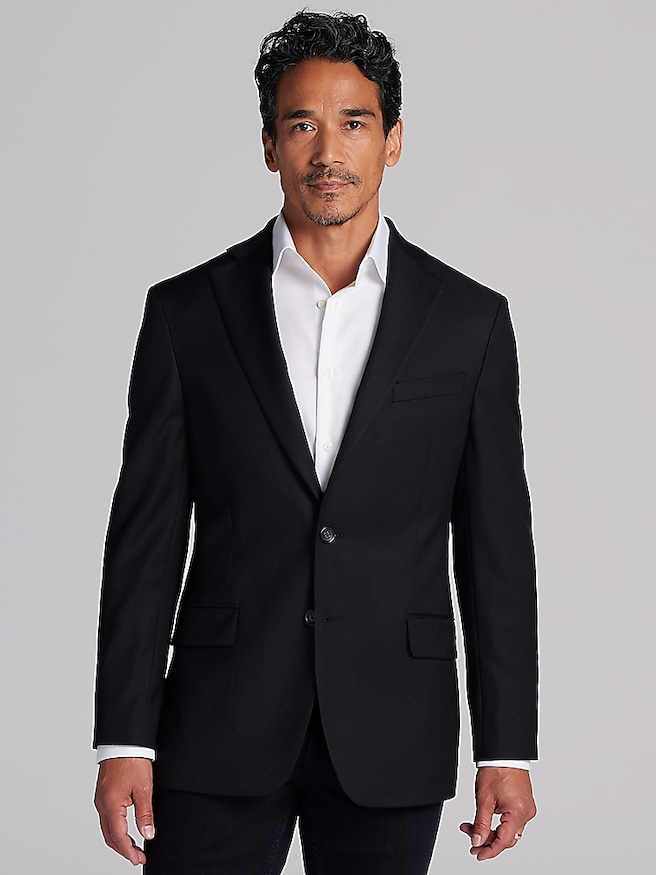
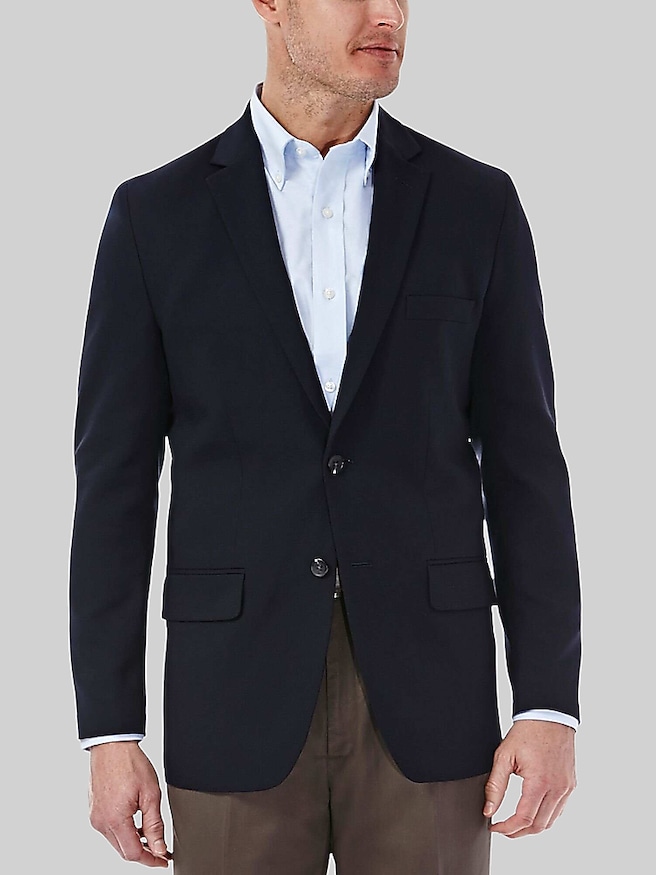
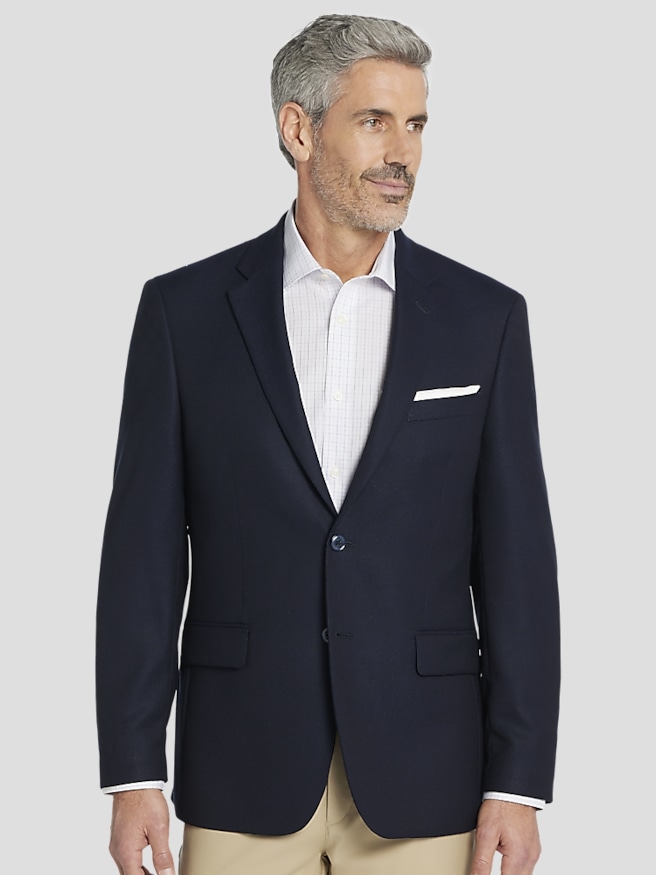
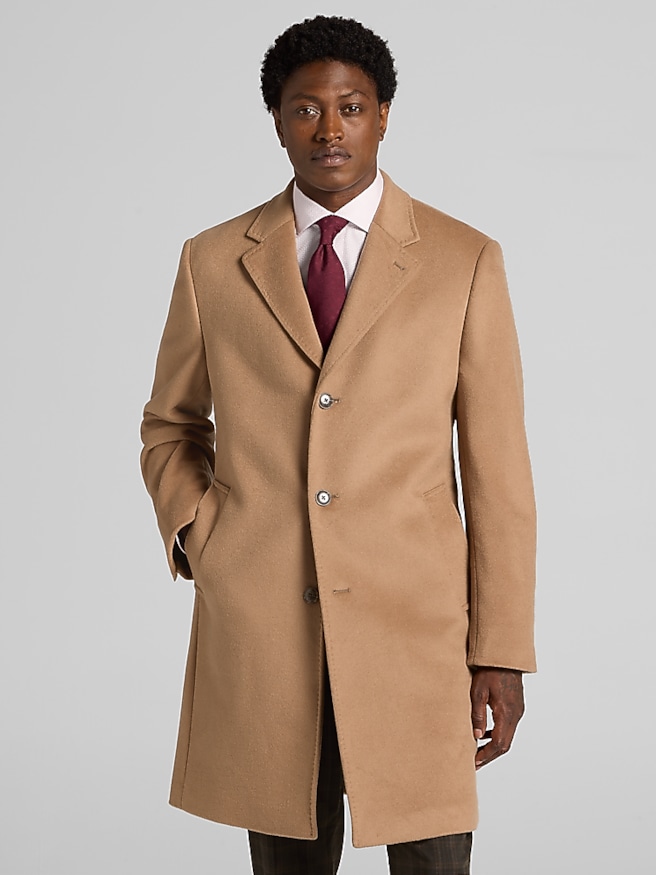
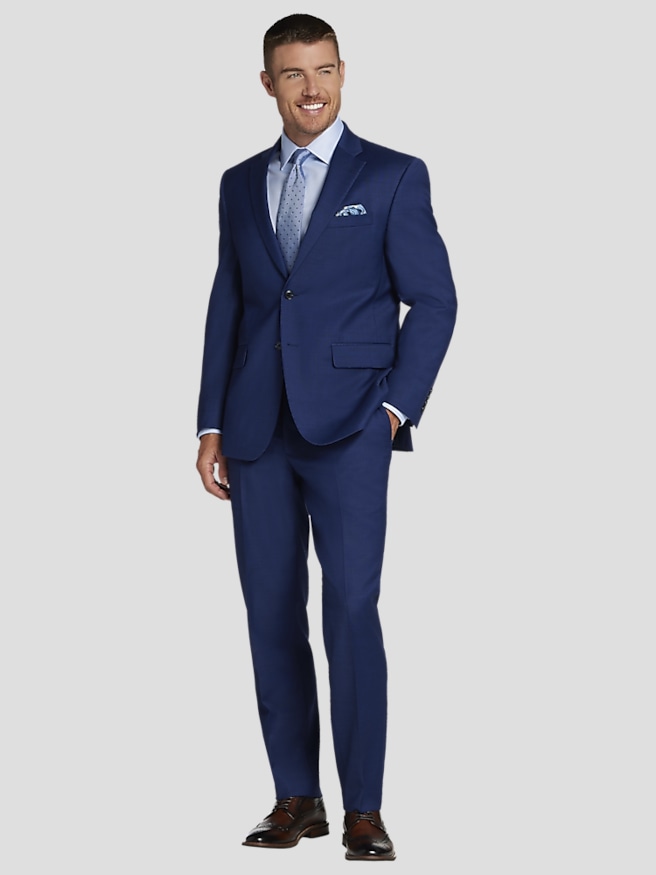
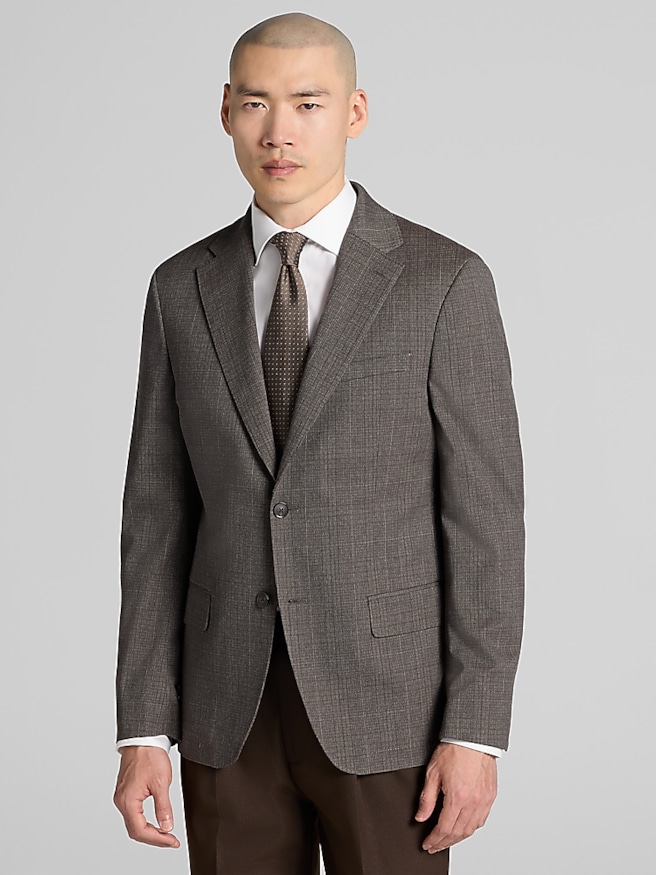
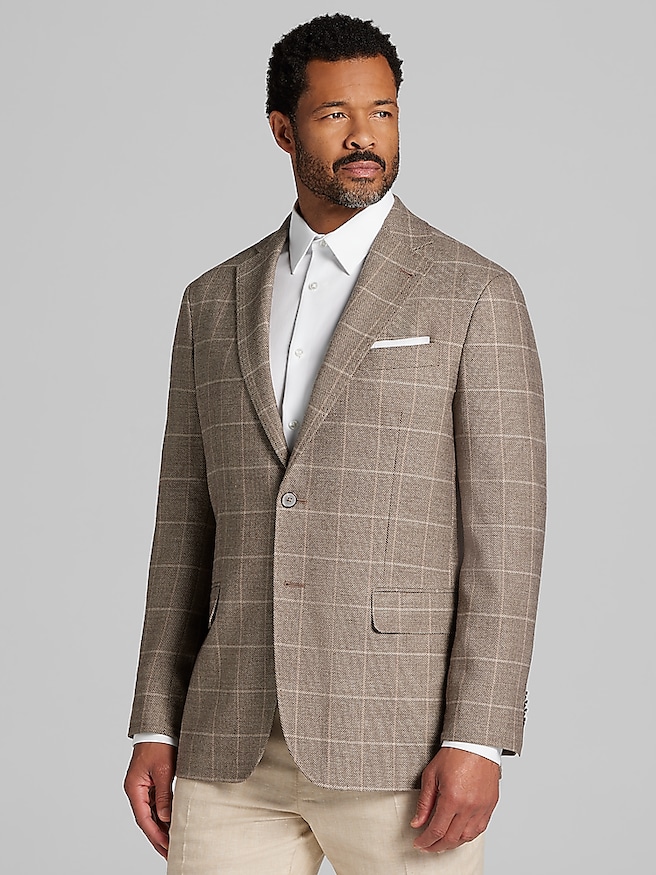
Men's modern coats combine clean tailoring, practical coverage, and versatile silhouettes that work over business clothing and casual layers. Their contemporary character often comes from balanced proportions, understated closures, and a shape that follows the body without restricting movement. Modern does not necessarily mean tight: a well-proportioned coat leaves room for the clothing underneath while keeping the shoulders, sleeves, and torso looking intentional. A tailored overcoat can give a suit a smooth outer layer, while a shorter car coat pairs naturally with chinos, denim, and knitwear. Longer silhouettes create a continuous line over dress trousers and offer more coverage; shorter lengths feel less cumbersome when getting into a vehicle or navigating a crowded train. The right length also depends on what sits underneath. A coat worn over a suit should generally cover the jacket hem so the layers look considered rather than accidental. Shoulder seams should sit comfortably near the shoulder edge, and the front should close without pulling across the chest or creating pronounced horizontal creases. When reaching forward or sitting down, there should still be enough ease through the upper back and arms. Sleeves need to accommodate a shirt or sweater without bunching, with cuffs that provide coverage without swallowing the hands. These details matter just as much as the silhouette seen in a mirror. A coat that looks sharp standing still should also feel comfortable while carrying a laptop bag, holding a handrail, or walking several blocks. Navy, charcoal, black, and earthy neutrals make useful foundations because they coordinate easily with familiar wardrobe colors. Subtle texture can add depth without requiring a bold pattern, while a simple collar and restrained hardware keep the overall look adaptable. Pockets positioned for a natural hand angle, a collar that sits neatly when raised, and closures that are easy to manage contribute to a coat's everyday usefulness. Together, those elements give modern outerwear its appeal: a refined appearance supported by details that make sense beyond the doorway.
Fabric plays a large part in how a modern coat looks, feels, and performs. Wool offers natural insulation and a textured surface that complements tailoring, with weight and weave influencing how substantial or fluid the coat feels. Wool blends can combine that familiar character with fibers selected for qualities such as resilience, softness, or reduced weight; the full fiber content is more informative than a broad fabric description alone. Cashmere contributes softness, though any fabric's performance also depends on its construction and care. Cotton blends can provide a crisp appearance, while nylon and polyester are often used in lightweight shells, linings, and insulated designs. A dense woven exterior may help limit wind penetration, but protection from rain depends on the fabric, finish, seams, and overall construction. Water-resistant and waterproof are not interchangeable descriptions, and neither should be assumed from a coat's appearance. For someone who spends time walking between buildings, a secure front closure and a collar with useful coverage may matter more than decorative details. For someone who mostly travels by car, flexibility through the shoulders and a manageable hem can take priority. Inside the coat, a smooth lining helps sleeves pass over a blazer or sweater without catching, while neatly finished seams and securely attached buttons are useful signs of careful construction. Durability also depends on how the coat is treated between wears. A broad, supportive hanger helps maintain the shoulder shape, and allowing space around the garment prevents unnecessary crushing. Wool surfaces generally benefit from gentle brushing to lift dust and lint, with extra attention around the collar and cuffs where contact is frequent. Cleaning should follow the care label rather than assumptions about the fabric; some coats require professional cleaning, while others permit specific washing methods. If a coat gets damp, letting it dry naturally away from direct heat helps protect its shape and finish. Emptying heavy pockets and addressing loose buttons early can also reduce strain on areas that receive repeated use.
The versatility of men's modern coats becomes clear in the way they connect the rest of an outfit. Over a navy suit, a charcoal coat creates a restrained combination suitable for a business meeting, an evening performance, or a wedding arrival. Over a textured sweater, dark jeans, and leather boots, that same clean silhouette feels relaxed without looking unfinished. A slightly roomier cut can accommodate knitwear comfortably, while a more closely shaped coat works best when the underlying layers remain relatively light. Fit is easiest to judge over the clothing intended for regular wear: a coat that closes comfortably over a T-shirt may feel very different over a suit jacket. The collar should rest cleanly around the neck, and the lapels or front edges should lie smoothly rather than lift away from the chest. At the hem, enough ease for a normal walking stride helps the coat move naturally instead of pulling with each step. Scarves, gloves, and footwear can reinforce the outfit without competing with it. A textured scarf adds interest to a plain coat, while a simple leather belt and understated shoes keep a more distinctive fabric grounded. Lighter layering follows similar principles, and Spring Coats For Men offers a related direction for dressing when substantial insulation is not the priority. For gifting, a coat can be a thoughtful choice for a partner, father, brother, or recent graduate establishing a work wardrobe. Familiarity with the recipient's usual jacket size, preferred silhouette, and daily routine helps make the choice personal and practical. Someone who wears tailoring regularly may value generous coverage over a blazer, while someone with a casual wardrobe may appreciate a shorter shape that works easily with sweaters. Across these uses, the most useful modern coat is not simply the narrowest or most formal. It is the one whose fabric, proportions, and construction support the way it will actually be worn.