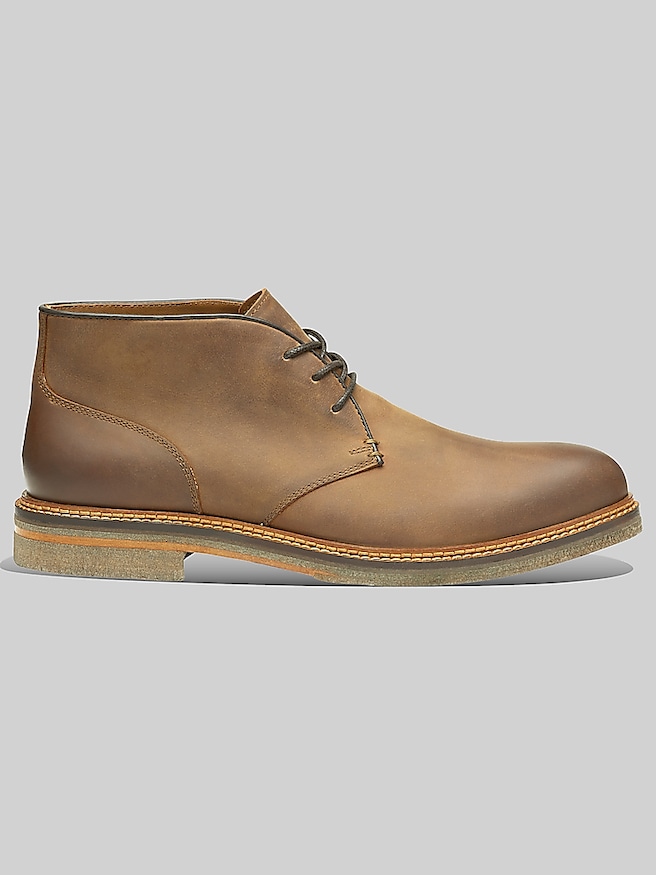
Chukka boots can be worn with a suit when their shape, material, and sole are refined enough to complement tailored clothing. The strongest combinations feature smooth leather or fine, dark suede, a streamlined toe, minimal detailing, and a slim leather or low-profile rubber sole. Typically ankle-high with two or three pairs of eyelets, chukkas bring a simple lace-up silhouette to outfits that fall between traditional business dress and smart casual. Their appeal is the balance: more substantial than a dress shoe, less imposing than a taller boot, and clean enough to sit comfortably beneath tailored trousers. For navy suits, dark brown, oxblood, and black leather provide versatile pairings; charcoal suits work particularly well with black or deep brown. Black leather is the most cohesive choice with a black suit, especially when the overall outfit needs a sharper finish. The boot’s proportions matter as much as its color. A gently tapered or softly rounded toe generally complements a suit better than a broad, bulky shape, while restrained stitching keeps attention on the full outfit rather than the footwear alone. Thick crepe soles, heavily distressed uppers, prominent contrast stitching, and rugged tread pull the look toward casual clothing. Those details can work with relaxed separates, but they are less harmonious with a crisp worsted wool suit. Chukkas paired with suits are especially appropriate for workplaces with flexible dress codes, client dinners, restaurant evenings, and celebrations that allow a polished but individual look. They are not a substitute for formal dress shoes at black-tie events or occasions with strict footwear expectations. A navy suit, pale blue shirt, and dark brown leather chukkas create an understated combination for a business dinner; charcoal tailoring with black chukkas feels more restrained. A knit tie, open-collar shirt, or fine-gauge sweater can reinforce the relaxed character of the boots when the setting allows it. The result should feel coordinated rather than like formal clothing paired with an unrelated casual shoe.
Materials and construction influence both the appearance of suit chukka boots and how they feel over a full day. Smooth calfskin can provide a fine grain and a polished surface, while other quality leathers may offer a slightly firmer feel or more visible texture. The finish matters: an even, well-maintained leather surface usually sits more naturally alongside tailored wool than a heavily oiled or deliberately worn finish. Dark suede offers a softer, more understated effect and pairs particularly well with textured suits and relaxed tailoring. Its nap adds visual depth without requiring decorative stitching or hardware. Leather linings can help manage moisture and provide a comfortable interior, although comfort also depends on the shape of the boot, the footbed, and the fit. A leather sole has a traditional dress-shoe appearance; a slim rubber sole can retain that neat outline while adding traction and cushioning, depending on its composition and tread. Neither material guarantees comfort or durability on its own. Secure stitching, neatly finished edges, a stable heel, and a well-attached sole all contribute to the boot’s usefulness. Fit deserves close attention because chukkas have relatively few lacing points. The heel should feel secure without painful rubbing, the forefoot should have room to flex, and the toes should not press against the front or top of the boot. Excessive pressure across the instep is not something to dismiss as a necessary break-in stage. Trying boots with the dress socks intended for the outfit gives a more useful impression than trying them with unusually thick socks. Walking, turning, and sitting can reveal pressure points that standing still misses. Trouser length also affects the finished appearance: a slight break or a clean hem near the top of the boot helps the fabric fall neatly, while excess length can bunch around the ankle. A tapered trouser opening should still be wide enough to pass over the boot shaft without catching.
Well-chosen chukkas can earn a regular place in a tailored wardrobe because their usefulness extends beyond a matching suit. The same understated leather pair can complement a sport coat and wool trousers, a button-down shirt and chinos, or dark denim in a setting that permits it. That flexibility makes them a thoughtful gift for someone building a professional wardrobe, starting a role with a relaxed office dress code, or replacing overly casual footwear for dinners and social occasions. Shoe size alone does not establish fit, so knowing the recipient’s preferred width, usual fit, and comfort needs makes footwear gifting more considered. For a related silhouette, explore Chelsea Boots Men Suit, which centers on an elastic-sided alternative to the chukka’s laced design. Both silhouettes benefit from a clean profile when worn with tailoring, but chukkas allow some adjustment across the instep through their laces. Long-term appearance depends on care suited to the upper material. Smooth leather benefits from gentle cleaning, occasional conditioning with a compatible product, and polish when appropriate to its finish. Suede needs a dedicated brush to lift the nap and remove surface debris; ordinary leather polish can flatten or discolor it. Testing any treatment on an inconspicuous area helps reduce the risk of an unwanted change in color or texture. After wear, allowing boots to air out and using properly fitted shoe trees can help preserve their shape. Keeping them away from direct heat protects against unnecessary drying, while rotating footwear gives the interior time to dry between wears. Heel wear, loose stitching, and thinning soles are worth addressing before damage spreads. Some stitched constructions can be resoled by a qualified cobbler, although repair options depend on the individual boot. With a comfortable fit, restrained styling, and consistent care, suit chukka boots provide a distinctive alternative to lace-up dress shoes without losing the composed appearance that makes tailored clothing work.