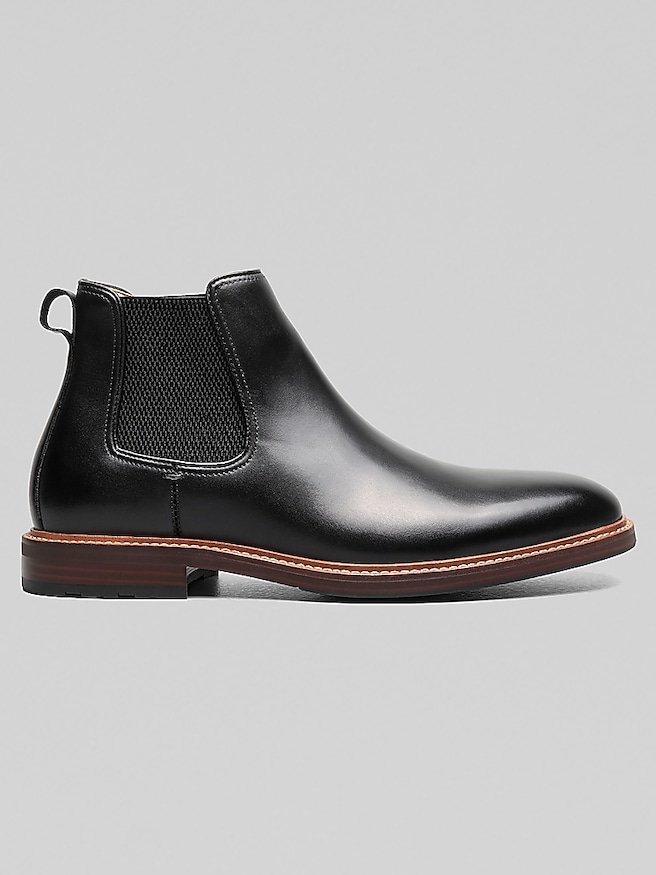
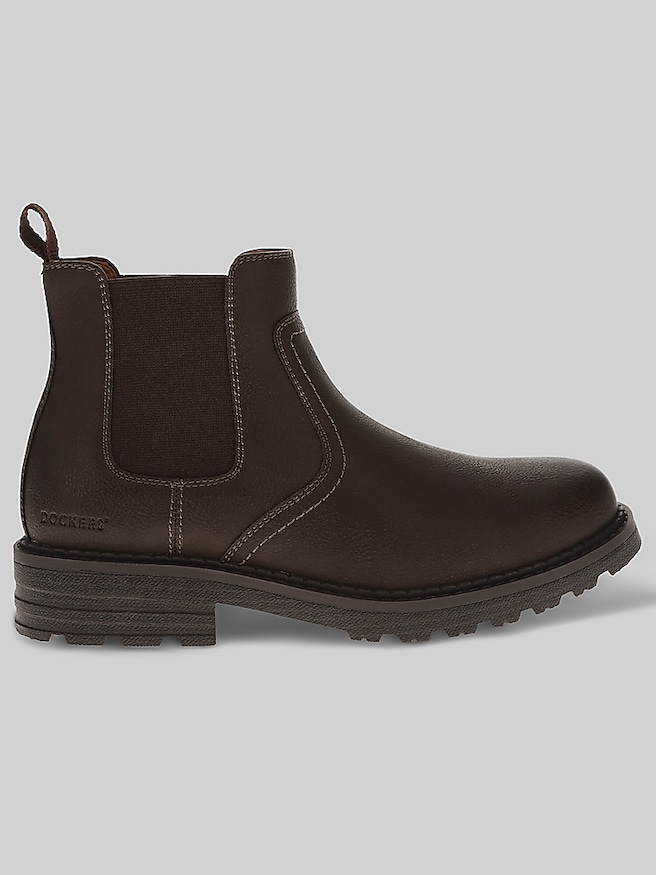
Chelsea boots with a men's suit create a clean, modern look when the boots have a refined profile, a close-fitting ankle, and a finish that complements the tailoring. Their defining details—elastic side panels, an ankle-height shaft, and a pull-on design without laces—keep the outline simple beneath a trouser hem. That simplicity makes dress Chelsea boots a natural companion to business suits, wedding attire, and tailored separates. A gently tapered or almond-shaped toe usually works well with a suit because it follows the lines of the trousers without looking overly pointed or bulky. Smooth black leather offers a particularly crisp pairing with charcoal, dark gray, or black tailoring, while dark brown leather brings depth to navy and medium-gray suits. Rich brown tones can also complement textured tailoring without making the outfit feel too casual. The overall effect depends as much on proportion as color: a narrow shaft sits neatly under a tapered trouser leg, and a restrained sole keeps attention on the suit rather than the footwear. A light trouser break, or a hem that just meets the top of the boot, helps avoid fabric gathering around the ankle. Wider trouser legs can work, too, provided the hem falls smoothly and the boot has enough visual presence to balance the silhouette. For an office presentation, polished leather and a matching leather belt establish a cohesive finish. At a wedding with a suit-appropriate dress code, the same streamlined shape can feel dressed up without competing with a patterned tie or pocket square. Chelsea boots are not a substitute for every type of formal footwear; an invitation calling for black tie generally favors traditional tuxedo shoes. Their strength lies in the space between everyday dress shoes and more casual boots, where sharp tailoring, understated details, and practical wearability meet. A navy suit, white dress shirt, and dark brown Chelsea boots, for example, can look composed at a client meeting and equally at home at dinner afterward.
Materials and construction influence how Chelsea boots look with a suit, how they feel through a full day, and how they develop with wear. Full-grain leather retains the hide's natural surface and can develop a distinctive patina with appropriate care, while smooth calfskin is often valued for its fine texture and refined appearance. Leather quality also depends on the tanning, finishing, and overall construction, so a material name alone does not tell the whole story. Suede offers a softer, less reflective finish that pairs especially well with textured suits and relaxed tailoring, although polished leather is usually the more straightforward choice for a conservative business setting. Elastic side panels should stretch enough for the foot to enter comfortably, then recover to hold the shaft close to the ankle. Reinforced pull tabs make the pull-on design easier to use, but the opening should never require excessive force. Inside the boot, a smooth lining, a supportive footbed, and cushioning under the heel can make a noticeable difference when the day includes standing at a reception or walking between appointments. Cushioning alone does not guarantee comfort; the shape of the last, the boot's width, and the placement of seams matter just as much. Underfoot, leather soles offer a traditional dress appearance, while low-profile rubber soles can provide added grip without creating a heavy outline beneath suit trousers. Construction methods bring their own characteristics. Goodyear-welted boots are often suited to resoling when their condition allows, while Blake-stitched construction can produce a slim, flexible profile; repair options depend on the individual design and a cobbler's assessment. Neither method automatically makes a boot comfortable or appropriate for every occasion. A discreet welt, tidy stitching, a stable heel, and well-finished edges all contribute to the polished look that tailored clothing calls for. The appeal of Men's Fashion Chelsea Boots lies in this balance of recognizable shape and subtle variation, with differences in texture, toe shape, and sole thickness influencing how dressy the finished outfit feels.
A good fit allows Chelsea boots to feel secure without relying on laces to adjust the hold. The heel should stay reasonably settled while walking, the instep should feel comfortably supported rather than squeezed, and the toes should have room to move without striking the front. A small amount of initial heel movement can occur in some designs, but pronounced slipping or persistent rubbing suggests the fit needs attention. Trying boots with the dress socks intended for suit wear gives a more useful impression than testing them with thick athletic socks. Walking, sitting, and taking a few steps on an incline can reveal pressure across the instep or contact at the ankle that is not obvious while standing still. Leather may soften with use, but a boot that pinches the toes or compresses the foot should not be expected to stretch into the correct size. Once the fit is right, consistent care helps preserve both appearance and useful life. Smooth leather benefits from regular brushing, a gentle wipe with a soft cloth, and conditioning suited to its finish. A compatible cream or polish can restore an even appearance, while suede requires a dedicated brush and care products intended for its nap. Any treatment is best tested on an inconspicuous area first. Shoe trees can help maintain the shape between wears, and giving boots time to dry naturally helps protect the uppers and lining. Direct heat can damage leather, while pulling boots off by stepping on the heel can strain the construction. Attention to worn heel edges and thinning soles also gives a cobbler the opportunity to assess repairs before damage spreads. These habits make particular sense for someone who wears suits regularly and wants footwear that remains presentable across repeated outings. Chelsea boots can also make a thoughtful gift for a graduate entering a professional role, a partner who enjoys tailored clothing, or someone refining a dress wardrobe. Knowing the recipient's usual size, preferred width, and existing suit colors makes that choice more personal and more likely to earn regular use.