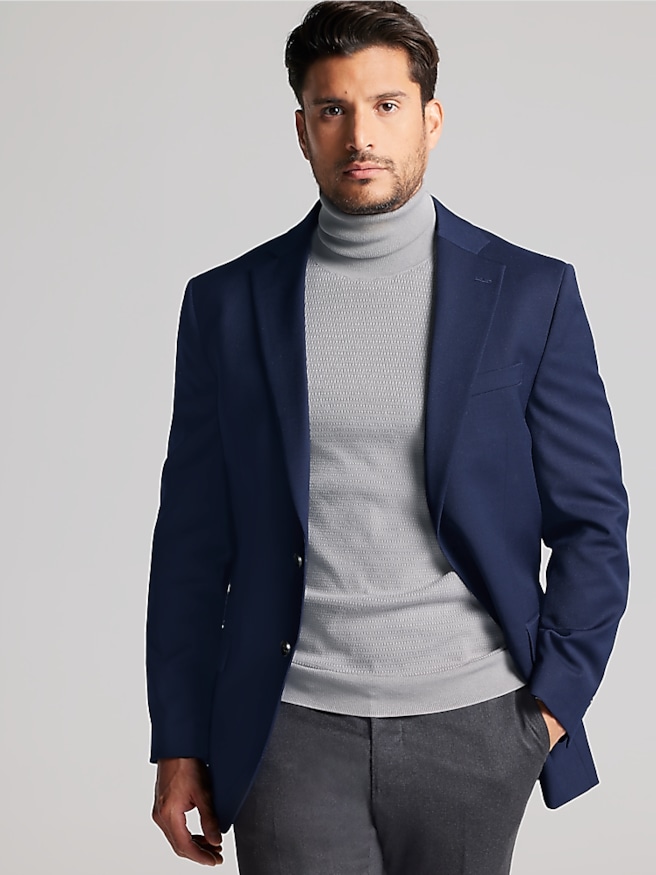
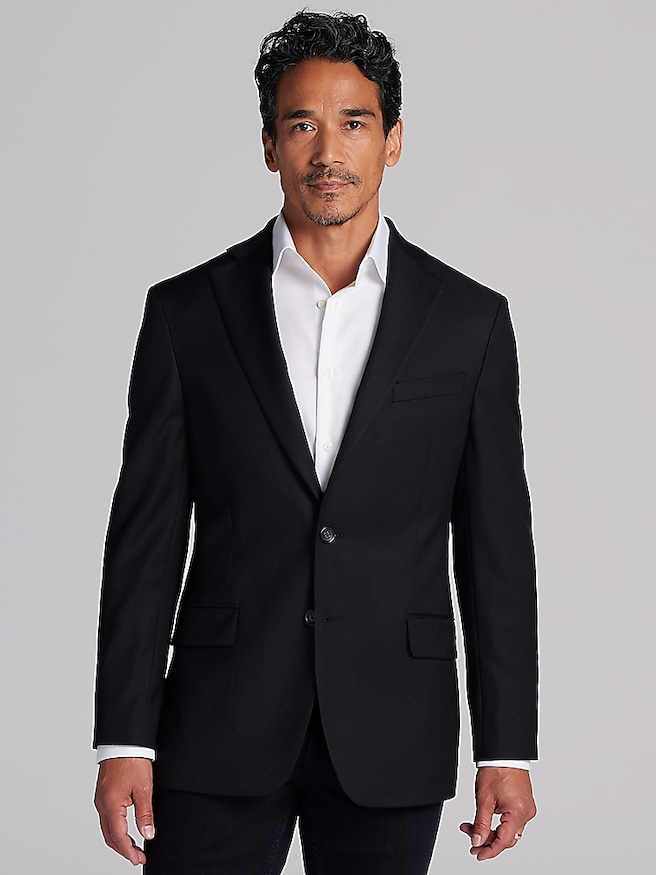
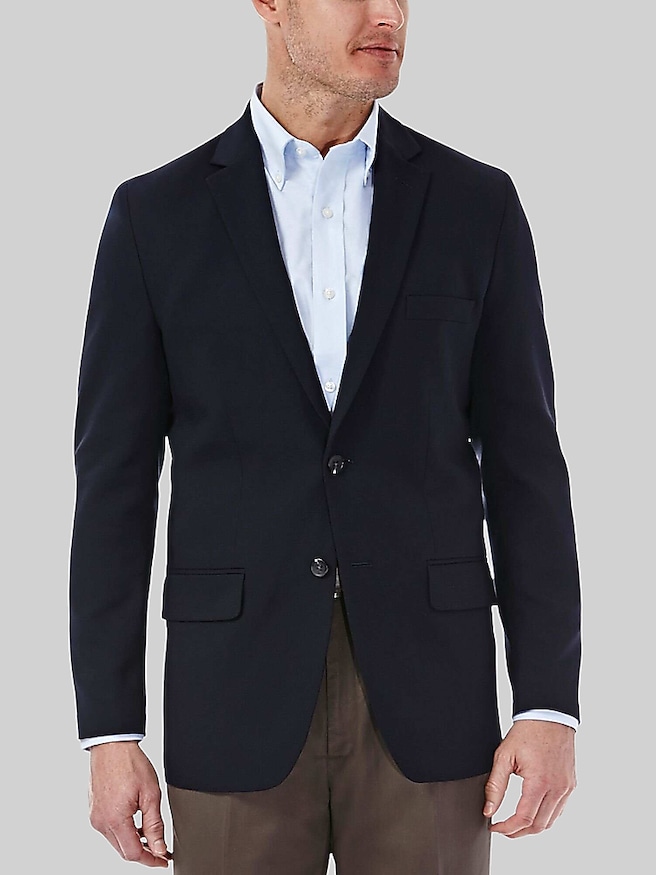
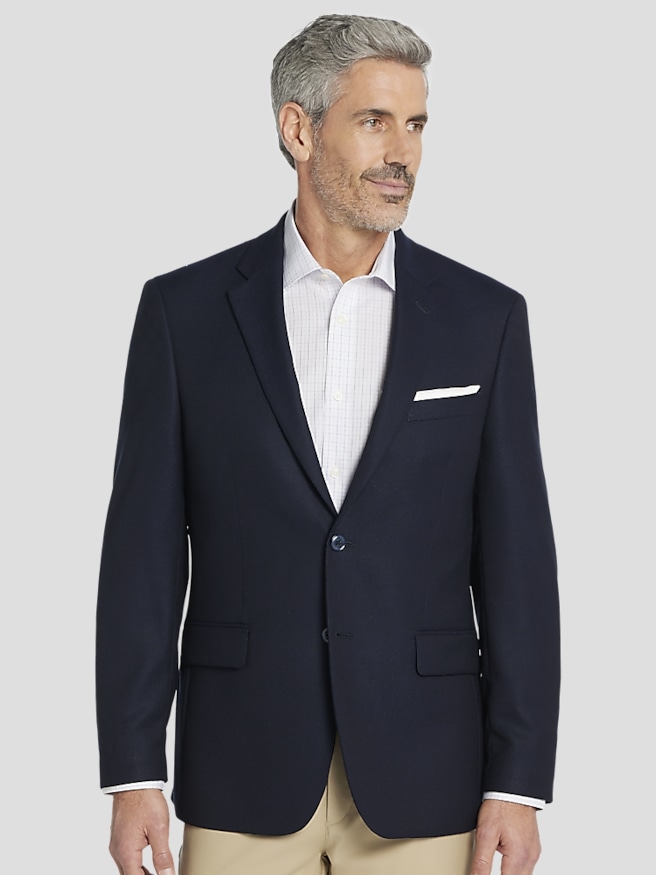
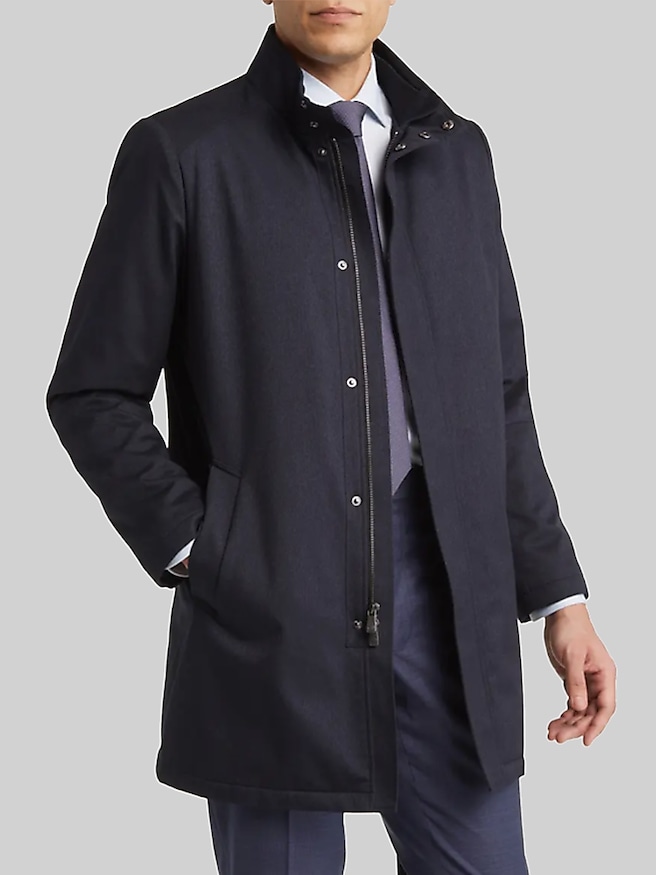
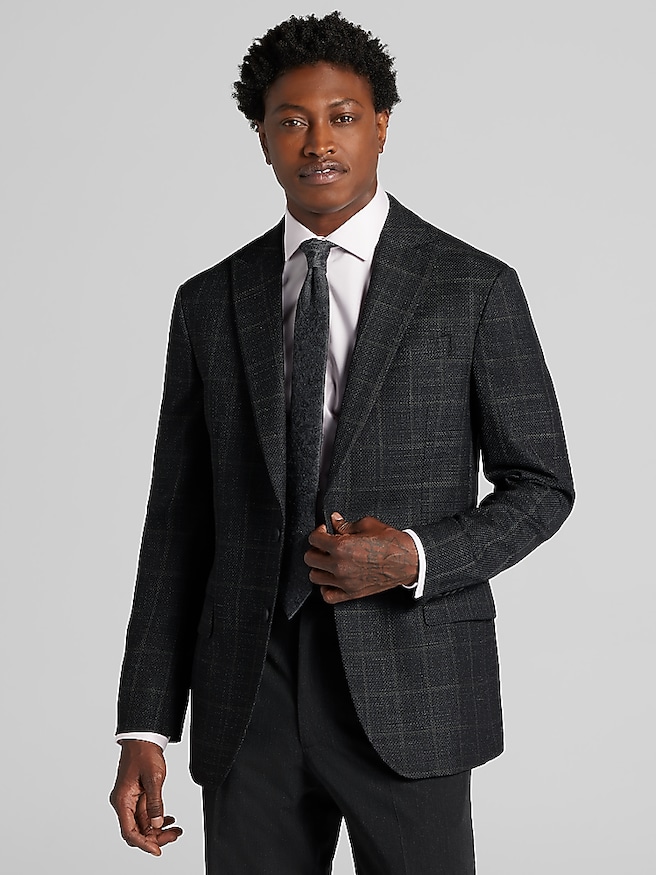
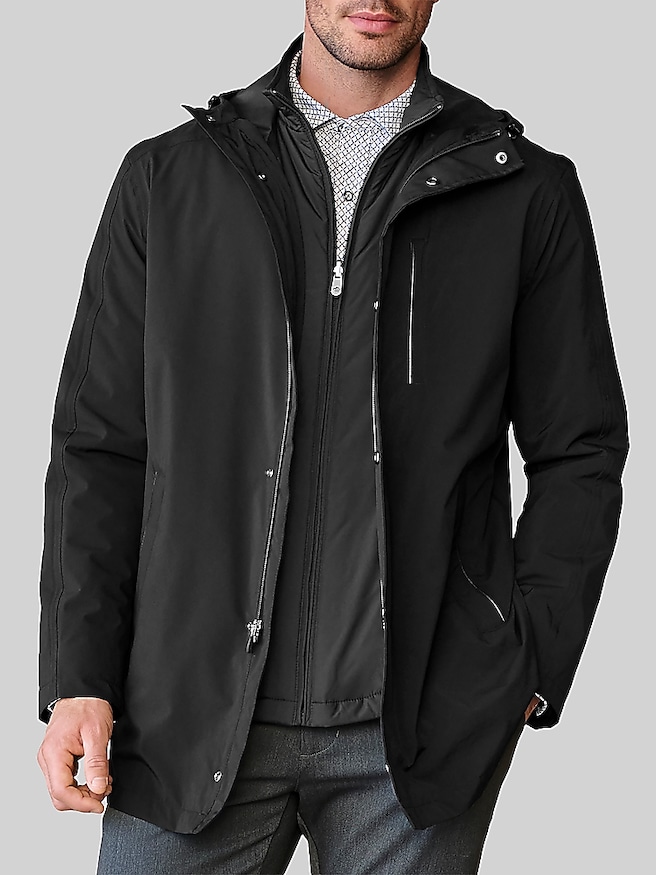
Structured coats are tailored outerwear defined by a clear shoulder line, a shaped body, and fabric with enough substance to hold a deliberate silhouette. Rather than falling loosely from the neck, they create a defined outline through the chest, waist, and hem. That structure can come from the cut of the fabric, internal support, carefully placed seams, or a combination of all three; it does not necessarily mean heavy shoulder padding or a stiff feel. Set-in sleeves, crisp lapels, and a balanced button placement help establish the polished appearance associated with this style. Single-breasted fronts typically create a clean vertical line, while double-breasted designs add an overlapping front and a more pronounced frame across the torso. Notched lapels offer familiar versatility, and peak lapels can give the same basic silhouette a more formal character. These details make structured outerwear a natural companion to tailoring, but its usefulness extends beyond suits. Over a fine-gauge sweater and straight-leg trousers, a defined coat brings the outfit into focus without requiring a tie or matching jacket. With dark denim and leather shoes, it provides a sharper finish while keeping the overall effect approachable. Length also changes the impression: a mid-thigh hem can feel streamlined and easy to move in, while a knee-length silhouette creates a longer, more substantial line. Neither length is inherently more flattering; the relationship between the shoulders, waist, and hem matters more than a single measurement. A coat worn over a suit should generally cover the jacket beneath it, keeping the layered outline intentional rather than exposing an uneven strip of fabric. Traditional shades such as navy, charcoal, black, and camel allow the shape to remain the focal point, while subtle texture adds depth without competing with the rest of an outfit. The result is outerwear suited to office entrances, dinner reservations, and occasions when the first impression begins before the coat comes off.
Fabric gives a structured coat much of its character, influencing how sharply it holds its lines, how it moves, and how much attention it needs over time. Wool is valued for its natural resilience and ability to recover from modest creasing, making it well suited to tailored shapes. A dense wool cloth can produce a crisp outline, while a softer weave may offer a gentler interpretation of the same silhouette. Wool blends combine fibers to achieve particular balances of texture, strength, weight, and shape retention, although the finished result depends on the weave and construction as much as the fiber percentages. Twill contributes a recognizable diagonal texture and can provide the body needed for a defined profile. Smooth surfaces emphasize clean seams and precise edges; brushed finishes soften their appearance without necessarily changing the underlying structure. Within the broader category of Quality Coats, structured designs are distinguished by this relationship between fabric and tailoring, not simply by thickness or a firm hand. Linings can help the coat slide over jacket sleeves and knitwear, while internal support may help lapels and fronts maintain their intended shape. Fit needs to account for those layers. Across the upper back, there should be room to reach forward without strong pulling, and the front should close without strained buttons or folds radiating from the fastening point. A defined waist can look precise without fitting tightly against the body. Shoulder seams should sit in a position consistent with the intended cut, rather than collapsing noticeably beyond the frame or pinching inward. Sleeve length should be assessed with the arms relaxed and with the clothing likely to be worn underneath. Even a beautifully shaped coat loses some of its ease if jacket sleeves bunch inside it or the armholes restrict ordinary movement. Sitting at a restaurant table, reaching for a bag, or stepping into a car provides a more realistic sense of comfort than standing perfectly still. Good structure supports the wearer’s outline while leaving enough freedom for the day’s ordinary gestures.
Lasting satisfaction with structured coats also depends on details that are easy to overlook when attention is focused on the silhouette. Secure buttons, neatly finished seams, smoothly attached linings, and well-supported pocket openings all contribute to dependable wear. Lapels should lie as intended, and the front edges should remain balanced when the coat is fastened. A vent can allow the hem to open naturally during walking or sitting, while pocket placement affects both appearance and convenience. Carrying bulky objects in the pockets can distort an otherwise clean line, so keeping heavier belongings in a separate bag helps preserve the intended shape. Care should follow the garment’s label, especially when the outer fabric, lining, and internal structure require different handling. Professional cleaning may be specified for tailored wool styles, but frequent cleaning is not automatically better; prompt attention to marks and routine gentle brushing, when appropriate for the fabric, can help limit unnecessary treatment. A broad, supportive hanger helps maintain the shoulders, and space between garments reduces crushing through the lapels and sleeves. Hanging the coat between wears also gives minor creases a chance to relax. Direct heat, aggressive pressing, and improvised stain treatments can affect both the surface and the internal construction, making fabric-specific care worthwhile. These practical considerations are especially relevant for someone who wears tailored clothing regularly, travels for business, or wants one outer layer that feels appropriate across professional and social settings. Structured coats can also make thoughtful gifts for a graduate starting an office role, a partner refreshing an established wardrobe, or someone who appreciates clothing with a defined, composed silhouette. Fit preferences matter in that setting: a recipient who layers over jackets may need a different balance of room and shape than someone who usually wears lightweight knitwear. The most useful choice reflects those habits rather than an abstract idea of formality. With suitable fabric, comfortable proportions, and consistent care, a structured coat can remain a dependable finishing layer through repeated wear, lending definition to everyday clothes and complementing the precision of dressed-up looks.