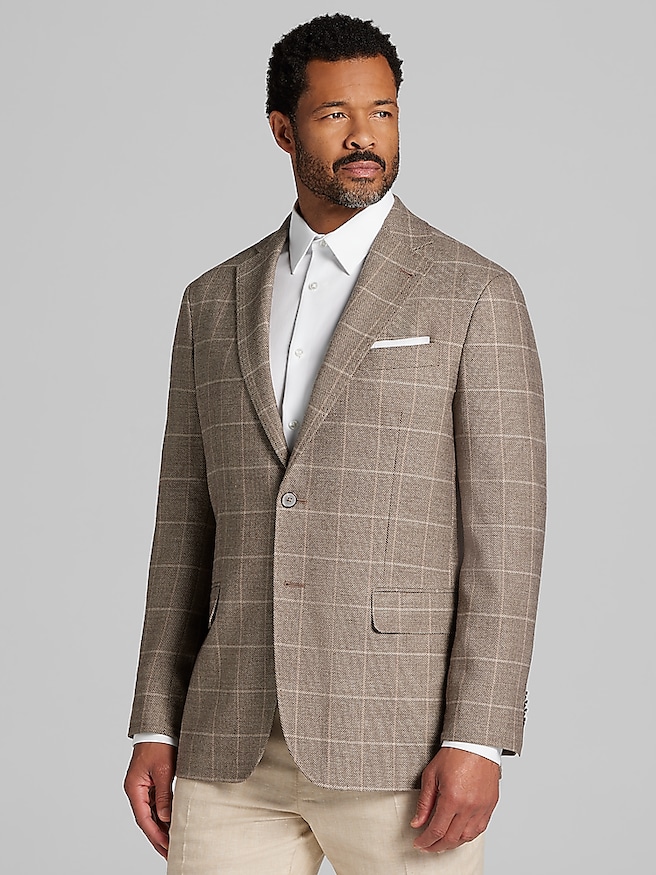
Check coats are patterned outerwear defined by intersecting lines or contrasting shapes that form a repeated design across the fabric. Their appeal lies in the balance between a familiar coat silhouette and a pattern with enough character to stand apart from solid outerwear. Common designs include windowpane, houndstooth, glen plaid, and tartan, each with a distinct scale and visual rhythm. Windowpane checks use widely spaced lines for an open, uncluttered appearance. Houndstooth creates a tighter, broken-check effect that can read almost like texture from a distance, while glen plaid combines smaller checks with larger intersecting lines. Tartan usually brings together several bands of color in a more noticeable grid. Smaller, low-contrast patterns tend to feel understated; larger checks and sharper color contrasts give the coat a stronger presence. Charcoal, navy, brown, and gray combinations coordinate easily with tailored trousers, dark denim, and knitwear, making check coats useful for office commutes, dinner reservations, and occasions that call for a polished arrival. A gray check over a navy suit adds interest without requiring another bold pattern underneath. A brown check worn with a cream sweater and dark jeans creates a more relaxed combination while retaining a sense of structure. When a coat carries the main pattern, solid layers help its lines remain clear, though a finely striped shirt can also work when its scale differs noticeably from the check. The overall effect depends as much on contrast as color: a subtle grid can blend into an everyday wardrobe, while a broad windowpane can become the defining feature of an outfit. For those drawn to cleaner silhouettes alongside patterned outerwear, Modern Coats offers a related style direction. The strongest choice is one that feels at home with the clothes beneath it, whether that means business tailoring or a favorite pair of straight-leg jeans.
Fabric determines much of a check coat’s feel, drape, and usefulness. Wool is valued for its warmth, natural resilience, and ability to hold a tailored shape, although the weight and density of the cloth matter as much as the fiber name. A substantial wool fabric can give an overcoat a smooth, defined outline, while a brushed surface softens the pattern and adds a more tactile finish. Wool blends may combine that character with other fibers chosen for durability, softness, or easier handling; the exact composition is more informative than the word “blend” alone. Polyester and other synthetic fibers can contribute strength and shape retention, but warmth still depends on the complete construction, including the lining and any insulation. Cotton-rich checked fabrics generally offer a different hand and weight from dense wool, so their suitability depends on the conditions and the layers underneath. A check pattern itself says nothing about weather protection, and a wool coat should not be assumed to provide the same protection as outerwear specifically designed for rain. Lining also affects everyday comfort. A smooth lining helps the coat slide over a suit jacket or sweater without catching at the sleeves, while additional insulation can add warmth and bulk. For winter use, coverage through the seat, a collar that sits comfortably when raised, and a front closure with adequate overlap can be meaningful details. For frequent driving or train travel, a less cumbersome length may feel easier to manage. Construction deserves equal attention: secure buttons, neatly finished buttonholes, reinforced pocket openings, and even seams support repeated wear. Pattern alignment at prominent seams and pockets can contribute to a cleaner appearance, though some designs intentionally change the check’s direction at selected details. A back vent helps the hem move naturally when walking or sitting. These details are especially noticeable in a coat worn often, when ease of movement and reliable finishing become more important than the first impression alone.
Fit brings the fabric and pattern together. A check coat intended to cover tailoring needs enough room for a jacket through the chest, shoulders, and upper arms without looking oversized when fastened. Trying the same size over only a thin shirt can give a misleading impression if the coat will usually cover heavier layers. In a well-balanced fit, the collar rests comfortably near the neck, the front closes without pulling into an X around the buttons, and the sleeves allow an easy reach toward a steering wheel or bag handle. Shoulder placement depends on the design: a structured coat generally follows the shoulder line, while a relaxed or raglan style distributes volume differently. Length changes both proportion and practicality. A longer coat provides more coverage and a continuous view of the check, while a shorter silhouette exposes more of the outfit underneath and can feel less restrictive in a car. Care should follow the garment label rather than assumptions about a particular fiber. Some coats require professional dry cleaning, while others permit a specified washing method; linings, trims, and internal structure can affect those instructions. Between cleanings, gentle brushing with a suitable garment brush can remove surface dust, and a sturdy, shaped hanger helps support the shoulders. Pockets emptied before hanging are less likely to stretch, and a damp coat should air-dry away from direct heat before being stored. Breathable storage, prompt attention to loose buttons, and careful handling of snags can help preserve both the cloth and its appearance. Check coats can also make thoughtful gifts for someone who regularly wears tailored clothing, enjoys textured fabrics, or wants outerwear with more personality than a solid color. Familiarity with the recipient’s preferred fit, usual layers, and existing wardrobe colors is more useful than choosing a pattern on appearance alone. A restrained check can become an everyday signature; a larger pattern suits someone comfortable making the coat the focal point. In either case, lasting appeal comes from comfortable proportions, appropriate fabric, and a design that earns repeated wear.