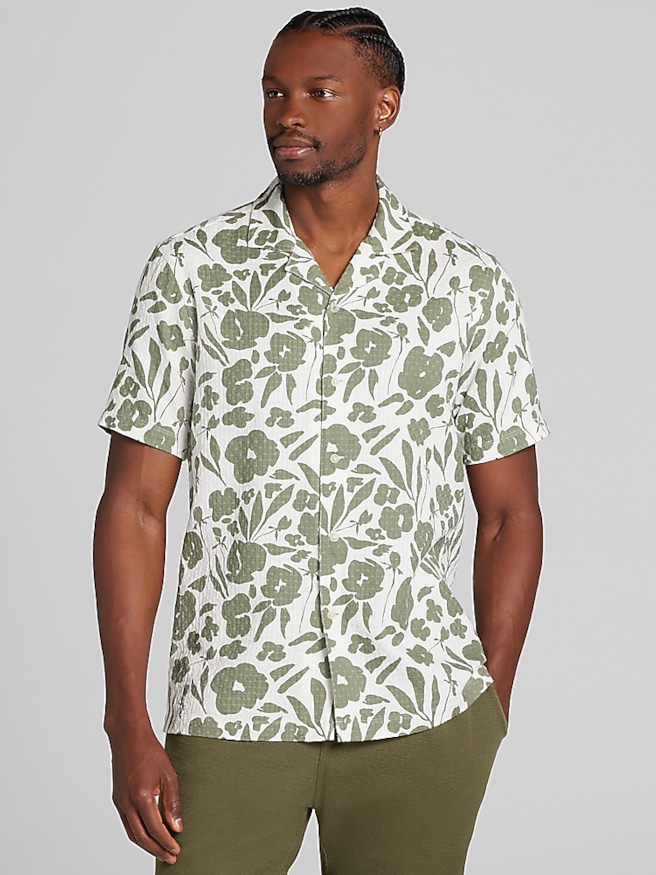
Spring floral shirts are patterned shirts with botanical designs that bring color and character to spring outfits, from relaxed weekend combinations to dressed-up looks for social occasions. The patterns can range from tiny scattered blossoms to broad leafy arrangements, with the scale, spacing, and background color shaping how a shirt looks once it is on. A small floral pattern against navy or charcoal can feel understated, especially beneath a solid jacket, while larger flowers on an ivory or pale blue background create a more noticeable focal point. Neither approach needs complicated styling. Solid chinos, clean dark denim, or tailored trousers give the print room to stand out without competing with it. Pulling one color from the pattern into the pants or jacket helps the outfit feel connected; a shirt with olive leaves, for example, works naturally with olive or stone chinos. For a family brunch or an afternoon gathering, an open collar and neatly finished sleeves can strike the right balance between comfortable and considered. For a spring wedding with a relaxed dress code, a restrained floral print can add personality beneath a sport coat, though the invitation should determine whether a patterned shirt is appropriate. Floral shirts are not a substitute for formal attire when a specific dress code calls for it. The mood also changes with the details: a structured collar creates a sharper frame beneath a jacket, while a softer collar suits an easygoing outfit. Short sleeves emphasize the casual side of the pattern, and long sleeves offer more flexibility for tucked-in looks and layered combinations. The most versatile print is often one that works with the colors already in the closet rather than one that requires an entirely new outfit. A familiar blue-and-white palette can make floral patterns approachable for someone who usually wears stripes or checks, while richer greens, pinks, and warm earth tones offer a more expressive direction.
Fabric and fit have as much influence on a spring floral shirt as the pattern itself. Cotton is a familiar choice for its comfortable feel and breathability, although the weave and fabric weight determine whether it feels crisp, smooth, or softly textured. Cotton poplin generally has a cleaner surface that gives printed details clear definition, while more textured constructions can soften the visual effect. Linen brings a distinctive natural texture and an airy feel, with wrinkles that are part of its relaxed appearance. A linen blend may balance that texture with a different level of softness or structure, depending on the other fibers. Blended fabrics that include stretch can allow easier movement, but the fiber percentages and overall construction matter more than a stretch label alone. Lightweight does not automatically mean sheer, and soft does not automatically mean durable; fabric density, finishing, and stitching all contribute to how a shirt performs over time. For a comfortable fit, the shoulder seams should sit close to the shoulder edges, and the front should lie smoothly without pulling between the buttons. Reaching forward, sitting down, and bending the elbows should not make the shirt feel restrictive across the back or upper arms. A trim cut creates a close, defined outline, while a roomier cut leaves more space through the chest and waist. Neither should rely on excess tightness or oversized shoulders to achieve its shape. Length matters, too. A shirt intended to stay tucked needs enough fabric to remain secure when moving, while an untucked style should finish at a length that looks deliberate rather than hanging far below the seat. Under a jacket, smooth sleeves and a comfortable collar help prevent bunching. Worn alone, a clean drape lets the pattern remain the focus. These details become especially noticeable through a full day that includes driving, sitting through a meal, and spending time on foot.
Thoughtful care helps floral shirts retain their color, shape, and surface finish through repeated wear. The care label is the starting point because cotton, linen, stretch blends, and decorative finishes can require different treatment. When machine washing is permitted, washing with similar colors and using the recommended water temperature can help limit unwanted color transfer and fading. Turning a printed shirt inside out may reduce surface abrasion, while avoiding an overloaded washer gives the fabric more room to move without excessive friction. Follow the drying instructions rather than assuming every lightweight shirt can tolerate high heat. Removing a shirt promptly after drying and smoothing the collar, placket, and hem can make the next wear easier. If ironing is appropriate, use the temperature recommended for the fabric and take extra care around printed surfaces; pressing from the reverse side may be preferable when the label allows it. A sturdy shirt also depends on construction details such as even stitching, secure buttons, and neatly finished seams, particularly at areas that receive regular stress. Between wears, a suitable hanger helps preserve the shoulder shape, and addressing a small loose thread or button early can prevent a more disruptive repair later. For gifting, floral shirts work best when the recipient’s usual size, preferred fit, and comfort with pattern are already familiar. Someone who favors quiet colors may get more use from a closely spaced print in blue or gray, while someone who enjoys expressive dressing may appreciate a larger botanical design. Think about where the shirt will be worn: casual dinners, weekend trips, spring celebrations, or everyday settings that welcome a patterned button-front style. For a broader look at the seasonal category, Spring Shirts provides a natural point of comparison beyond floral patterns. The lasting appeal of a floral shirt comes from the combination of a wearable print, comfortable fabric, and a fit that feels good well beyond the first outing.