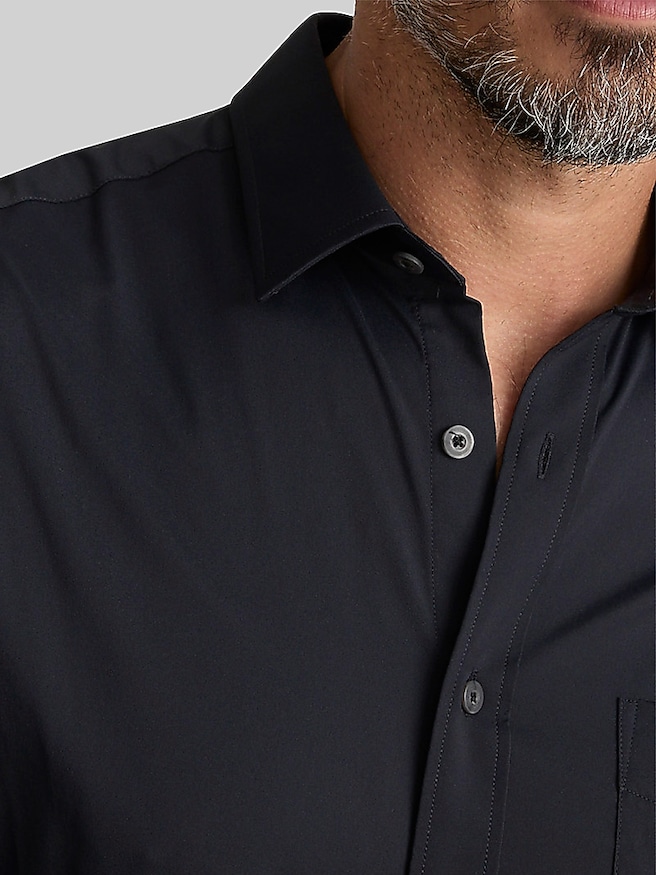
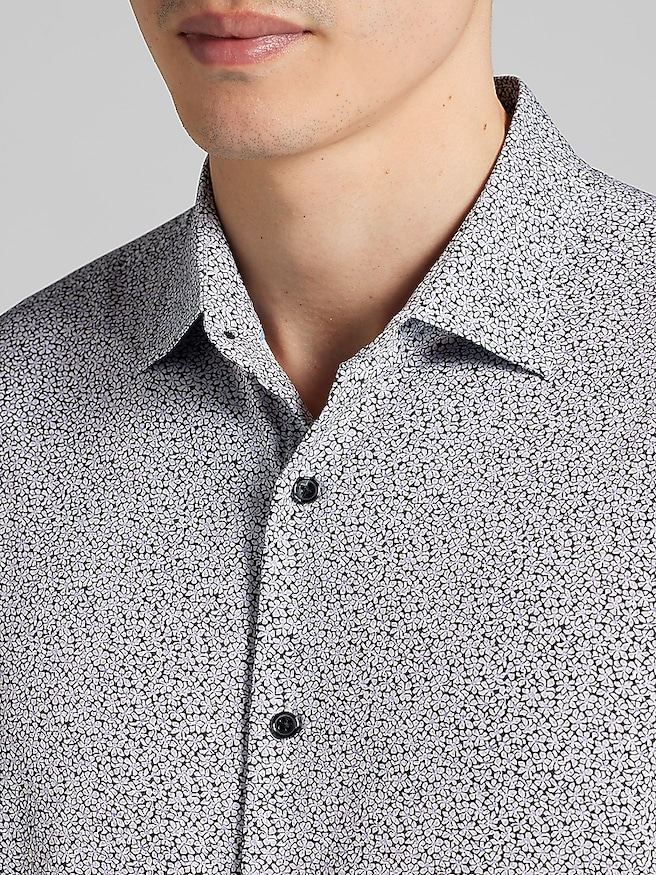
Button down floral shirts bring pattern and personality to a familiar menswear staple, combining the structure of a collared shirt with the movement of blossoms, leaves, and botanical linework. The effect depends on more than the flowers themselves. A small repeating print in closely related colors can read almost like texture from a distance, while larger blooms against a contrasting background make the shirt the clear focal point of an outfit. Navy, charcoal, and other deep grounds lend floral patterns an understated character; softer backgrounds create a more open, graphic look. Some designs use detailed botanical illustrations, while others reduce petals and stems to loose shapes that feel relaxed rather than ornate. A button-front closure makes these shirts easy to wear tucked, untucked, or open over a plain T-shirt, depending on their cut and the setting. Strictly speaking, a button-down collar has small buttons securing its points to the shirt, while a button-front shirt may have an unfastened point or spread collar. That distinction affects the finished look: secured collar points sit neatly under a casual jacket, while an open collar can give the same floral pattern a less structured feel. Long sleeves add another styling option through adjustable cuffs and a clean line beneath a blazer; short sleeves emphasize the print without adding extra layers. For a dinner reservation, a birthday gathering, or a workplace that welcomes expressive business-casual clothing, a floral shirt can supply visual interest without requiring a complicated outfit. Solid trousers and straightforward shoes usually provide enough balance. The pattern does not need to compete with a patterned jacket, a bright tie, and several accessories at once. Its appeal is the combination of recognizable tailoring and distinctive detail: a shirt that feels considered, but still comfortable enough for conversation around a table or an afternoon spent visiting friends.
Fabric and fit determine whether that visual appeal translates into a shirt that feels good through a full day of wear. Cotton is a common choice for woven shirts because it feels familiar against the skin and can provide a crisp surface for printed detail. The weave matters as much as the fiber: a smooth, tightly woven fabric gives fine stems and petals a defined appearance, while a textured weave creates a more casual finish. Linen contributes visible texture and a naturally relaxed character, including creasing that becomes part of the look rather than a flaw. Rayon or viscose can offer a softer drape, allowing larger floral shapes to move with the fabric instead of standing rigidly away from the body. Blends may combine qualities such as softness, resilience, or easier maintenance, and a small amount of stretch can add flexibility when reaching, sitting, or driving. None of those characteristics replaces a good fit. Shoulder seams should sit close to the natural shoulder edge, and the front should lie smoothly without pulling between the buttons. Enough room through the chest and upper back helps the print retain its shape instead of stretching across areas of tension. A trim cut can create a clean outline beneath a jacket, while a roomier cut suits someone who prefers more ease through the torso. Collar comfort matters even when the top button stays open, and long sleeves should allow the cuffs to rest near the wrist without covering the hands. Hem length also shapes how the shirt works in an outfit. A shorter hem can look balanced untucked, while a longer shirttail generally stays secured more comfortably inside trousers. Pattern placement deserves a glance as well: very large motifs create a different impression from evenly spaced miniature florals. The most wearable choice is often the one that suits the wearer's usual silhouette and feels natural in motion, not simply the one with the most striking print.
The strongest outfits give floral button down shirts enough space to stand out. A dark floral print with charcoal trousers creates a restrained combination for a restaurant or a casual office, while a cream-ground botanical design with clean indigo denim feels easy without looking unfinished. Picking up one quiet color from the print in the trousers or jacket ties the outfit together without matching every detail. A solid overshirt or unstructured blazer can frame the pattern, leaving just the collar and front visible; worn on its own, the shirt carries more of the outfit's personality. Botanical styling also extends to Spring Floral Shirts, a related direction for anyone drawn to blossoms, leafy details, and expressive color combinations. For gifting, floral shirts can suit a father, brother, partner, or friend who already enjoys patterned clothing, especially when the colors connect with pieces he wears often. Familiar sizing, a preferred sleeve length, and a comfortable cut usually matter more than choosing the boldest design. Long-term wear depends on both construction and care. Even stitching, securely attached buttons, neatly finished seams, and fabric that feels substantial for its intended drape are useful details to consider. A softer, flowing shirt should not be judged by the same stiffness expected from a crisp woven style. Care instructions remain the best reference because fiber blends, finishes, and print methods vary. Turning a printed shirt inside out for washing can help limit surface abrasion, and avoiding an overloaded machine gives the fabric room to move without excessive friction. Any drying or ironing method should follow the garment label, particularly for fabrics that may shrink or react poorly to heat. Prompt attention to a loose button or a small seam opening can prevent a minor issue from becoming a larger repair. Hung neatly or folded without crushing the collar, a floral shirt keeps its shape between wears and remains an easy way to add character to otherwise simple clothing.