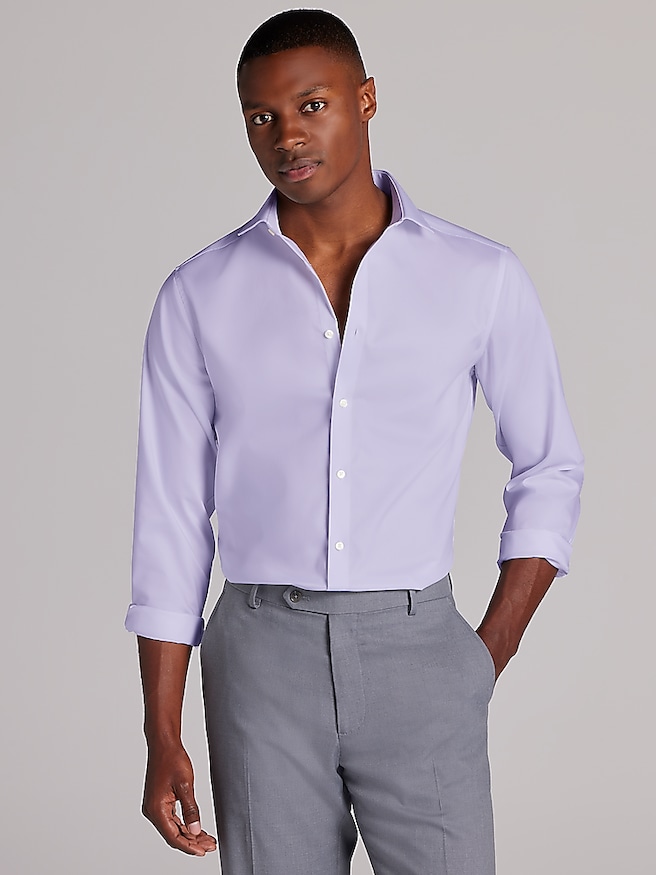
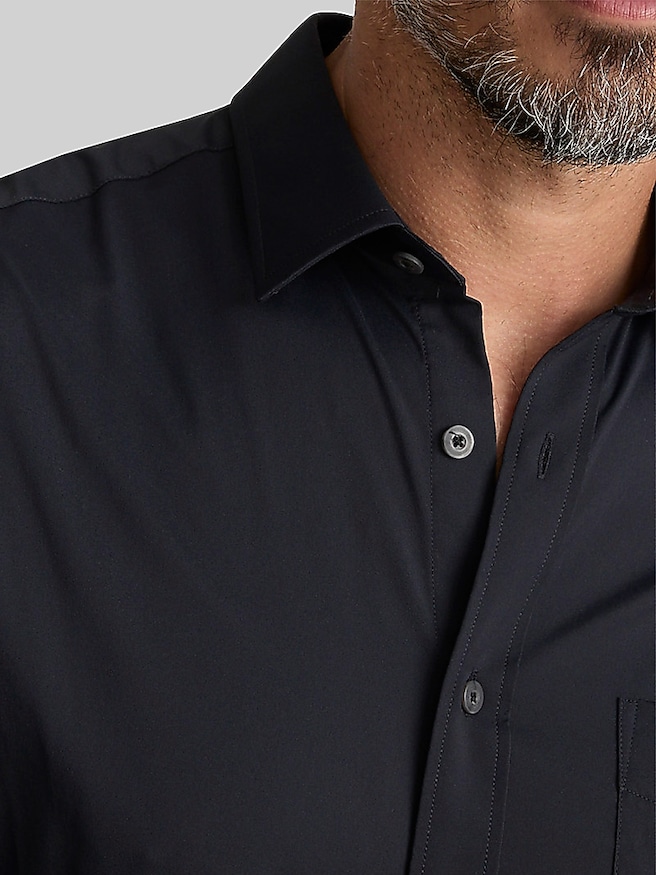
A button down earns its place in a wardrobe by looking finished without feeling overly formal. The defining detail of a traditional button-down shirt is its collar: small buttons secure the collar points to the shirt, helping them stay neatly positioned beneath a jacket or on their own. That detail lends a relaxed character to an otherwise polished shape, making button downs useful for office days, dinner reservations, family gatherings, and weekends with more on the calendar than errands. The full button front also gives the shirt flexibility in how it is worn, from tucked into tailored trousers to left untucked over jeans when the hem is designed for it. Fabric makes a noticeable difference in the result. Cotton offers a familiar, comfortable feel, while an Oxford weave adds visible texture and enough substance to keep the shirt from looking too delicate. Poplin has a finer, smoother surface that works well with clean-lined trousers, and twill brings a subtle diagonal texture with a softer drape in many constructions. Cotton blends can combine that familiar feel with other performance characteristics, depending on their composition and finish. A small amount of stretch may make reaching across a desk or sitting through a long presentation more comfortable, though the cut still matters more than any single fabric feature. The right shirt moves with the wearer without pulling across the back, opening between buttons, or gathering heavily at the waist. A shoulder seam that sits close to the edge of the shoulder usually creates a cleaner line than one that falls far down the arm. Around the neck, a comfortable collar leaves room to fasten the top button without pressure, especially when a tie is part of the outfit. These practical details explain why button downs appeal to men with different routines: a commuter who wears a jacket most days, a teacher moving between classrooms, or someone who wants a dependable shirt for dinners and social plans. Each benefits from a balance of structure, movement, and an easy-to-pair shape.
Fit shapes the overall impression as much as color or pattern. A trim cut follows the torso with less extra fabric, making it easier to tuck the shirt smoothly beneath a belt or wear it under a closely fitted jacket. A roomier cut gives more space through the chest and waist, which can feel more comfortable for broader builds or for anyone who prefers a less fitted look. Neither should require constant adjustment. Sleeves should allow the elbows to bend freely, and cuffs should sit neatly at the wrist rather than sliding over the hand. Shirt length deserves the same attention: a longer, curved hem generally stays tucked more securely, while a shorter hem can look more proportionate when worn outside the waistband. An untucked shirt that extends too far down the thigh may overwhelm the rest of the outfit, particularly with slim trousers. Color and pattern then give that fit its personality. White and light blue create a crisp foundation for navy, charcoal, tan, and denim, while deeper tones can make a simple shirt-and-trouser combination feel more deliberate. Narrow stripes often read as restrained from a distance; checks introduce a more casual rhythm; larger prints make the shirt a stronger focal point. For a more expressive option, Button Down Floral Shirts bring botanical shapes and varied color combinations to the familiar button-down silhouette. A patterned shirt tends to look balanced with solid trousers and an uncomplicated jacket, giving the print room to stand out without competing with several other details. Texture can provide interest when a print is not the preference: an Oxford surface against smooth chinos, for example, adds depth to an outfit made from just two main pieces. The level of formality still depends on the whole combination. A button-down collar suits many business-casual settings and relaxed jacket-and-tie outfits, but a more formal invitation may call for a different collar style or dress code altogether. That distinction helps keep an everyday shirt useful without asking it to serve every occasion.
Comfort over a full day also depends on the smaller construction details that are easy to overlook at first glance. A smoothly finished collar, tidy seams, and securely attached buttons contribute to a shirt that feels good against the skin and holds its shape through repeated wear. The placket should lie flat, and the cuffs should close without twisting the sleeve. Dense fabric can provide substance, but weight alone does not establish quality; the weave, stitching, and finishing all influence how a shirt wears over time. Durability is especially relevant for button downs used repeatedly for commuting, desk work, travel, or gatherings where the same shirt may need to look presentable from an afternoon meeting through an evening meal. Care requirements belong in that decision as well. The garment label is the best starting point because cotton, blended fabrics, stretch fibers, and specialty finishes can respond differently to washing, drying, and ironing. Excessive dryer heat can encourage shrinkage or shorten the life of some fibers, while leaving a shirt crumpled after laundering makes wrinkles harder to address. Promptly smoothing the collar, cuffs, and front before hanging or folding helps preserve a neater appearance. Ironing or steaming, when permitted by the care label, is particularly useful along the button placket and collar edges, where wrinkles tend to be most visible. For travel, a shirt that packs neatly and works with more than one pair of trousers can simplify dressing without making every outfit look identical. Button downs also make thoughtful gifts for a father, brother, partner, or recent graduate who is building a wardrobe for work and social occasions. A useful gift reflects the recipient’s actual habits: preferred sleeve length, usual fit, favorite colors, and whether shirts are typically tucked in or worn casually. Someone who spends most days in plain neutrals may appreciate a subtle stripe more than a bold print, while a frequent jacket wearer may value a smooth fabric that layers comfortably. Those familiar preferences often matter more than novelty, turning a well-chosen button down into a shirt that gets worn often rather than saved for an unspecified occasion.