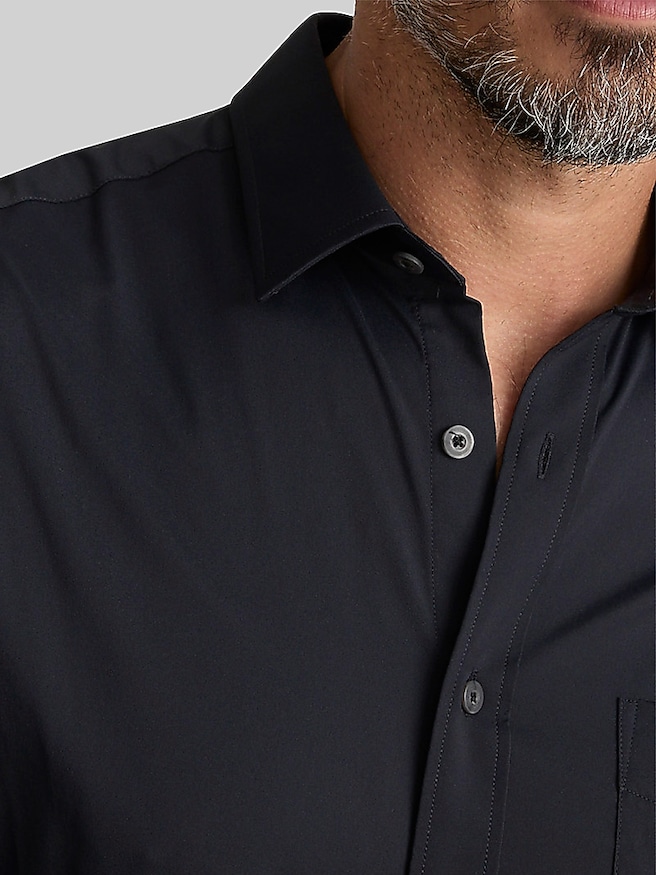
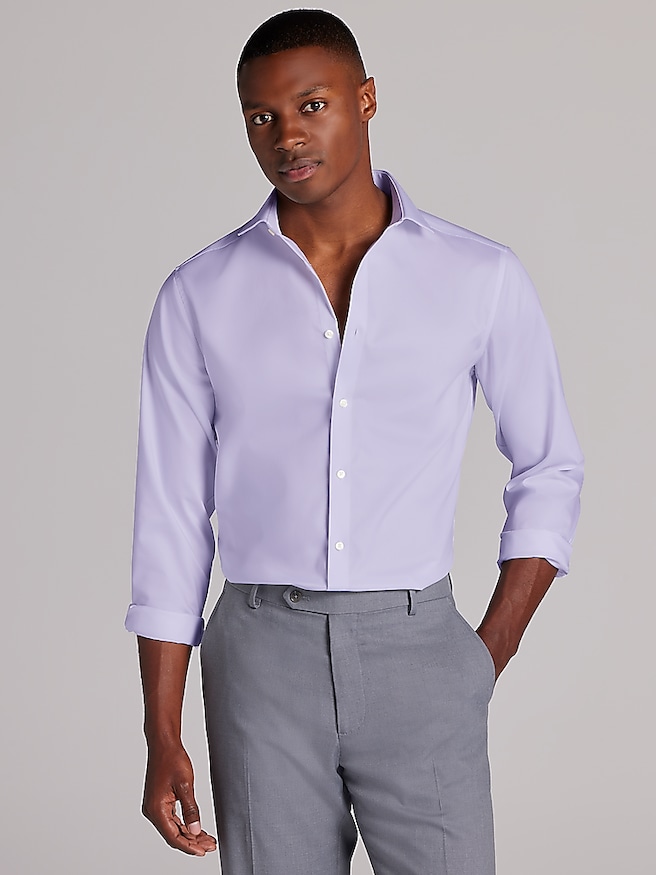
Button-down dress shirts for men bring a familiar, polished shape to workdays, dinners, and occasions that call for more than a casual shirt. The defining detail is the collar: small buttons secure its points to the shirt, helping it stay in place beneath a jacket or frame the neckline neatly when worn without a tie. That construction gives a button-down collar a slightly more relaxed character than a traditional point or spread collar, while still leaving plenty of room for a dressed-up look. A white or light blue shirt can sit comfortably beneath a navy suit for an office presentation, then work just as naturally with chinos for dinner afterward. Subtle stripes and small checks introduce pattern without dominating an outfit, especially when the jacket and trousers are solid. The scale of a pattern makes a difference; a fine stripe reads quietly from across a room, while a broader check becomes a more noticeable part of the look. For men who regularly move between meetings, client visits, and less formal settings, that flexibility makes the button-down dress shirt a useful foundation. With a tie, the collar should have enough space to accommodate the knot without pulling the points upward. Without one, a well-shaped collar helps the shirt look deliberate rather than unfinished. A soft collar roll adds dimension around the neckline, while a firmer collar creates a crisper outline. Both can work well, depending on the fabric and the level of structure in the rest of the outfit. Button-down styles are especially at home in business-casual wardrobes and relaxed tailoring, though the dress code of an occasion still matters. For a formal wedding or an event with a strict dress requirement, collar style should suit the overall attire. The appeal is not simply that one shirt can be dressed up or down, but that its details remain useful in either setting: a stable collar, an orderly front, and a silhouette that complements the wearer rather than competing with the rest of the clothes.
Fabric and fit determine how a dress shirt feels through a full day and how cleanly it sits beneath other clothing. Cotton is a familiar shirting material because of its breathability, comfortable feel, and ability to take on a pressed finish. Its character varies with the weave. Poplin generally has a smooth, relatively flat surface that works well with tailored clothing, while twill has a subtle diagonal texture and can offer a softer drape. Oxford cloth has a more visible woven texture, giving a button-down shirt a relaxed quality that pairs easily with chinos, wool trousers, or dark denim when the setting permits. Blended fabrics may bring additional wrinkle resistance or easier care, and a small amount of stretch can provide give when reaching for a steering wheel or sitting through a long meeting. Those features are worth considering alongside the feel and weight of the cloth, rather than treating any single fiber as the answer for every wardrobe. A fabric with more body may feel substantial on its own, while a finer cloth can sit smoothly under a close-fitting jacket. Neither fabric weight nor thread count alone tells the full story of quality; the weave, finishing, stitching, and intended use all contribute. Fit is equally specific. Shoulder seams should sit near the edge of the shoulders, and the chest should allow movement without buttons pulling or creating gaps. A slim fit generally follows the torso more closely, while a roomier cut provides additional space through the chest and waist. The best shape is the one that looks balanced on the wearer, not simply the one with the narrowest label. Collar sizing should allow comfortable fastening, especially for anyone who wears a tie. Sleeves should reach the wrist without covering the hand, with cuffs that stay in place when the arm bends. Shirt length matters, too: a dress shirt intended for tucking needs enough fabric to remain secure through ordinary movement, without excess material bunching around the waistband. Taken together, these proportions help the shirt look composed while still feeling comfortable.
Thoughtful finishing and consistent care help a button-down dress shirt keep its shape and remain a dependable part of a wardrobe. Even stitching, securely attached buttons, and neatly finished seams support repeated wear, particularly around the cuffs, collar, and front placket where handling is frequent. The collar buttons should be fastened without stretching the surrounding fabric, and cuffs should close comfortably whether worn alone or beside a watch. A breast pocket can add a traditional detail and a convenient place for a small essential, while a pocket-free front creates a simpler surface beneath a jacket. These differences are less about one construction being better than another and more about how the shirt will be used. Someone who wears tailored clothing most days may prioritize a smooth front and precise sleeve length; someone with a flexible office dress code may value a softer fabric and a little more room through the body. Care requirements also affect how naturally a shirt fits into that routine. The garment’s care label should determine washing, drying, and ironing methods, since fabrics, finishes, and collar construction can respond differently to heat. Prompt attention to marks around the neckline and cuffs can help keep them from becoming harder to remove. Removing a washable shirt from the dryer promptly, when its label permits tumble drying, can reduce lingering creases, while hanging it with the collar settled into shape helps maintain a tidy appearance between wears. Wrinkle-resistant and non-iron finishes may reduce maintenance, but they do not replace proper laundering or guarantee a crease-free result in every situation. For a broader view of the details that distinguish everyday shirting, Best Dress Shirts For Men offers a related place to explore. A button-down dress shirt can also be a practical gift for a graduate starting an office job, a partner refreshing a work wardrobe, or a father who appreciates familiar tailoring. Knowing the recipient’s collar size, sleeve length, preferred fit, and usual colors makes that choice more personal and more likely to become a shirt worn often.