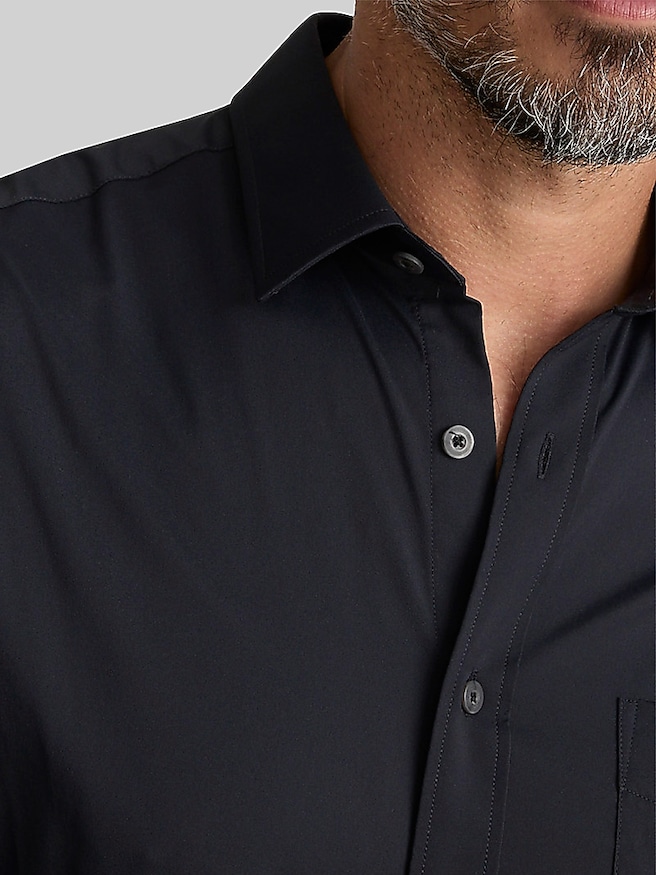
Black button down shirts for men bring a clean, understated look to outfits ranging from tailored office clothing to dark denim and leather sneakers. The color gives the shirt a strong visual presence without relying on a pattern, making the shape of the collar, the line of the shoulders, and the finish of the fabric especially noticeable. Worn beneath a charcoal jacket, a black shirt creates a close-toned combination that feels polished without being overly conspicuous. Paired with stone chinos, it creates sharper contrast and a more relaxed impression. That flexibility makes black a useful choice for someone whose day might include a client meeting followed by dinner, or for someone who prefers a small wardrobe of pieces that work together easily. Fit determines much of that versatility. A shoulder seam that sits close to the edge of the shoulder helps the sleeves hang cleanly, while enough room through the chest keeps the front placket from pulling when sitting or reaching. Slim fits generally create a closer silhouette; classic fits typically allow more space through the torso. Neither should feel restrictive across the upper back or leave the buttons under visible tension. Sleeve length matters, too: cuffs should rest near the wrist rather than cover the hand, with enough room to accommodate a watch comfortably. For tucked-in wear, sufficient shirt length helps keep the hem secure through a full day of movement. A shorter hem can look more balanced when worn untucked, particularly with jeans or casual trousers. Collar construction also shapes the overall effect. A true button-down collar secures its points with small buttons, giving the neckline a neat, slightly relaxed character. Other button-front styles may have collars better suited to a tie or a more structured jacket. The most useful choice is one that fits the wearer’s routine as naturally as it fits the body, whether that means regular office wear, evenings out, or a dependable shirt for occasions that call for an intentional outfit.
Fabric gives a black shirt much of its character, even when the color appears simple at first glance. Smooth cotton poplin has a crisp surface that works well with tailored trousers, while an Oxford weave adds visible texture and a more casual feel. Twill can provide a subtle diagonal pattern and a fluid drape, depending on its weight and construction. These distinctions become clear in everyday settings: a smooth shirt can look sharp beneath a suit jacket, while a textured weave can keep an open-collar outfit from feeling too stark. Cotton is often valued for its familiar feel and breathability, though wrinkle resistance, softness, and drying time vary with the weave and any finishing treatments. Blended fabrics may offer easier upkeep, and a modest amount of stretch can make reaching, driving, or sitting through a long dinner more comfortable. Stretch is not a substitute for the right size; a shirt that fits properly should allow movement without relying on the fabric to remain continuously pulled tight. Fabric weight deserves attention as well. A lighter weave may drape closer to the body, while a more substantial one can hold a defined shape through the collar and front. Opacity affects how neatly the shirt works with an undershirt, particularly under bright indoor lighting. With black fabric, surface finish matters as much as weight: a matte appearance tends to feel understated, while a slight sheen can give an outfit a dressier edge. Construction details contribute to durability and a tidy appearance over repeated wear. Even stitching, securely attached buttons, well-finished seams, and a placket that lies flat all support the shirt’s everyday usefulness. Collars and cuffs receive frequent handling, so their structure and finish deserve particular attention. A black shirt need not feel stiff to look polished; the best balance is enough structure to hold its shape and enough flexibility to feel comfortable through the wearer’s normal activities.
Styling a black shirt is often a matter of balancing contrast, texture, and the formality of the occasion. Charcoal trousers and a dark belt create a restrained combination for an evening reception, while medium-blue jeans and clean footwear make the same color feel less formal. An all-black outfit can look especially cohesive when the fabrics have distinct surfaces, such as a smooth shirt with textured trousers, rather than competing shades and finishes that appear unintentionally mismatched. A jacket adds structure, but the shirt should still look complete when the jacket comes off: a flat placket, tidy collar, and appropriate hem length make that transition easy. For occasions where a tie is expected, collar shape and tie proportions matter, and a subtle pattern or texture can provide separation against the dark shirt. A black button down is not automatically appropriate for every formal dress code, so the event’s requirements remain more important than the color alone. Within the broader category of Button Down Dress Shirts for Men, black offers a distinctive alternative to lighter neutrals for people who favor darker outfits or want stronger contrast with their trousers. It can also make a practical gift for a partner, parent, graduate, or friend who already wears button-front shirts regularly. Knowing the recipient’s usual fit, neck size, and sleeve length is more useful than choosing by color alone, especially when the shirt will be worn with tailored clothing. Thoughtful care helps preserve its appearance. The care label should determine washing, drying, and ironing methods, since cotton, blends, and finished fabrics can require separate approaches. Washing with similar dark colors, turning the shirt inside out when appropriate, and avoiding unnecessary heat can help limit visible fading and surface wear. Removing lint before dressing keeps black fabric looking crisp, particularly beneath bright lights. Pressing or steaming according to the label can restore a smooth front and clean collar line, while storage on a suitable hanger helps prevent deep creases between wears. With attention to fit, fabric, and upkeep, a black shirt can become a reliable part of a wardrobe rather than a piece reserved for one particular occasion.