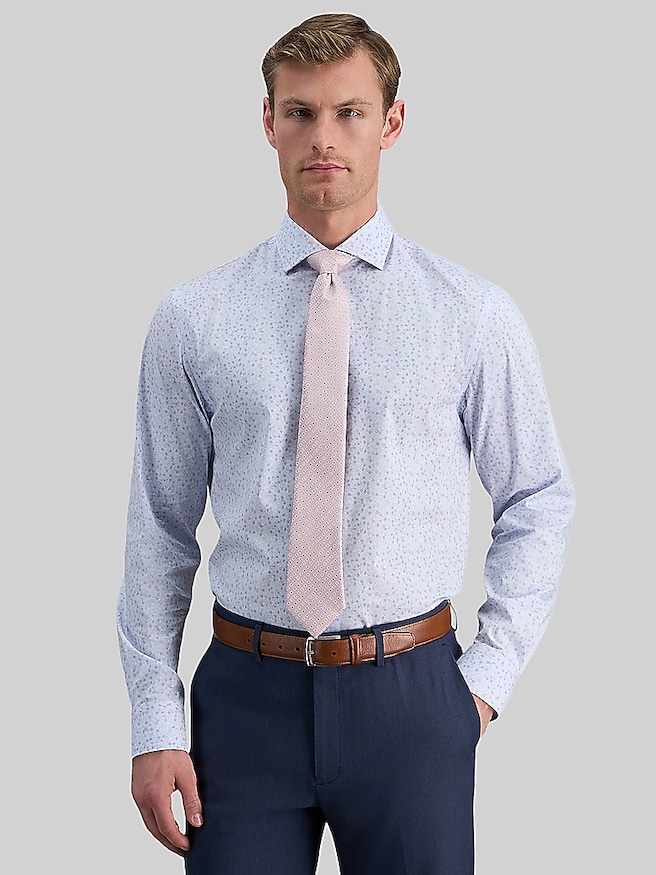
Floral spring shirts bring botanical prints, fresh color, and a little personality to everyday dressing. Typically designed as collared, button-front shirts, they range from understated patterns with tiny scattered blossoms to larger designs with leafy stems and expressive blooms. That variety makes floral shirts useful for more than a vacation outfit: a restrained print can sit comfortably beneath a blazer, while a bolder pattern can give a simple pair of chinos a distinct point of view. For men who usually wear solid colors or stripes, a small floral motif on a navy, white, or pale blue background offers an approachable change. Larger flowers, contrasting outlines, and richer colors create a more noticeable look without requiring much else in the outfit. Print spacing matters, too. An open pattern with plenty of visible background often feels quieter than a dense, allover design, even when both use similar colors. Spring florals frequently draw on soft pink, green, lavender, and blue, but darker backgrounds can make those shades easier to coordinate with familiar trousers and jackets. Short sleeves lend themselves to casual lunches, outdoor celebrations, and relaxed travel days; long sleeves offer more coverage and can look polished beneath a lightweight sport coat. Collar shape adds another distinction. A button-down collar generally has a casual character, while a structured spread collar can support a dressier outfit when the fabric and overall construction are appropriate. An open camp collar creates a relaxed neckline that works especially well with an untucked silhouette. For a spring wedding with a relaxed dress code, a fine-scale floral shirt with tailored trousers can feel festive without competing with the occasion. At a backyard gathering, a larger print paired with solid shorts has an easy, unforced quality. The most versatile choice is not necessarily the smallest or brightest pattern, but one that connects with colors already present in the wearer’s wardrobe and feels comfortable in the setting where it will be worn.
Fabric and fit determine how a floral shirt feels well beyond its first impression. Cotton is a familiar choice for its softness and breathability, although its weight and weave affect whether a shirt feels crisp, airy, or substantial. A smooth cotton poplin can give a detailed floral print a clean appearance, while a textured weave adds dimension to a simpler design. Linen has a distinctive surface and an easy drape, with natural creasing that belongs to its relaxed character. Cotton-linen blends can balance those qualities, though their feel depends on the proportion of each fiber and the way the fabric is woven. Rayon and viscose often have a fluid hand that lets a shirt fall softly rather than hold a sharp shape. Polyester blends may help with wrinkle resistance and shape retention, while a small amount of stretch can make reaching, sitting, and moving more comfortable. Fiber content alone does not establish quality; fabric density, finishing, stitching, and care all influence long-term wear. At the shoulders, the seams should generally sit near the shoulder edges rather than pulling inward or dropping far down the arms, unless the cut is deliberately oversized. The chest needs enough room for the button placket to lie flat, including when seated. A slim fit follows the torso more closely, while a classic or relaxed fit allows extra space through the body. Neither should restrict a comfortable reach across a table or a bend to tie a shoe. Sleeve openings should leave room for movement without overwhelming the arm. Shirt length deserves equal attention: a shorter, balanced hem often works well untucked, whereas a longer hem is better suited to staying inside trousers. Even stitching, secure buttons, and neatly finished seams are useful construction details to examine. A floral design may disguise minor wrinkles, but it cannot compensate for a collar that feels tight or a fit that pulls across the back.
Styling floral spring shirts is often simplest when the surrounding pieces provide a calm backdrop. Stone chinos, dark denim, navy trousers, and solid-colored shorts give the print room to stand on its own. Picking up one quieter color from the shirt can make an outfit feel connected without matching every detail. For example, a white shirt patterned with blue flowers can sit naturally with navy chinos and brown loafers, while a green botanical print can work with sand-colored trousers and clean, minimal sneakers. Under a jacket, a smaller repeat generally keeps the visible section of the shirt from looking crowded. A solid pocket square, or no pocket square at all, can be a cleaner choice than adding another competing pattern. In workplaces where patterned shirts fit the dress code, restrained colors and a tidy silhouette help maintain a professional appearance; Floral Work Shirts offer a related direction for office-minded dressing. Beyond work, floral shirts can suit graduation celebrations, brunches, casual dates, and spring trips, with footwear and trouser choice doing much of the work of adjusting the outfit’s formality. They can also make a thoughtful gift for a father, partner, brother, or friend who enjoys expressive clothing, especially when the print reflects colors he already wears. A familiar sleeve length and fit are usually more useful than choosing a dramatic pattern simply for novelty. Keeping that print looking its best starts with the care label, since similar-looking shirts can have very different washing requirements. When machine washing is permitted, turning the shirt inside out and washing with similar colors can help protect its appearance. Avoiding excessive heat, following drying directions, and removing the shirt promptly can reduce unnecessary creasing and stress on the fabric. Some materials need gentler handling or professional cleaning, and ironing temperatures should match the fiber content. Thoughtful care supports both color clarity and shape, helping a well-chosen floral shirt remain an easy part of a wardrobe rather than an outfit reserved for a single occasion.