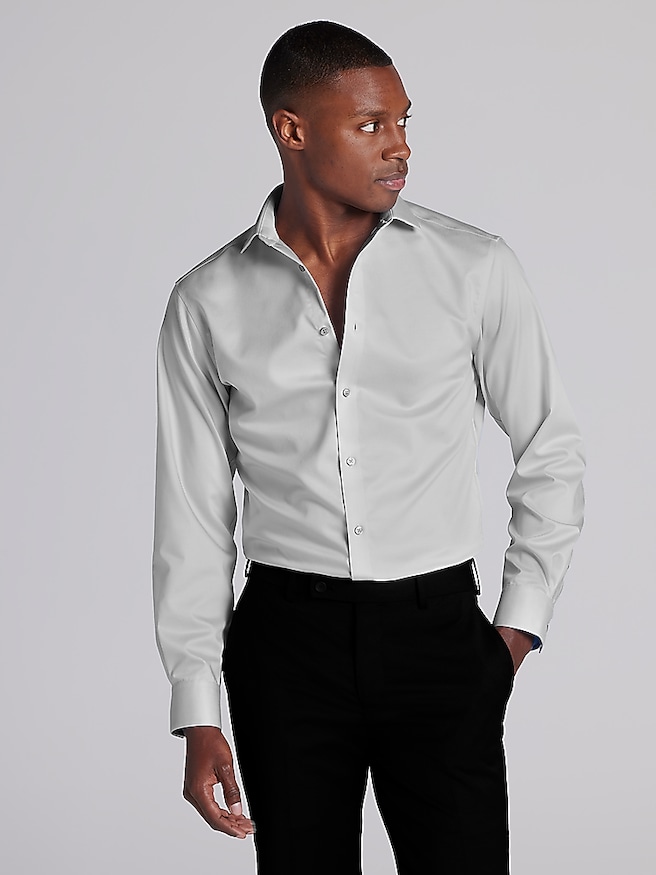
Shirts for men with big necks need enough room at the collar without adding unnecessary fabric through the chest and waist. A comfortable fit often comes down to three features: an appropriate neck measurement, a body cut that suits the wearer’s proportions, and a collar that allows natural movement. Simply moving up a size can solve tightness at the throat while creating dropped shoulders, loose sleeves, and excess material around the belt. Dress shirts sized by neck and sleeve measurements allow those dimensions to be considered separately, although the chest and waist proportions still depend on the cut. A man with a muscular neck and a tapered torso may need a more shaped fit, while someone with a fuller midsection may prefer a straight, roomier silhouette. Fit names vary, so garment measurements and sizing information are more useful than assuming every slim, tailored, or classic fit has the same proportions. The collar should close comfortably without pressing into the neck, with enough space to slip a finger between the collar and skin without forcing it. That comfort should remain when sitting at a desk, turning toward a colleague, or fastening a tie before a wedding. A collar that feels acceptable while standing still may feel restrictive once the top button is secured and the wearer starts moving. Shoulder seams near the natural shoulder, sleeves that reach the wrist, and a front placket that lies flat help complete the fit without relying on an oversized body. A broader frame or longer torso may also benefit from the added proportions of Big And Tall Collared Shirts, while a larger neck alone does not necessarily call for extra length or width. The goal is a shirt that follows the body comfortably, rather than one that trades a tight neckline for a billowing waist. For tucked shirts, enough length to stay secure through ordinary movement matters just as much as avoiding excessive fabric beneath a jacket.
Fabric and collar construction influence how that fit feels over a full day. Cotton is a familiar choice for its softness and breathability, but the weave changes its texture, weight, and appearance. Poplin generally offers a smooth, clean surface suited to dressier combinations, while twill has a subtle diagonal texture and often a softer drape. Oxford cloth brings a more noticeable woven texture that works naturally with chinos, denim, and less formal tailoring. Blends containing a small amount of stretch fiber can make reaching, driving, and sitting more comfortable, though stretch through the body does not automatically mean the collar stretches too. A flexible collar construction can provide useful give at the neckline; it should complement the correct size rather than compensate for a collar that is too small. The collar band, which wraps around the neck beneath the folded collar, deserves attention because its height and stiffness affect how the shirt feels under the jaw. A heavily structured collar may look crisp with a tie but feel more noticeable than a softer construction. Spread and moderately spread collars create a more open visual frame and can balance a broad neck, although collar shape alone does not increase the actual neck opening. Point collars offer a more vertical line, while button-down collars keep the tips secured for a relaxed, tidy appearance. The right choice depends on facial proportions, jacket lapels, and whether a tie is part of the outfit. A tie knot should sit neatly in the collar opening without forcing the points outward or putting extra pressure on the throat. For casual wear, an open-neck button-front shirt or a polo with an adjustable placket offers a less enclosed feel. Smooth fabric against the neck, neatly finished seams, and buttonholes that hold their shape are small details that become more noticeable over repeated wear. No single fabric or collar style solves every fit issue, but thoughtful construction helps the shirt feel as comfortable as it looks.
Shirts with a comfortable neck fit serve everyday routines as well as occasions that call for a polished appearance. For an office schedule, a smooth shirt that stays neat under a jacket can move from a morning presentation to a seated lunch without drawing attention to pulling at the throat. For a wedding, graduation, or anniversary dinner, a collar that fastens easily allows the tie and jacket to sit as intended instead of becoming something to loosen at the first opportunity. White, light blue, and understated patterns offer flexibility across tailored outfits, while textured fabrics and open collars suit more relaxed settings. An untucked style needs a hem length designed for that purpose; buying an oversized dress shirt to gain neck room often leaves too much length and volume for a balanced casual outfit. For a gift recipient, a comfortable shirt’s neck and sleeve measurements provide a more dependable starting point than a general size alone, especially when the recipient has a broad neck but a narrower waist. Care also plays a role in preserving that fit. Cotton can shrink with washing and drying, and excessive heat may affect both dimensions and stretch fibers. Following the garment’s care label, avoiding unnecessary dryer heat, and smoothing the collar while the fabric is slightly damp can help maintain its shape. Collar stays, when removable, should be taken out before laundering. Prompt attention to perspiration and skin oils around the inside collar can help prevent buildup without harsh scrubbing that wears down the fabric. Pressing at the recommended setting keeps the collar and placket tidy, while checking buttons and seams occasionally helps catch small repairs before they become larger problems. A well-fitting shirt should not require constant tugging, an unfastened top button when a tie is needed, or folds of extra fabric hidden beneath a jacket. Enough neck room, appropriate body proportions, and fabric suited to the occasion make these shirts practical foundations for a wardrobe built around comfort and a clean silhouette.