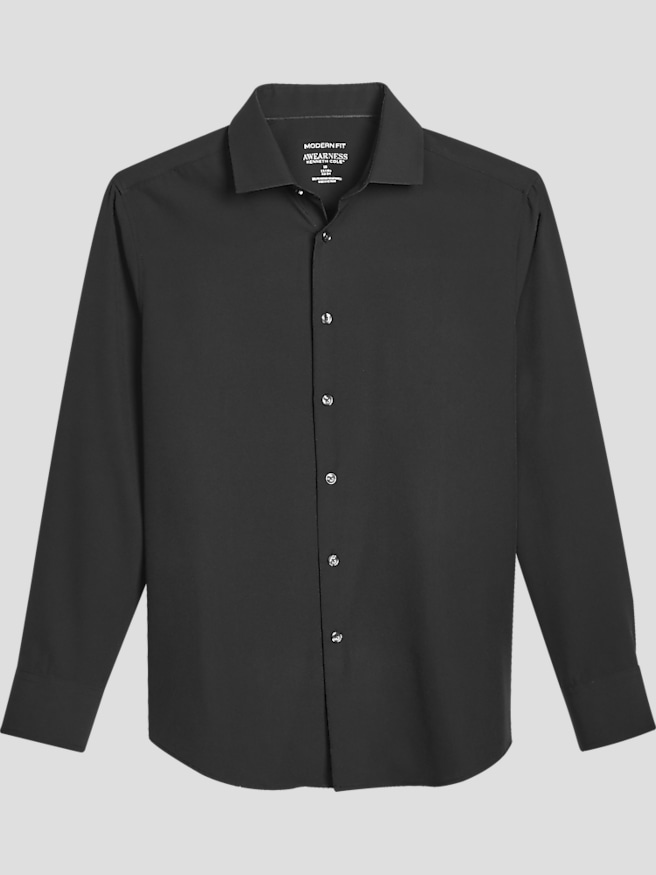
Dress shirts for big men work best when the cut accommodates a fuller chest, waist, and upper arms without adding unnecessary length or leaving the shoulders oversized. A larger neck measurement alone does not tell the whole story: two men with the same collar size may need very different proportions through the body. Big sizing generally addresses a broader build, while tall sizing adds length where a longer torso and arms need it; some men benefit from both. The right fit leaves enough room to sit through a meeting, reach across a desk, and button a jacket without the shirt pulling tight across the middle. When the buttons lie flat and the placket stays straight, the shirt creates a clean foundation for everything worn over it. Shoulder seams should sit near the natural edge of the shoulders rather than slipping down the upper arms, and sleeves should allow easy movement without gathering excessively at the cuffs. A collar that fastens comfortably matters especially for men who wear ties, while adequate room through the abdomen helps the shirt remain comfortable after sitting down. Shirt length deserves the same attention as collar and sleeve measurements. A hem with enough coverage to stay tucked helps maintain a polished appearance through commutes, presentations, and evenings out, but extra torso length is not a substitute for sufficient width. Labels such as classic fit and regular fit can be useful starting points, though their proportions vary, making actual measurements more informative than the fit name alone. For men with a broad chest and shoulders but a more tapered waist, Dress Shirts for Athletic Men offers a related fit category to consider. The distinction is about shape rather than simply choosing a larger size. A well-proportioned shirt gives the body room where it needs it while keeping the collar, cuffs, and shoulder line looking intentional, whether the shirt is worn beneath a suit or on its own with tailored trousers.
Fabric influences how a dress shirt feels against the skin, how it drapes over a fuller frame, and how much attention it needs between wears. Cotton is a familiar choice for its breathability and comfortable feel, with the weave contributing as much to the finished appearance as the fiber itself. Poplin typically has a smooth surface that looks crisp beneath a jacket, while twill has a subtle diagonal texture and often drapes more softly. Oxford and pinpoint weaves bring texture that can feel equally at home with a tie or an open collar, depending on the shirt’s construction and the occasion. Cotton blends may offer easier maintenance or improved wrinkle resistance, while a small amount of stretch can provide additional give through everyday movement. Stretch should complement a suitable fit rather than compensate for a shirt that is too narrow; pulling around the buttons or tightness across the back still signals that the proportions need attention. Fabric weight and opacity also affect the finished look. A pale shirt with enough substance can provide a cleaner appearance over an undershirt, while a softer drape can settle smoothly beneath a jacket instead of bunching at the waist. Surface texture offers another way to add interest without relying on a bold pattern. A fine twill or understated woven design brings depth to a solid shirt, particularly when paired with a smooth suit fabric. For men who wear dress shirts several days a week, the balance of comfort, structure, and care requirements matters more than any single fabric claim. A shirt needs to look composed at the beginning of a workday and still feel comfortable during the drive home. Smooth seams, secure buttons, and neatly finished cuffs contribute to that everyday experience, helping the shirt hold its shape and stand up to repeated wear when cared for according to its label.
Color, collar shape, and pattern make dress shirts for big men adaptable to a range of settings without changing the essentials of good fit. White and light blue create familiar foundations for business attire, interviews, and wedding guest outfits, while fine stripes, small checks, and deeper solid colors bring variety to a regular rotation. Pattern placement and scale are matters of personal preference rather than rules about body size; a balanced fit does more for a polished appearance than avoiding a particular stripe or color. A spread collar can frame a tie knot neatly, a point collar offers a more traditional line, and a button-down collar often suits less formal combinations with chinos or textured trousers. With a jacket, the collar should sit comfortably at the neck and the cuffs should remain tidy at the wrists, with a small amount of shirt cuff visible beyond the jacket sleeve. Worn without a tie, a collar with enough structure helps an open neckline look deliberate rather than collapsed. These details make a difference for men dressing for client appointments, family celebrations, religious services, or an evening at a restaurant. Dress shirts can also be thoughtful gifts when the recipient’s neck size, sleeve length, preferred fit, and care habits are known. Someone who spends long days at a desk may appreciate room through the midsection and an easy-care finish, while someone who enjoys traditional tailoring may value a crisp collar and fabric that presses cleanly. Ongoing care helps preserve those qualities. Following the garment’s washing instructions, treating stains promptly, and avoiding excessive dryer heat can help protect the fabric and maintain its intended dimensions. Removing a shirt promptly after drying and hanging it on a supportive hanger can reduce deep creases; pressing or steaming should follow the care label. With appropriate proportions and consistent care, a dress shirt becomes a dependable part of getting dressed, providing a neat, comfortable base for everyday professionalism and important occasions alike.