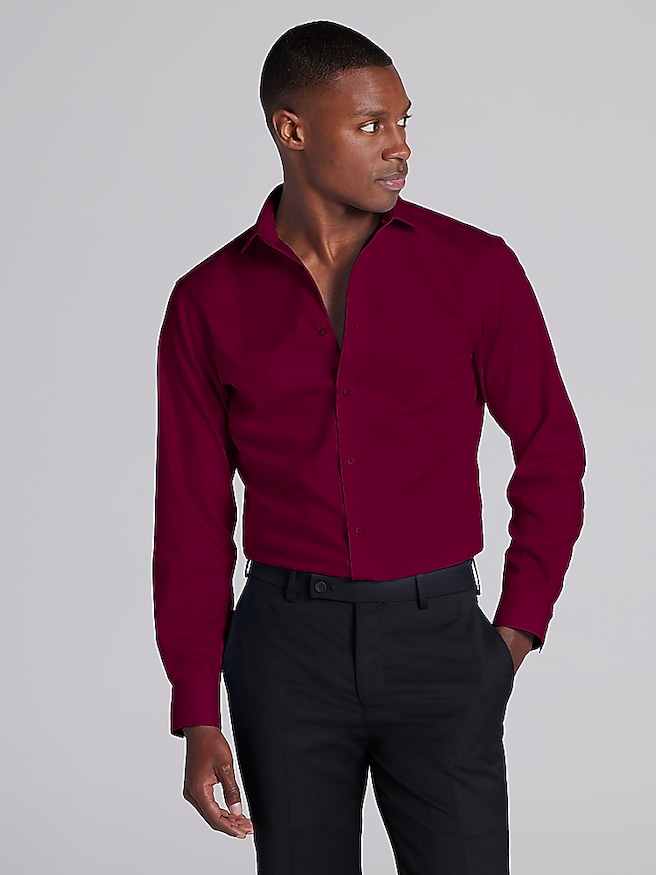
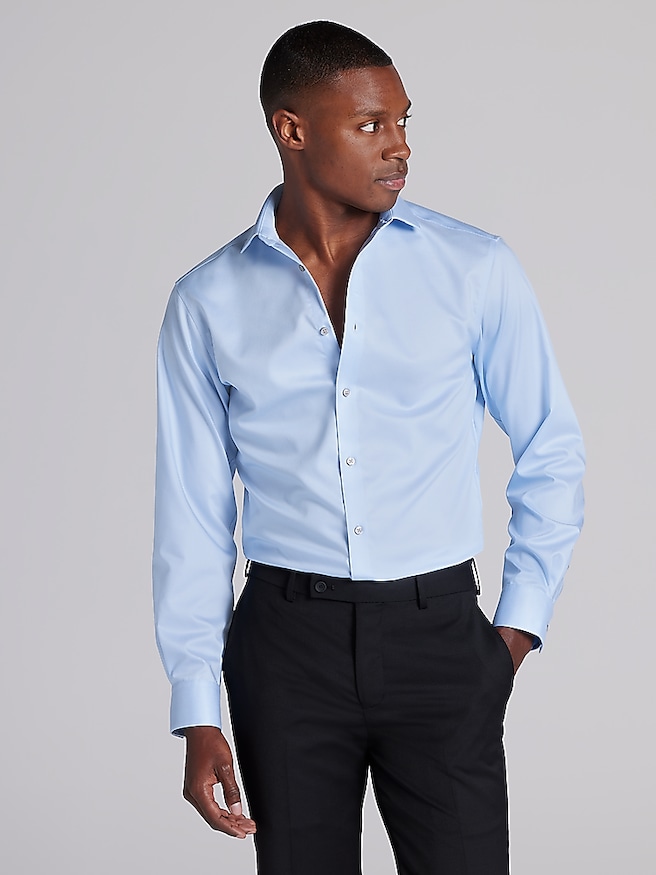
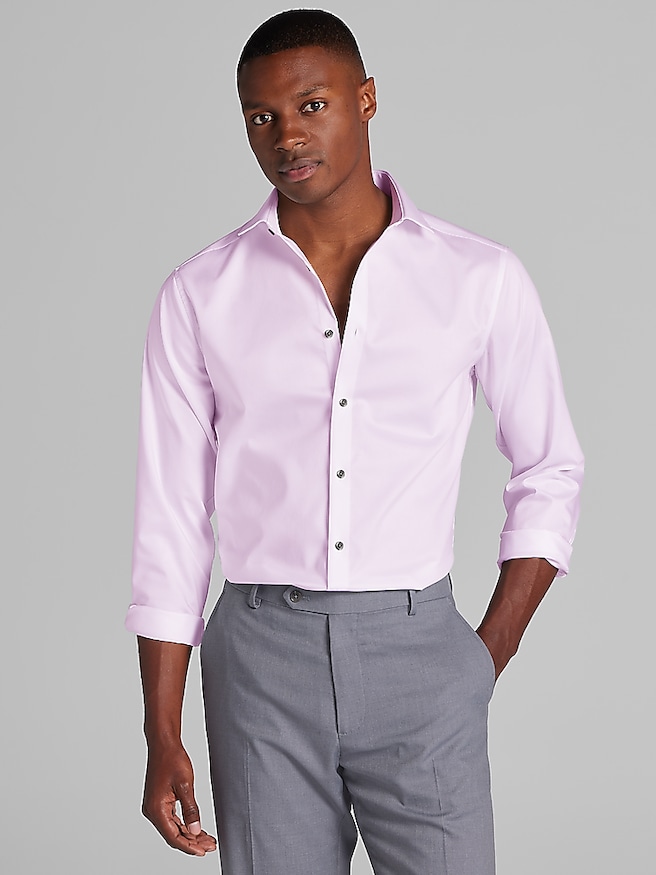
Men’s big dress shirts are designed for fuller builds, with proportions that provide room through the chest, waist, shoulders, and upper arms while maintaining a polished appearance. The goal is a shirt that sits smoothly beneath a jacket, stays comfortable through a long meeting, and looks composed when the jacket comes off. Big sizing and tall sizing address distinct needs: a larger frame may need additional width without extra sleeve length, while a taller frame may need longer sleeves and a longer body. Some builds benefit from both. Neck and sleeve measurements help distinguish dress-shirt sizing from the broader size labels used for many casual shirts, though the shape through the body matters just as much. With Dress Shirts for Big Men, a comfortable fit leaves breathing room at the collar, allows the shoulders to sit naturally, and gives the chest enough ease that the button placket lies flat. A classic or traditional fit often offers a fuller silhouette, but fit names are not standardized, so measurements and construction details are more useful than the label alone. Sleeves should allow easy movement without pulling the cuffs far up the forearms when reaching across a desk or shaking hands. At the wrist, a properly adjusted cuff stays in place without feeling restrictive, with enough allowance for a watch if needed. Through the middle, comfortable ease becomes especially noticeable when sitting for a presentation, driving to an event, or settling into a reception dinner. A shirt that looks smooth while standing should also accommodate those ordinary movements without strain across the buttons. Body length contributes to that comfort, too: a dress shirt intended to be tucked in needs enough length to remain secure without creating unnecessary bulk beneath the waistband. These proportions help a larger size feel intentional rather than simply oversized. The result is a foundation for suits, sport coats, and dress pants that supports both a clean silhouette and the freedom to move naturally.
Fabric gives men’s big dress shirts much of their character, influencing how they feel against the skin, how they drape, and how much attention they need between wears. Cotton is valued for its breathable feel and versatility, with textures ranging from smooth and crisp to softly structured. A fine plain weave, often described as poplin or broadcloth, creates a relatively smooth surface that works well with tailored clothing. Twill has a subtle diagonal pattern and often a softer drape, bringing quiet texture to an otherwise understated outfit. Oxford weaves have a more visible texture, while finer pinpoint constructions can bridge everyday office wear and dressier settings. Fiber content and weave are separate considerations: two cotton shirts can feel noticeably distinct because of yarn size, weave density, and finishing. Cotton blends can balance a familiar feel with easier maintenance, while fabric containing stretch may offer additional give across the back and arms. Stretch is a useful feature, not a substitute for enough room through the torso or the correct neck measurement. Fabric weight also affects coverage and drape; a very lightweight pale shirt may reveal an undershirt more readily than a denser weave. For someone who spends much of the day seated, bends frequently, or moves between meetings, the interaction between fabric and fit makes a meaningful difference. Wrinkle-resistant finishes can help reduce creasing, although they do not mean a shirt will remain perfectly smooth under every condition. Construction matters alongside fabric. Neat stitching, securely attached buttons, evenly finished seams, and a smooth collar contribute to a shirt that looks orderly through repeated wear. A reinforced feel at high-stress areas can be helpful, but durability also depends on laundering and how tightly the garment fits. Enough ease across the chest and upper arms reduces unnecessary tension on seams and buttonholes, helping comfort and longevity work together.
Color, pattern, and collar shape give a big dress shirt its place in a wardrobe. White offers a crisp backdrop for a suit and tie, while light blue brings subtle contrast to navy, charcoal, and gray tailoring. Fine stripes and restrained checks introduce detail without dominating an outfit, particularly when balanced with solid dress pants or a jacket with a quiet texture. A point collar creates a more contained opening around a tie knot; a spread collar leaves additional space and can suit a fuller knot. The best balance depends on the collar’s proportions, the jacket lapels, and whether the shirt will usually be worn buttoned with a tie or open at the neck. A button-down collar has a more relaxed character and can work well in offices where a sport coat takes the place of a full suit. Barrel cuffs offer straightforward everyday practicality, while French cuffs bring a more formal finish and require cuff links. For an interview, an important client meeting, or a wedding, these small choices help establish the level of formality without calling attention away from the person wearing the shirt. Easy coordination also makes dress shirts a thoughtful gift for a partner, relative, or friend, especially when the recipient’s neck size, sleeve length, and preferred body fit are known. Care helps preserve both appearance and fit after those occasions. The garment’s care label should determine washing, drying, ironing, and professional cleaning choices, since fiber blends and finishes respond differently to heat and moisture. Prompt attention to collar and cuff marks can help prevent buildup, while unnecessary heat may contribute to shrinkage or wear. Hanging a clean shirt neatly, smoothing the placket, and allowing space around the collar help maintain its shape between wears. Rotating shirts rather than repeatedly wearing the same one also allows time for proper cleaning and care. A well-proportioned shirt in a comfortable fabric earns its place through that combination of dependable fit, versatile styling, and an appearance that holds up to regular use.