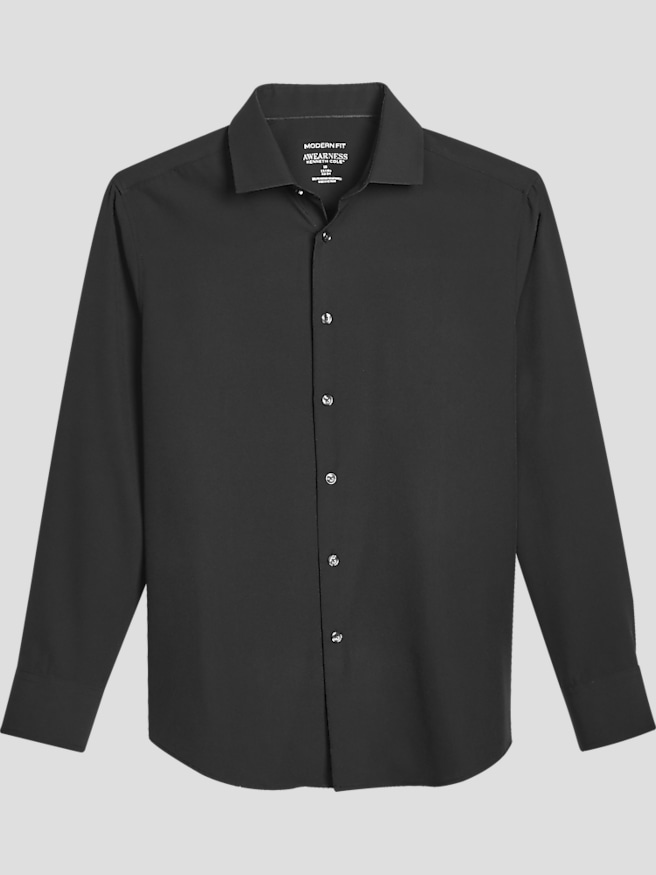
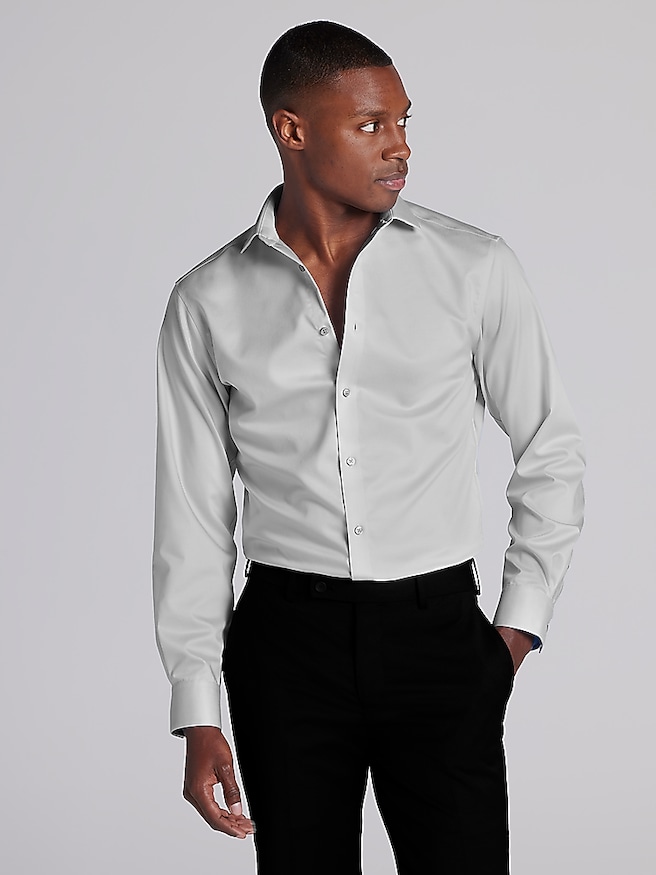
Men's large dress shirts bring structure and polish to business attire, occasion dressing, and everyday outfits that call for more than a casual button-down. The right fit leaves room across the chest and upper back while keeping the collar, shoulders, and sleeves in proportion. Large is a letter size, not a universal set of measurements, so its dimensions can vary by cut and sizing system. Dress shirts may also use separate neck and sleeve measurements, which can give a more precise picture of fit than the size letter alone. A comfortable collar rests against the neck without squeezing when the top button is fastened, and the shoulder seams generally sit near the natural edge of the shoulders. Across the front, the placket should lie flat rather than pull open between buttons. There should also be enough ease to reach across a desk or lift an arm without the fabric binding through the back. Traditional and classic cuts generally offer more room through the torso, while slimmer cuts create a closer outline; those labels are not standardized across all shirts. A large in one cut can feel noticeably different from a large in another. Sleeve length matters just as much as chest room, especially beneath a suit jacket, where a small amount of shirt cuff typically remains visible. Shirt length also affects everyday comfort: a hem intended for tucking should stay secure when sitting, standing, and moving throughout the day. Men who need substantially more room through the chest and torso may also consider XXL Men's Shirts, while checking that the shoulders and sleeves remain proportionate. Simply choosing a bigger letter size does not always resolve a tight collar or short sleeve. A well-balanced large dress shirt accommodates the body without excess fabric bunching above the waistband or collecting beneath a jacket.
Fabric gives a dress shirt much of its character, from the crisp appearance of the front to the way the sleeves bend and drape. Cotton is valued for its breathable feel and absorbency, with texture and finish varying considerably by weave. Poplin typically has a smooth, relatively flat surface that looks clean under a suit, while twill has a subtle diagonal texture and often a slightly softer drape. Pinpoint and other finely textured weaves can add visual depth without creating a bold pattern. Cotton blends may combine the familiar feel of cotton with fibers intended to support shape retention or easier maintenance. Stretch fabrics can provide additional give during movement, but stretch should complement a sound fit rather than compensate for a shirt that pulls across the chest. Wrinkle-resistant finishes can help limit creasing during a day at a desk or a trip in a garment bag, although they do not make every shirt completely crease-free. Fabric weight, opacity, and surface texture also influence how a shirt looks on its own. A white dress shirt with more opacity can create a cleaner appearance over an undershirt, while a finer fabric may reveal more of what sits beneath it. Details around the face and wrists help establish the overall level of formality. A point collar creates a narrower frame for a tie, while a spread collar leaves more space for the knot. Button-down collars lend a more relaxed character, even when the shirt is tucked into tailored trousers. Adjustable button cuffs allow some flexibility at the wrist, and French cuffs create a dressier finish with cufflinks. Durable construction often shows up in less conspicuous places: secure buttons, even stitching, neatly finished seams, and reinforcement at areas that experience repeated movement. These details contribute to a shirt that feels dependable through regular wear and repeated laundering.
Color and pattern make men's large dress shirts useful across a broad range of settings. White offers a crisp foundation for a dark suit, while light blue adds color without competing with a patterned tie or textured jacket. Fine stripes and small checks introduce interest while remaining easy to coordinate with solid trousers. For a presentation or interview, a smooth shirt front and a collar that sits neatly beneath the jacket help keep the outfit looking composed. At a wedding or formal dinner, the invitation's dress expectations determine whether a standard dress shirt is appropriate or more specialized formalwear is needed. An open collar with tailored pants creates a less formal combination for a dinner reservation or a workplace where ties are optional. Shirts worn without a tie benefit from a collar that holds its shape instead of collapsing beneath the jacket lapels. For men who spend long stretches seated, comfortable room at the waist and a secure tuck can matter as much as the view in a fitting-room mirror. Thoughtful care helps preserve those qualities. The care label should determine washing, drying, and ironing methods because fiber blends, finishes, and construction do not all respond the same way. Prompt attention to collar and cuff marks can help keep buildup from becoming harder to remove. Avoiding unnecessary heat, when consistent with the label, helps protect fabric and reduce unwanted shrinkage. Hanging a shirt neatly after laundering can limit deep folds, and removable collar stays should be taken out before washing when the care instructions call for it. High-friction areas such as cuff edges, collar folds, and elbows deserve occasional inspection for wear. A dress shirt can also be a practical gift for a partner, father, brother, or recent graduate preparing for a professional wardrobe. Confirmed neck and sleeve measurements, a preferred fit, and familiar colors make that choice more personal than relying on a large label alone. With the right proportions and appropriate care, a large dress shirt becomes a dependable part of getting dressed for work, meaningful occasions, and everyday plans.