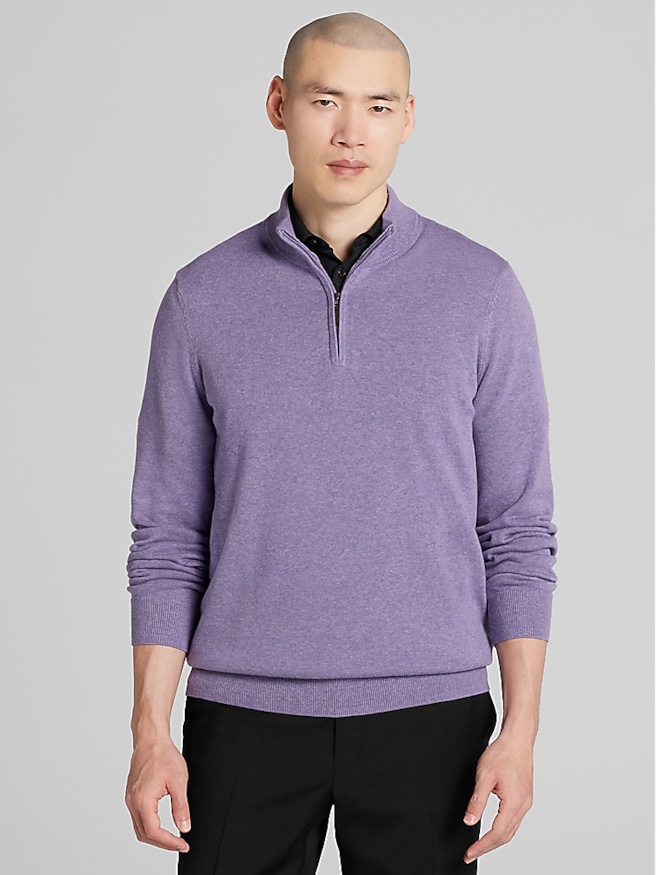
Purple menswear brings color to everyday outfits, business attire, and dressed-up occasions through shades ranging from pale lavender and lilac to plum, grape, and deep eggplant. Light purple often reads as a soft alternative to white or blue, while darker tones create a richer, more pronounced contrast against neutral clothing. Purple clothing for men can be understated or expressive depending on the shade, fabric, and amount of color in the outfit. A lavender dress shirt beneath a charcoal suit introduces color without dominating the look; a plum jacket over a white shirt makes purple the focal point. Navy, gray, white, black, and beige are dependable companions because they give the color room to stand out. Brown leather can add warmth to softer purples, while black leather creates a sharper finish alongside dark shades. The overall effect also depends on texture: a smooth woven shirt looks crisp, a knit feels more relaxed, and a subtle sheen makes the same color appear dressier. For office settings, restrained patterns and lighter shades can sit comfortably alongside familiar tailoring. For dinners, celebrations, and social gatherings, deeper purples offer a distinctive alternative to an entirely neutral outfit. Purple does not have to cover much of an outfit to make an impression. A narrow stripe, a small geometric pattern, or a glimpse of color at the collar can provide enough interest when the rest of the clothing is simple. Larger areas of purple feel balanced when surrounding colors stay quiet and patterns have space between them. Combining several purple pieces creates another effect entirely: closely matched shades look deliberate, while clearly separated light and dark tones add depth. Slightly mismatched purples can be more noticeable than expected, especially when one leans blue and another leans red. Seeing pieces together in natural light helps reveal those undertones, particularly when coordinating an outfit for photographs or an important occasion.
Fabric and fit shape how purple menswear looks and feels over the course of a day. Cotton shirting generally offers a breathable feel and a clear, defined surface that suits both solid colors and small patterns. Oxford cloth has a more visible texture, while smoother weaves tend to look dressier beneath a jacket. Linen brings natural texture and a relaxed appearance, with creasing that is part of its character rather than a flaw. Wool tailoring can provide graceful drape and shape retention, and blends may add stretch, softness, or wrinkle resistance depending on their composition. Stretch fabric can make sitting and reaching more comfortable, but it does not replace a well-proportioned cut. A shirt should allow movement across the back without pulling open at the buttons, and its collar should sit comfortably when fastened. Jacket shoulders should lie cleanly, lapels should rest flat, and trousers should allow enough room through the seat and thigh to move naturally. These details become especially visible with a saturated color, which draws attention to the garment’s overall shape. A close fit can look neat without being tight, while a roomier silhouette still benefits from a defined shoulder and an intentional trouser length. Care requirements deserve the same attention as appearance. The garment label is the best reference for washing, drying, pressing, or professional cleaning, since dyes, linings, trims, and fiber blends can require different treatment. For washable pieces, separating strong colors and using the recommended water temperature can help limit color transfer and fading. Excessive heat may affect both fit and finish, and direct contact with a hot iron can leave unwanted shine on some fabrics. Well-finished seams, secure buttons, and fabric that holds its shape are useful durability details, especially for clothing worn frequently. Allowing garments to air between wears and using suitable hangers helps preserve their appearance. Knits generally keep their shape better when stored folded, while tailored jackets benefit from hangers that support the shoulders.
Purple also has a place in event dressing, where color can express personality without replacing the need for an appropriate level of formality. For occasions that call for Purple Formal Wear, the invitation’s dress code remains the starting point. A purple tie with classic tailoring creates a different impression from a purple suit, and neither automatically meets the expectations of every formal event. Deep plum and eggplant can look particularly refined against a crisp white shirt, while lavender accents bring softer contrast to navy or gray. Velvet introduces a plush surface with noticeable depth, making purple appear lighter or darker as the fabric catches the light. Matte fabrics keep the effect quieter; lustrous fabrics bring more emphasis to the color. At weddings, coordinated purple accents can connect a group’s attire without requiring every piece to match exactly. A tie and pocket square often look more considered when they share a color family but differ in pattern or texture. Small-scale motifs can complement a solid shirt, while a patterned shirt usually benefits from a quieter accessory. For photographs, keeping the main colors consistent across the outfit helps the overall look feel cohesive even when individual details vary. Beyond special events, purple accessories can make thoughtful gifts for someone who already wears the color or wants a modest departure from familiar neutrals. Ties and pocket squares require fewer fit decisions than shirts or tailored clothing, though personal taste and usual dress codes still matter. For a clothing gift, knowing the recipient’s measurements, preferred cut, and fabric preferences makes the choice more personal and practical. Someone who spends the day in meetings may value a subtle lavender shirt, while someone who enjoys expressive evening attire may prefer a deeper, more saturated shade. Across these settings, purple menswear offers a broad range of expression, from a discreet detail within a familiar outfit to a confident color statement supported by comfortable fit, considered proportions, and well-chosen textures.