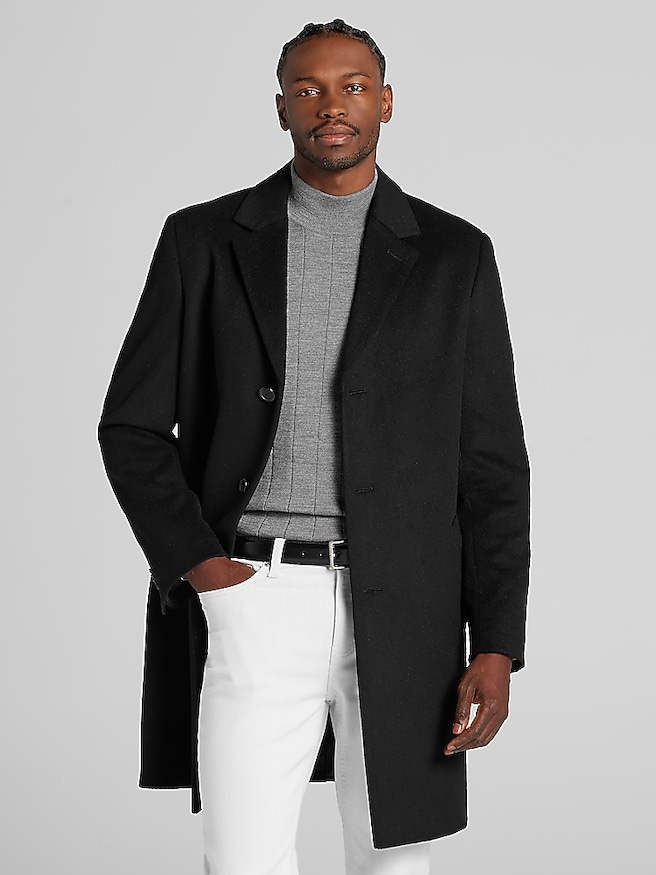
Purple outerwear includes coats, jackets, and insulating layers in shades ranging from soft lavender and muted mauve to rich plum and deep eggplant. The color can be a subtle alternative to navy or charcoal, or the focal point of an otherwise understated outfit. Dark purple often feels especially approachable for men who usually wear neutrals: an eggplant coat over gray trousers and a white shirt adds depth without creating a sharp contrast. Brighter violet has a more expressive character, particularly against black denim, while dusty purple works comfortably with washed blue jeans, cream knitwear, and brown footwear. The shape of the outerwear matters just as much as the shade. A short, clean-lined jacket has an easygoing feel for everyday errands and casual dinners; a longer coat creates a more tailored outline over office clothing or an evening outfit. Ribbed cuffs, a stand collar, pronounced lapels, and a hood each change the overall impression, even when the color stays similar. Texture also affects how purple looks. A brushed surface softens the color, a smooth woven fabric gives it a crisp finish, and a subtle sheen can make the same shade appear more vivid. For a coordinated wardrobe, Purple Attire offers a broader color theme that can carry through shirts, trousers, and accessories without requiring an exact match. A purple outer layer usually needs only one supporting detail, such as a patterned scarf with a small plum accent, to make an outfit feel considered. Keeping the remaining pieces simple allows the color and silhouette to stand out naturally. For someone building confidence with color, a darker shade in a familiar jacket shape can feel like a smaller step than a bright shade in an unfamiliar cut.
Fabric and construction determine how purple outerwear feels, performs, and holds its shape through repeated wear. Wool and wool-blend coats can provide warmth with a structured appearance, making them useful over tailored clothing when the fabric weight and cut suit the occasion. The fiber blend, weave, and lining all influence comfort; a wool percentage alone does not describe the entire garment. Fleece offers a softer, more relaxed texture and can serve as an insulating layer, though warmth does not automatically mean protection from wind or rain. Nylon and polyester shells can be lightweight and durable, but their resistance to moisture depends on the weave, finish, seams, and overall construction. Water-resistant fabric is not the same as waterproof construction, an important distinction for a coat worn on a walk from the train rather than just between a car and a doorway. Quilted outerwear holds insulation in separate sections, with the insulation type, fill amount, and fit affecting warmth and bulk. Down and synthetic fills have different care requirements and responses to damp conditions, so the garment label is more useful than appearance alone when assessing intended use. Practical details become noticeable through ordinary routines. A zipper backed by a protective flap can help limit drafts; an adjustable cuff can reduce gaps at the wrist; and a secure interior pocket can keep a phone from shifting while walking. A smooth lining helps a coat slide over a sweater without pulling at the sleeves underneath. Pocket placement matters, too: openings should feel accessible when standing or sitting, rather than forcing an awkward reach. Neat stitching, well-secured buttons, reinforced pocket edges, and closures that move smoothly are useful signs of thoughtful construction. These details contribute to everyday durability without needing to dominate the design or distract from the purple fabric.
Fit gives purple outerwear its finished appearance, whether the goal is a close, tailored line or a relaxed layer with room to move. The most useful fit reflects what will actually be worn underneath. A jacket that feels comfortable over a T-shirt may become restrictive over a substantial sweater, while a coat intended for a suit needs enough space through the shoulders, upper arms, and chest to accommodate the jacket beneath it. With the outerwear fastened, the front should lie comfortably rather than pull into tight horizontal lines. Reaching forward, bending the elbows, and sitting down reveal restrictions that are easy to miss while standing still. For a traditional set-in sleeve, the shoulder seam generally sits near the natural shoulder; dropped shoulders and raglan sleeves create a different shape by design. Sleeves should provide useful wrist coverage without swallowing the hands, and the hem should suit both the outfit and the wearer's routine. Longer coverage can work well over tailored layers, while a shorter silhouette may feel less cumbersome when driving. Care is equally important to keeping the color and construction looking their best. Cleaning instructions vary widely, so washing, drying, pressing, and professional cleaning should follow the sewn-in label. Prompt attention to spots, gentle treatment of closures, and avoiding unnecessary cleaning can help preserve the fabric's finish. Machine-washable pieces may call for cold water or low heat, while structured coats may require professional care; neither approach should be assumed from the color or fiber name alone. Outerwear should be completely dry before storage, and structured coats benefit from supportive hangers that do not distort the shoulders. Extended exposure to direct sunlight can fade fabric, making a shaded storage space a sensible choice. As a gift, purple outerwear is especially personal for a husband, partner, father, brother, or friend who already enjoys the color. A familiar silhouette, a shade that complements his usual wardrobe, and measurements taken from a well-fitting coat provide more useful direction than guessing from a shirt size. The result is an expressive layer with a practical place in everyday dressing.