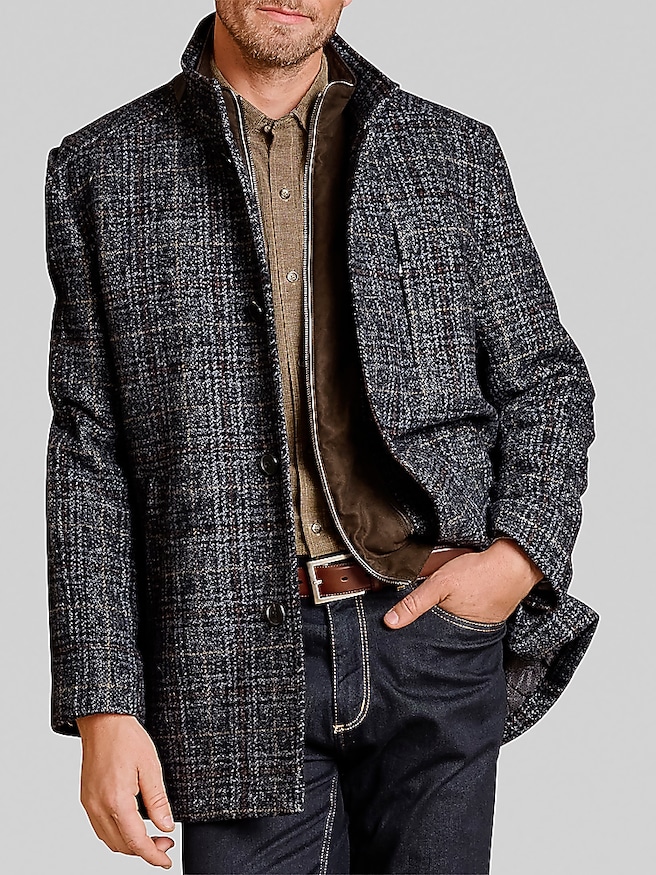
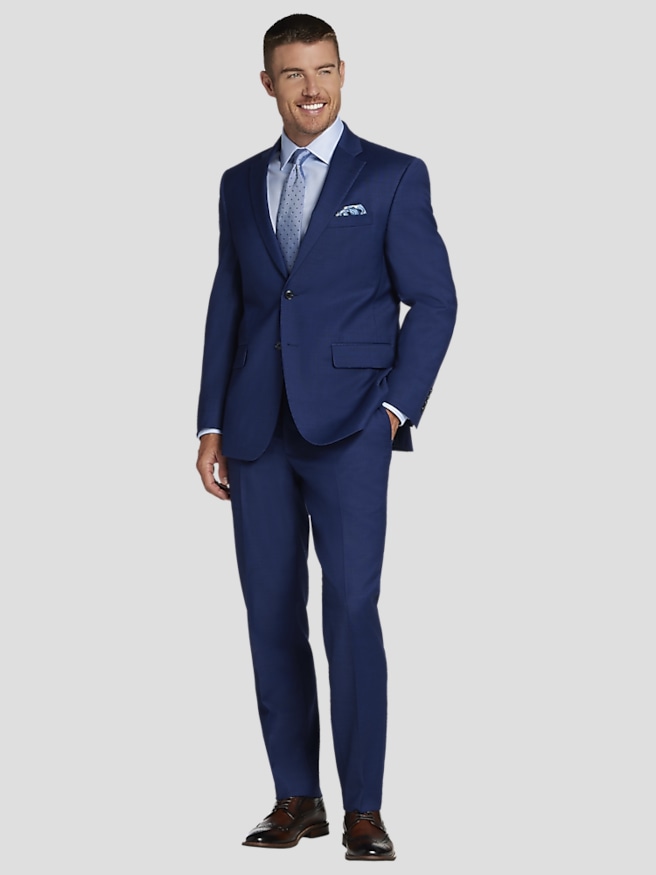
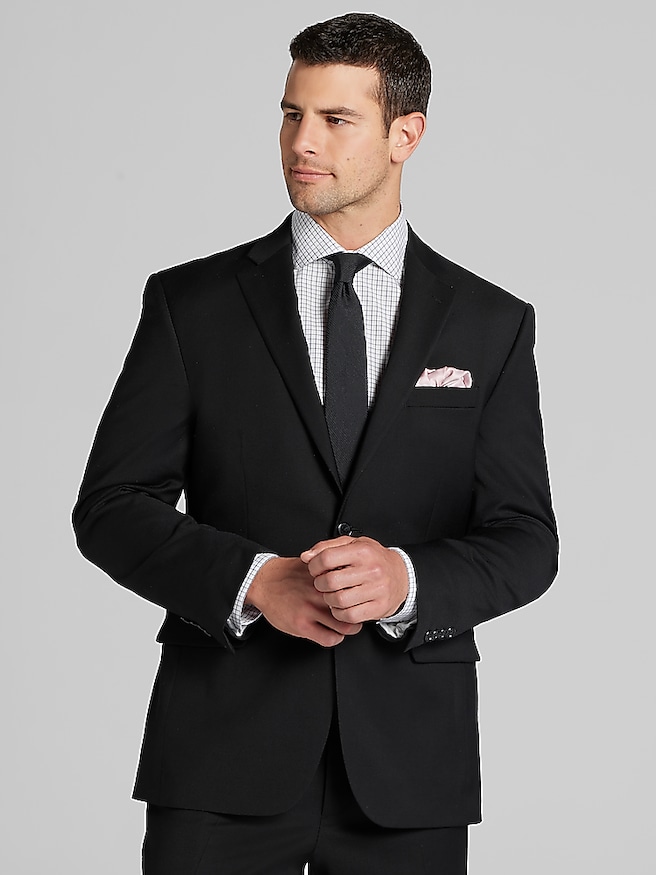
Black wool outerwear brings together the structure of tailored clothing and the practical coverage of a substantial outer layer. Its appeal starts with versatility: a black coat looks natural over a charcoal suit on the way to the office, adds definition to a sweater and dark denim, and creates a quiet finish over evening attire. The color lets shape and texture do much of the work, whether the fabric has a smooth, closely finished surface or a softer, lightly brushed feel. Wool’s natural crimp helps trap insulating air, while its ability to absorb moisture vapor contributes to comfort as activity levels change. The amount of warmth depends on more than fiber content, however. Fabric weight, weave density, lining, length, and the room left for layers all influence how a coat feels outdoors. Pure wool can provide a substantial hand and graceful drape, while wool blends may incorporate fibers chosen for softness, strength, or reduced weight. A wool-and-cashmere blend often feels softer to the touch; a blend containing nylon may add abrasion resistance. Neither the word “wool” nor a high wool percentage alone tells the whole story, so the full fabric composition and construction deserve attention. A dense cloth can help limit drafts, but wool outerwear should not be assumed to be windproof or waterproof unless its specifications support those claims. Black also gives familiar coat shapes a cohesive, understated appearance. A single-breasted front creates a clean vertical line, while a double-breasted front offers overlapping coverage and a more pronounced chest. Broad lapels emphasize tailoring; a higher collar frames the face and can provide additional neck coverage when designed to close. These distinctions matter in everyday settings, from walking between transit stops to arriving at a restaurant, because the coat becomes both a functional layer and the first visible part of an outfit. The strongest choice is one whose fabric, proportions, and details suit the way it will actually be worn.
Fit gives black wool outerwear much of its character, particularly when it needs to accommodate clothing that already has structure. A coat worn over a suit jacket needs enough space through the shoulders, upper arms, and chest to avoid compressing the jacket beneath it. Over a fine-gauge knit, a closer silhouette may feel comfortable without looking restrictive. The useful distinction is between a neat fit and a tight one: the front should close without pulling across the buttons, the lapels should rest naturally, and the sleeves should allow an easy reach toward a steering wheel or a shoulder bag. Shoulder shape varies by design, so the overall balance matters as much as the position of a single seam. A deliberately relaxed shoulder should still look intentional rather than making the entire coat sag. Sleeve length should provide wrist coverage without swallowing the hands, and a coat intended for tailoring should generally cover the jacket hem beneath it. Length also changes the experience of wearing wool outerwear. A shorter silhouette can be convenient for frequent sitting and getting in and out of a car, while a longer hem provides more coverage and a stronger vertical line over dress trousers. A back vent helps a longer coat move with the stride, though its usefulness depends on its placement and construction. For shoppers who need additional room, Large Wool Coats offer a related starting point, with attention still needed to the individual size chart and intended silhouette. A larger labeled size does not automatically mean longer sleeves, broader shoulders in the right place, or a better fit through the waist. Pocket placement, closure style, and lining also affect daily comfort. Hands should reach the pockets naturally, buttons should be manageable with gloves, and a smooth lining can help the coat slide over knitwear without bunching. In an office wardrobe, restrained detailing keeps the look composed over tailoring. With chinos, textured sweaters, or dark jeans, the same black wool surface adds definition without requiring every layer to look formal. A gray scarf introduces contrast, while black accessories keep the overall effect tonal.
Durability in black wool outerwear comes from the relationship between the cloth, its construction, and regular care. A coat that feels substantial is not necessarily better made, but securely attached buttons, tidy seams, reinforced stress points, and a lining that allows movement are useful signs of thoughtful construction. Friction deserves particular attention because cuffs, pocket edges, underarms, and the area beneath a bag strap receive repeated contact. Some wool fabrics develop surface fuzz or pills with wear, especially where fibers rub together; that does not automatically mean the garment has reached the end of its useful life. Gentle maintenance can preserve its appearance, but aggressive shaving or brushing may damage the surface. Black fabric makes pale lint, dust, and pet hair especially noticeable, so a soft garment brush used with the direction of the nap can help keep the finish tidy. The care label should determine the cleaning method. Many structured wool coats require professional dry cleaning, and machine washing a garment not intended for it can cause shrinkage, distortion, or damage to internal components. Between cleanings, airing the coat in a ventilated space and hanging it on a broad, supportive hanger can help it recover from wear. If it becomes damp, allow it to dry naturally away from direct heat rather than placing it against a radiator. Emptying heavy pockets helps protect the silhouette, and addressing a loose button early can prevent strain on the surrounding fabric. For longer storage, a clean, fully dry coat belongs in a breathable garment bag with appropriate protection against moths. These habits make particular sense for a piece worn repeatedly for commuting, business travel, dinners, and dress occasions. Black wool outerwear can also be a thoughtful gift for someone building a professional wardrobe or replacing a well-used coat, provided the recipient’s measurements, layering preferences, and preferred length are known. Its lasting usefulness rests less on dramatic details than on comfortable movement, suitable coverage, and a shape that works with the clothing already in the closet.