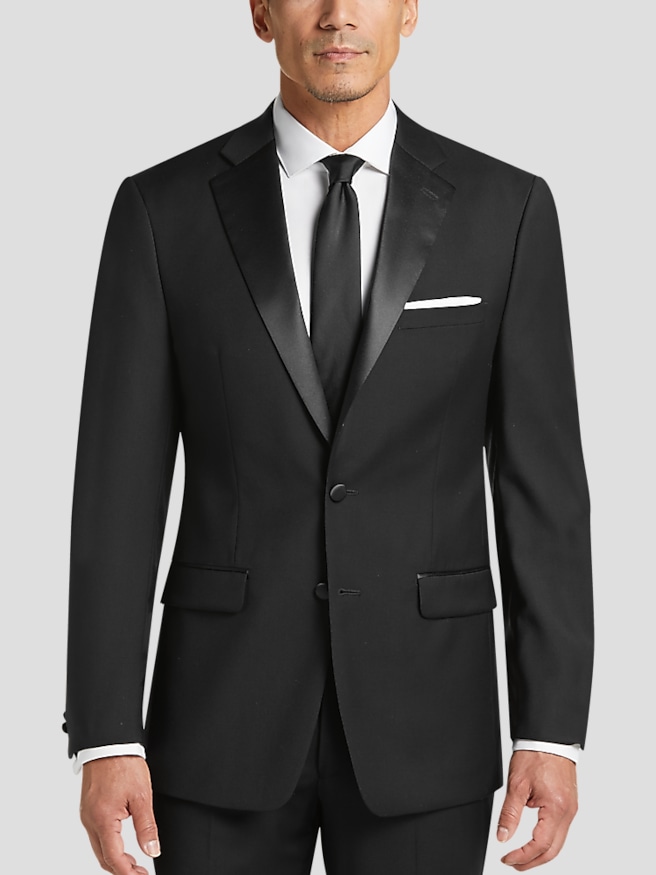
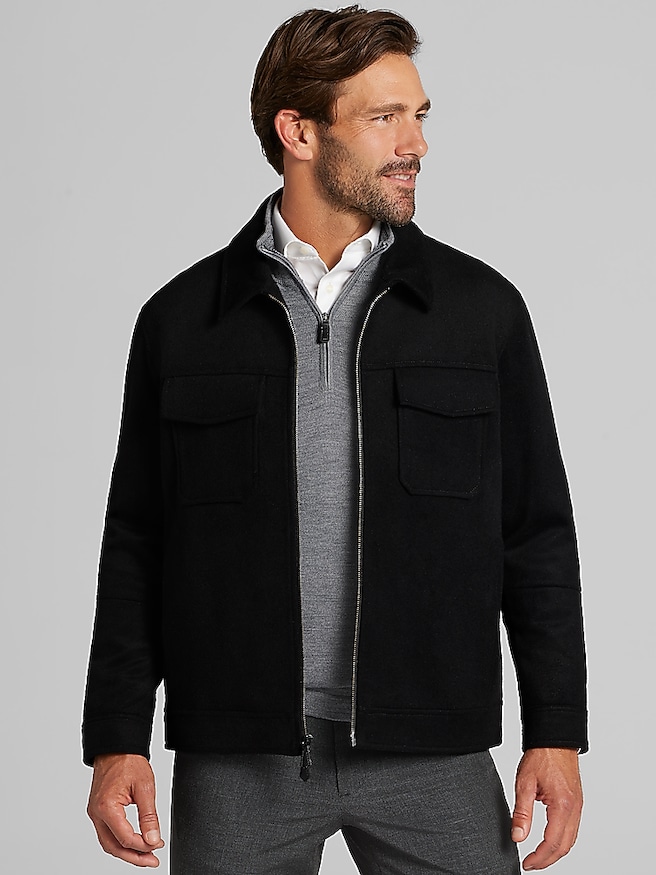
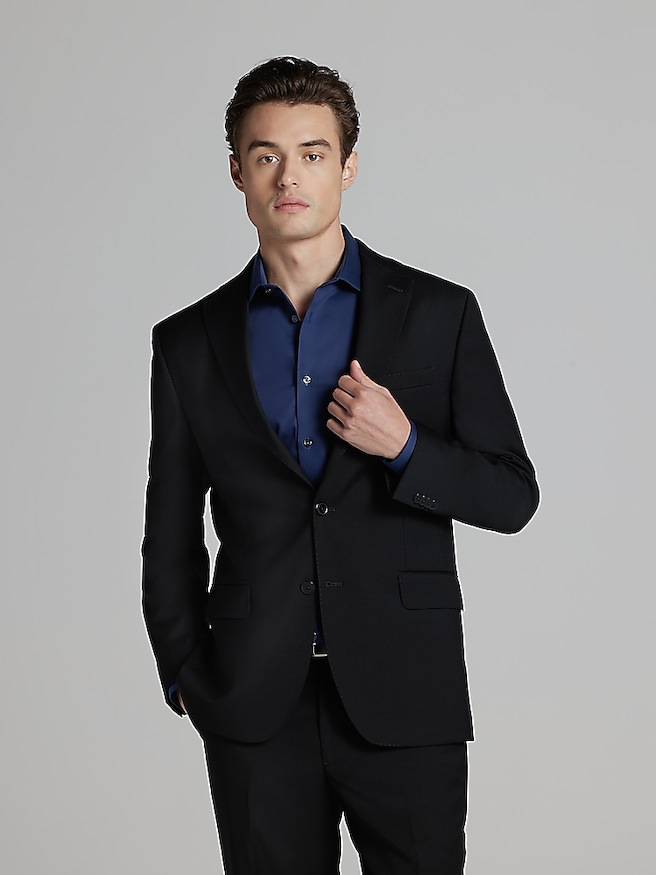
Black wool jackets for men combine a versatile neutral color with a fabric valued for its texture, resilience, and ability to hold a defined shape. The category spans tailored jackets, streamlined zip-front styles, and button-front outer layers, each with a different balance of polish and ease. A smooth wool surface and clean lapels can complement dress trousers for an office presentation or dinner reservation, while a more textured finish, simple collar, and practical pockets work naturally with denim and chinos. Black gives these silhouettes a consistent visual foundation without making them interchangeable: the cut, fabric weight, lining, and closure all influence how a jacket looks and feels in use. Woven wool can have a crisp, refined appearance or a softer, more substantial hand, depending on the yarn and construction. Boiled wool is treated to create a compact, felted texture that gives the fabric body and a distinctive surface. Wool blends introduce other fibers that may affect softness, abrasion resistance, stretch, or shape retention, so the fiber-content label provides more useful information than appearance alone. A higher wool percentage does not automatically make a jacket better for every purpose; the right choice depends on the desired feel, structure, and care routine. Fabric weight also matters independently of fiber content. A lighter construction may drape more freely, while a heavier cloth can create a firmer silhouette. Full linings help a jacket slide over shirts and knitwear, while partial or unlined construction allows more direct contact with the fabric and may feel less structured. Details such as a stand collar, notched lapel, ribbed cuff, or adjustable hem shift the overall character from dress-oriented to casual. For someone who moves between desk work, appointments, and social plans, a restrained design can make those transitions easier. For someone who prefers a more relaxed wardrobe, visible texture and straightforward closures can give a black jacket interest without relying on a bold color or pattern.
Fit determines whether a black wool jacket feels comfortable and looks intentional, especially when it will be worn over other clothing. Start with the shoulders: on a conventionally tailored silhouette, the shoulder line should sit close to the natural edge rather than extending noticeably beyond it or pulling inward. Designs with dropped shoulders are an exception, but their proportions should still look deliberate. Across the chest, a closed jacket should lie smoothly without strong horizontal pulling, and the collar should settle comfortably instead of standing away from the neck. Try it with the kind of layer it will usually cover, whether that is a dress shirt, a fine-gauge sweater, or a substantial knit. Reach forward as if holding a steering wheel, sit down, and bend the elbows to check that the upper back and sleeves allow normal movement. A fitted appearance should not require keeping the arms still. Sleeve length and overall length deserve equal attention. A tailored jacket may allow a small amount of shirt cuff to show, while an outer layer generally needs enough sleeve coverage to keep the underlying clothing from looking unintentionally exposed. If the jacket will cover a sport coat, make sure its hem accommodates that layer. Pocket placement also affects daily use; openings should be easy to reach without distorting the jacket, and overfilled pockets can interrupt an otherwise clean line. Styling black wool is often about contrast rather than adding more black. Charcoal trousers create a subtle distinction, tan chinos offer a clearer separation, and dark indigo denim keeps the combination grounded. A white shirt brings crisp definition near the face, while a textured knit softens the overall impression. When pairing black pieces, compare their tones and finishes in good light, since two fabrics can look noticeably different even when both are labeled black. For related silhouettes with a relaxed emphasis, Men's Casual Wool Jackets offers a natural point of comparison. A wool jacket can also make a thoughtful gift for a partner, relative, or friend, particularly when the recipient’s measurements, preferred fit, and usual clothing combinations are already known.
Long-term satisfaction with a wool jacket depends on both construction and everyday care. Look for seams that lie flat, lining that does not pull against the outer fabric, and closures that operate smoothly. Buttons should feel secure, buttonholes should be neatly finished, and a zipper should move without catching the surrounding cloth. Reinforced pocket openings and a stable collar are useful details in areas that receive frequent handling. Durability is not simply a matter of choosing the thickest material; a well-constructed jacket with an appropriate fit avoids unnecessary strain at the elbows, shoulders, and fastenings. Black fabric can make lint, dust, and pale fibers particularly noticeable, so regular surface care helps preserve its appearance. A soft clothing brush used gently in the direction of the fabric’s surface can remove loose debris without the repeated adhesive contact of a lint roller. Empty the pockets after wearing, hang the jacket on a broad, contoured hanger that supports its shoulders, and allow it to air in a ventilated space before placing it in a closet. Avoid crowding it tightly between other garments, which can flatten the fabric and leave unwanted creases. Cleaning should follow the care label rather than a fixed schedule. Some wool jackets require professional dry cleaning, while other constructions permit different methods; the lining, interfacing, trim, and blend all matter. When a spill occurs, blot gently with a clean cloth rather than rubbing, and seek appropriate professional treatment for persistent marks. Excessive heat, aggressive scrubbing, and unapproved washing can change wool’s texture or alter the jacket’s shape. If pressing is permitted, use the recommended setting and a protective pressing cloth, since direct heat can leave shine on dark fabrics. For extended storage, put away a clean, fully dry jacket in a breathable garment bag and keep the storage area clean. These habits help protect the texture, proportions, and finish that make a black wool jacket useful across many outfits and occasions.