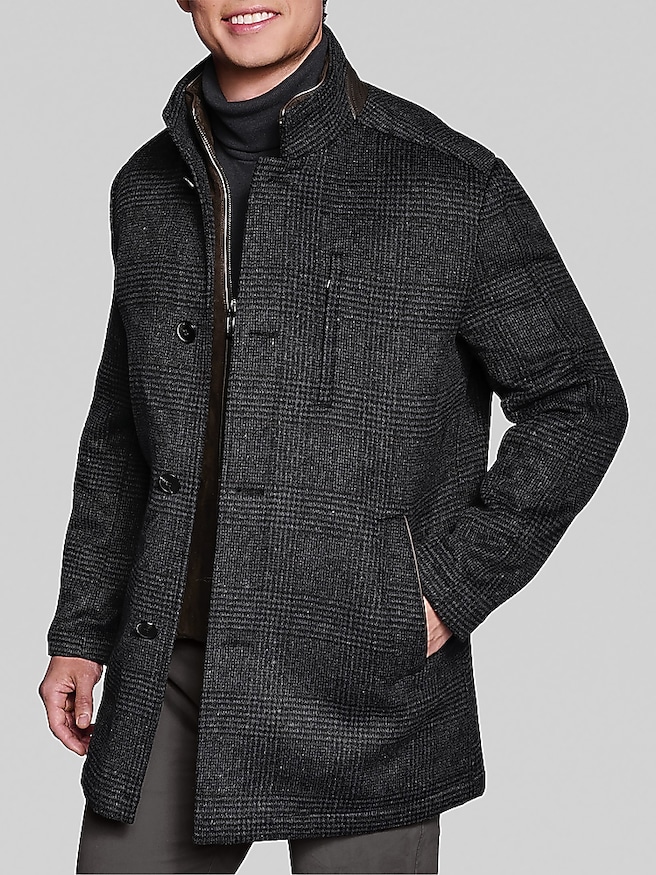
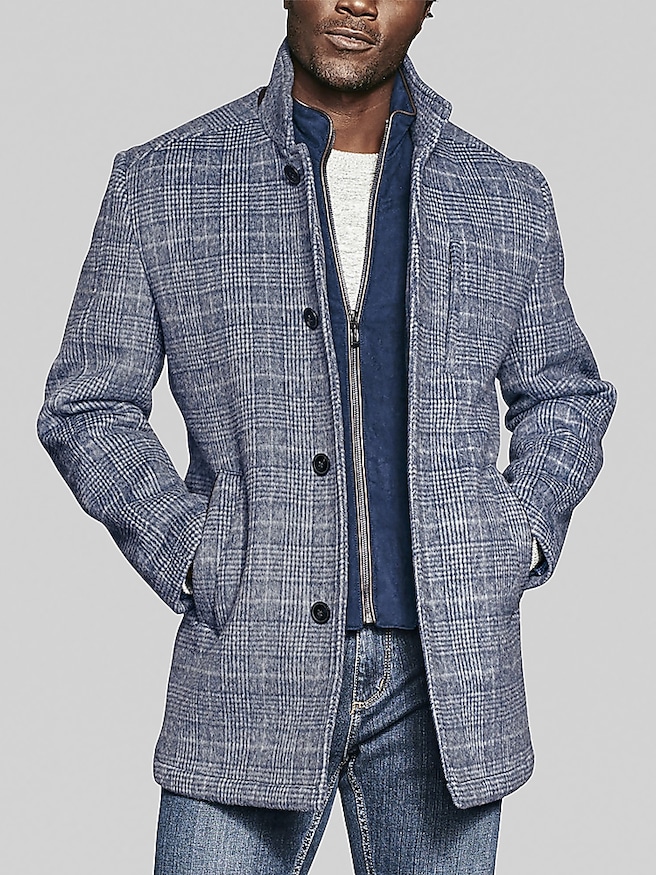
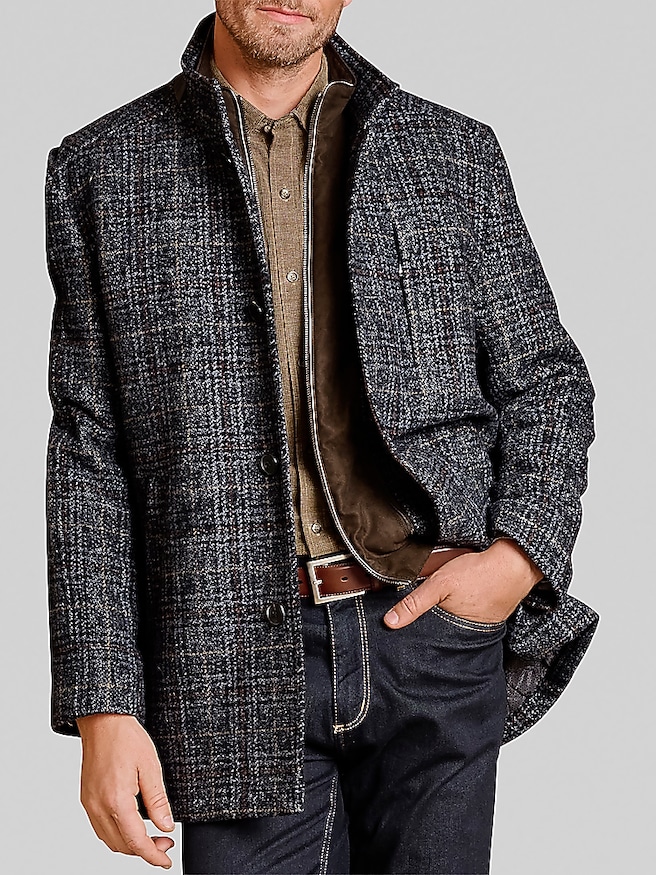
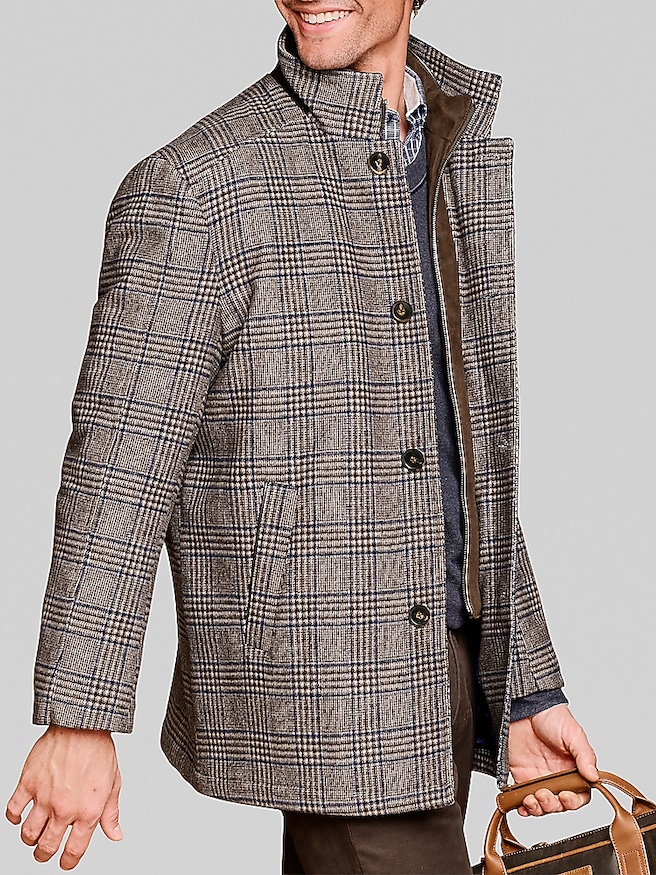
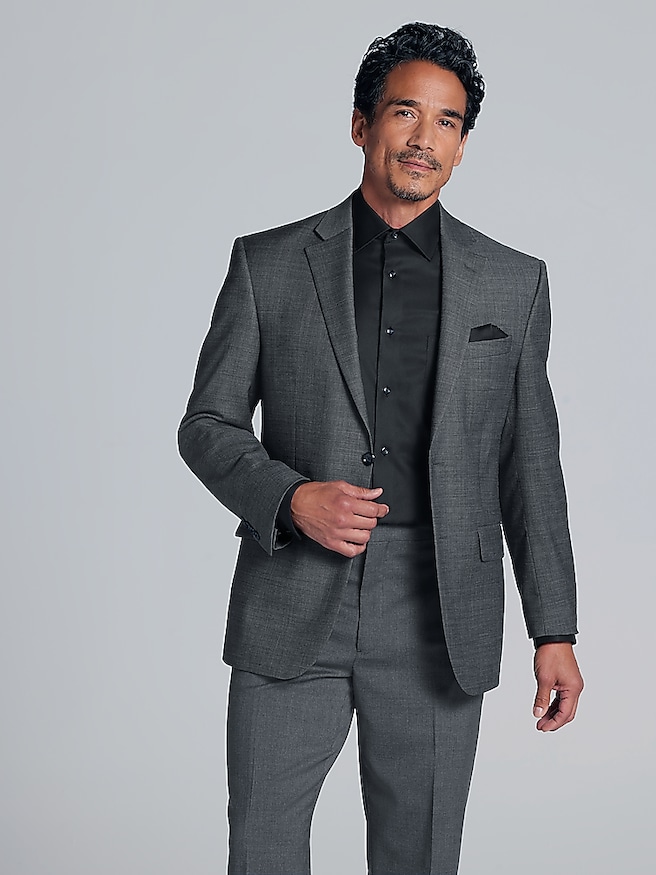
Men's casual wool jackets bring natural texture, comfortable structure, and a relaxed sense of polish to everyday outerwear. Less formal than a tailored overcoat, they work with the clothes that tend to get the most wear: straight-leg jeans, cotton chinos, button-down shirts, and simple knit layers. The category spans shirt-jacket silhouettes, short zip-front shapes, and softly structured designs with collars or understated lapels. Each has a distinct character, but the common thread is wool fabric that adds depth without relying on bold details. A brushed surface has a softer, more casual appearance, while a dense, smooth weave creates a cleaner outline. Herringbone introduces a subtle directional pattern, and heathered yarns give solid colors dimension up close. Wool fibers naturally provide insulation, absorb moisture vapor, and recover from some everyday wrinkling, although a jacket's overall feel depends on its weave, weight, lining, and construction. Fabric composition matters, too. A wool-rich shell emphasizes the fiber's characteristic texture and drape, while blends can introduce other qualities. Nylon may contribute abrasion resistance, polyester can help support shape retention, and cashmere can add softness; the proportions and quality of the finished fabric matter more than the presence of any single fiber. A higher wool percentage does not automatically make one jacket better suited to every routine. Dense fabric may feel substantial and hold a defined shape, while a lighter, more flexible cloth can move easily over a shirt. Lining changes the experience as well: a smooth lining helps sleeves slide over knitwear, whereas an unlined or partially lined construction may feel less structured. These distinctions make casual wool jackets useful for men who want an outer layer that looks considered without feeling dressy. For an office with a relaxed dress code, a dinner reservation, or a day spent moving between appointments, the appeal is the same: visible fabric character, a balanced silhouette, and enough versatility to complement familiar wardrobe staples. Details such as a restrained collar, neat seams, and well-proportioned pockets help keep that versatility intact.
An easy fit is central to the look, but relaxed should not mean shapeless. Shoulder placement establishes the outline: a conventional shoulder seam generally sits close to the edge of the shoulder, while an intentionally dropped seam creates a looser profile. Across the chest and upper back, enough room for a normal range of movement helps the jacket sit naturally rather than pull when reaching forward. Trying it over the layer most likely to be worn underneath gives a more useful sense of fit than trying it over a thin shirt alone. A fine-gauge sweater needs less space than a substantial knit or hoodie, and that difference can affect both comfort and appearance. With the front fastened, the fabric should fall without pronounced strain around buttons or a zipper. Sleeves should allow comfortable movement at the elbow, and cuffs should sit neatly near the wrist without swallowing the hands. Length changes the proportions of an outfit just as much as width. A hip-length jacket gives denim and casual trousers a compact, straightforward finish, while a slightly longer cut offers more coverage over an untucked shirt. Collar and closure details also influence how a jacket reads. A turn-down collar feels familiar with an Oxford shirt, a stand collar creates a clean frame around a crewneck, and a button front can emphasize the easy character of a shirt-jacket. Patch pockets add a practical, workwear-influenced note; discreet welt pockets keep the front visually quieter. For a casual dinner, charcoal wool over a textured knit with dark denim feels finished without resembling a suit. For a relaxed workplace, navy or brown pairs naturally with chinos and a crisp shirt. A patterned jacket often needs little more than solid-colored layers beneath it, allowing the weave to remain the focal point. Footwear can reinforce either direction: clean sneakers keep the combination informal, while leather boots or simple lace-up shoes give it a more defined finish.
Long-term wear depends on both construction and care. Firmly attached buttons, even stitching, secure pocket openings, and a zipper that moves smoothly are practical details worth noticing because they are used repeatedly. Wool is resilient, but friction from a shoulder strap, a desk edge, or repeated contact at the underarms can affect its surface. Some pilling is possible, particularly on softer fabrics, and does not by itself establish whether a jacket is well made. A fabric comb or sweater shaver may help with suitable fabrics when used gently and according to its directions, though delicate or loosely woven surfaces require extra caution. The care label remains the authority for cleaning: many structured wool jackets call for professional dry cleaning, while some less structured designs have other approved methods. A blend should never be assumed washable simply because it contains synthetic fibers. Between cleanings, gentle brushing with an appropriate clothing brush can lift surface dust, and allowing a jacket to air in a ventilated space can help freshen it. Spills are best blotted promptly rather than rubbed into the fibers, with further treatment guided by the label or a professional cleaner. A supportive hanger helps preserve the shoulders; crowded hooks and narrow wire hangers can distort the shape over time. For extended storage, a clean, fully dry jacket belongs in a breathable garment bag with appropriate protection against fabric pests. These everyday habits help preserve the texture and outline that make wool appealing. The same attention to fabric weight, coverage, and layering room is useful when comparing men's casual winter jackets, since the complete construction matters more than the shell material alone. As a gift for a partner, father, brother, or friend, a casual wool jacket is most personal when its proportions and details reflect the recipient's routine. A familiar color, preferred closure, and room for a favorite sweater can make it feel immediately at home among clothes already worn and enjoyed.