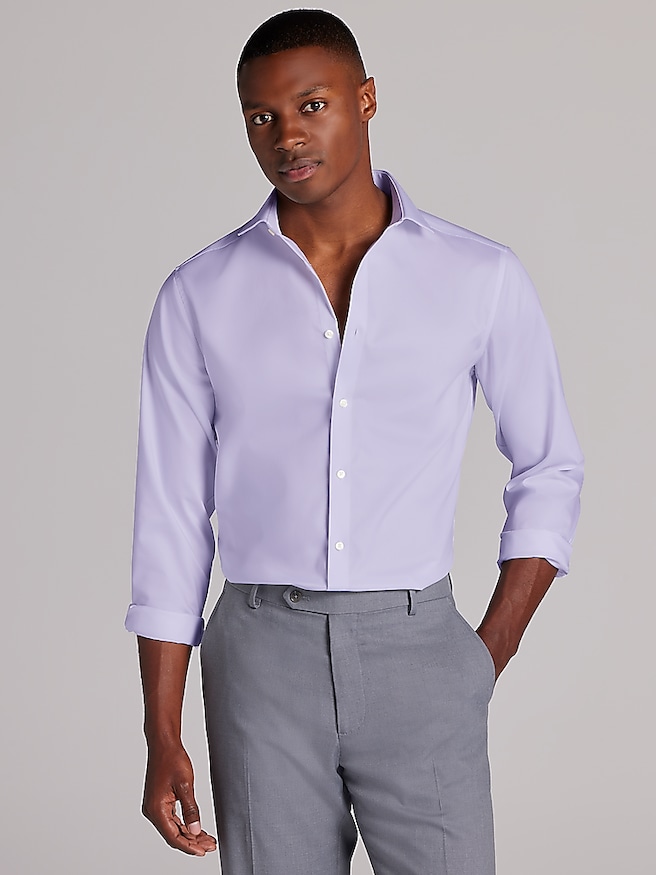
Purple attire includes clothing and accessories in shades ranging from pale lavender and lilac to saturated violet, rich plum, and deep aubergine. That range gives purple a place in casual outfits, business dress, and formal occasionwear without requiring every piece of an outfit to share the same color. A lavender shirt beneath a charcoal suit creates a softer contrast than bright white, while a plum tie can add depth to a navy jacket without becoming the first thing everyone notices. More vivid purple makes a stronger statement, especially across a larger surface such as a shirt or jacket. For an understated approach, darker, muted shades often blend easily with familiar neutrals, including gray, navy, cream, and brown. Black gives clear violet a sharper edge, while tan and medium brown bring warmth to softer lilac tones. The balance depends as much on proportion as on shade: a small purple accent leaves the rest of the outfit quiet, while a larger purple piece becomes its visual center. In professional settings, restrained patterns and matte textures can help the color feel composed rather than decorative. Away from the office, a purple knit with dark denim or neutral chinos offers a relaxed alternative to the usual blue or gray. Patterns create another way to introduce the color, whether it appears as a fine stripe, a small geometric motif, or one thread within a larger check. When purple appears in several places, the shades do not have to match exactly, but they should look intentional together. A pale lavender shirt and a darker plum accessory can provide depth, whereas several nearly identical purples may look mismatched if their undertones differ. Keeping the surrounding colors simple allows those distinctions to feel deliberate. The most useful combinations are often the ones that work with clothing already in regular rotation, making purple an extension of a personal wardrobe rather than an outfit reserved for a single photograph.
Fabric changes how purple looks and how clothing performs throughout the day. Smooth cotton can give lavender a clean, defined appearance, while an oxford weave introduces visible texture that makes the same shade feel more relaxed. Cotton blends may offer easier maintenance, though the care label and fabric composition matter more than broad assumptions about any one material. Wool and wool-blend tailoring can provide structure and drape, helping deeper purples look rich without relying on surface shine. Linen brings an irregular texture and a more relaxed character, including the natural creasing associated with the fiber. Silk accessories reflect light differently from matte woven fabrics, so a violet tie may appear brighter or darker as its folds move. That variation is worth considering when coordinating pieces for an event or a photograph. Stretch fibers can add flexibility, but comfort also depends on a garment's cut, construction, and size. A shirt should allow comfortable movement across the back without pulling between the buttons, and a jacket should sit cleanly at the shoulders rather than extend beyond them or pinch across them. Trouser fit matters just as much: a smooth waistband, adequate room through the seat, and a balanced leg shape help the color look polished instead of drawing attention to strain or excess fabric. Sleeve and trouser lengths finish the silhouette, particularly when a saturated shade makes the outline of an outfit more noticeable. Durability comes from practical details such as secure stitching, stable seams, and fabric suited to the intended frequency of wear. An everyday shirt faces repeated laundering and movement, while occasionwear may need more protection during storage and transport. Following the garment's care instructions helps preserve both its shape and its purple tone. Where washing is permitted, separating colors, avoiding excessive heat, and treating marks promptly can reduce unnecessary wear. Tailored garments may require professional cleaning, and structured pieces benefit from supportive hangers. Storing clothing away from prolonged direct sunlight also helps limit fading, especially when purple pieces are worn less frequently than everyday neutrals.
Purple attire can serve many occasions, from a business dinner or graduation celebration to prom, an anniversary gathering, or a wedding. The dress code establishes the level of formality; the color adds personality within it. A purple shirt with tailored trousers can feel appropriate for a polished dinner setting, while a dark suit with a restrained purple accent offers a different level of formality. At events with stricter dress requirements, smaller touches often provide the clearest way to incorporate color without distracting from the expected silhouette. Weddings bring additional considerations because individual outfits need to work within a shared palette. Soft lilac can create gentle contrast with light neutrals, while plum can add depth beside charcoal or navy. Coordinating does not require every participant to wear an identical shade from head to toe. Repeating a related purple tone in selected accessories can connect the group while leaving room for differences in fit and personal style. The broader palette ideas in Purple Wedding Colors can help place those individual choices within the overall celebration. Fabric samples are useful when close coordination matters, since screen settings and photographic lighting can change how a shade appears. Patterns deserve similar attention: a subtle motif may read almost solid from a distance but become more expressive in close photographs. Purple clothing and accessories can also make thoughtful gifts for someone who already enjoys the color, wants more variety in office outfits, or has a meaningful event ahead. Accessories generally involve fewer fit decisions than tailored clothing, though preferred widths, lengths, and patterns still matter. For clothing, an existing garment that fits well can provide a more useful size reference than guesswork. A gift feels especially considered when its shade and fabric suit the recipient's everyday habits, whether that means a quiet lavender accent for regular workdays or a deeper purple chosen for memorable occasions. Across those uses, comfortable fit and thoughtful coordination give the color lasting relevance.