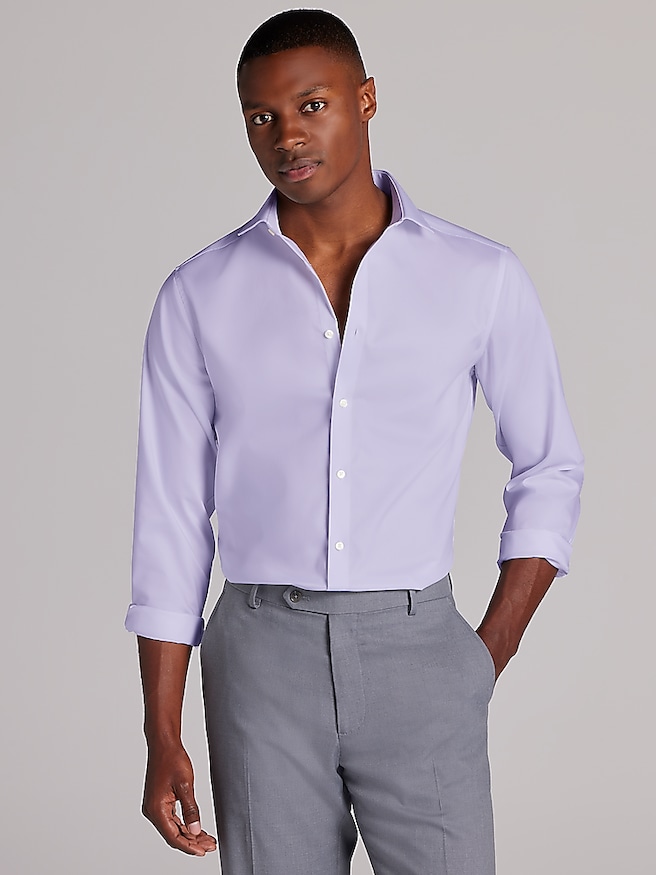
Men's purple clothing includes a broad family of shades, from pale lavender and lilac to saturated violet, muted mauve, and deep plum. That variety gives the color a place in both everyday dressing and more polished outfits. A light purple shirt can bring softness to a charcoal suit without losing the clean contrast expected in a business setting, while an eggplant knit adds depth to dark denim or gray trousers. The effect depends as much on the shade and fabric as on the color itself: a smooth, pale surface looks crisp, while a textured weave or substantial knit makes purple feel more understated. Blue-leaning purples sit comfortably beside navy, slate, and cool gray; red-leaning shades often work well with brown, tan, and other earthy neutrals. These are useful starting points rather than strict rules, especially when the rest of an outfit stays simple. For someone accustomed to white, blue, and gray, a muted purple layer offers a manageable step beyond familiar colors. A deeper tone can function almost like a neutral, particularly when its saturation is low and its finish is matte. Brighter violet makes a stronger statement and usually needs less competition from bold patterns or high-contrast accessories. Purple also suits a range of occasions without requiring a completely separate wardrobe for each one. A lilac collar beneath a navy jacket looks appropriate for a presentation or a dinner reservation, while a plum casual layer feels relaxed at a weekend gathering. At a wedding, a restrained purple accent can connect an outfit to the celebration's colors without making every element match. The most convincing combinations leave room for the shade to stand on its own, supported by familiar shapes, balanced proportions, and a clear sense of how dressed up the occasion needs to be. Even a small amount of purple at the neckline can change the character of an otherwise neutral outfit, adding interest without drawing attention away from the person wearing it.
Fabric and construction influence how men's purple clothing looks, moves, and holds up to repeated wear. Cotton is common in shirts and casual clothing because it feels comfortable against the skin and can take color with clarity, although the weave changes its character considerably. Poplin has a smooth surface that emphasizes a clean silhouette, Oxford cloth introduces visible texture, and twill has a diagonal structure that can give the fabric more body. Cotton piqué creates a subtly raised surface that makes a solid color look less flat. Wool and wool blends can give tailored clothing a softer drape, while fine-gauge knitwear offers a closer, smoother layer beneath a jacket. Synthetic fibers may contribute wrinkle resistance, shape retention, or stretch, but performance depends on the complete fabric blend and construction rather than a single fiber name. A small amount of elastane can support movement; it does not replace enough room through the shoulders, chest, seat, or thighs. For outfits built around a button-front layer, men's long sleeve purple shirts provide a useful connection between color, fit, and the level of polish an occasion calls for. A collar should sit comfortably when fastened, shoulder seams should meet the shoulder naturally, and the front should lie flat without pulling between buttons. Sleeves need enough length for reaching forward without exposing too much wrist, while cuffs should sit neatly beneath a jacket sleeve. Slim, tailored, and classic fit labels offer general direction, but measurements and garment proportions matter more than the name alone. A shirt intended to stay tucked needs sufficient length through the body; an untucked style generally looks more balanced when its hem does not overwhelm the trousers. Layering also changes the fit requirement. A close-fitting knit may work over a smooth shirt but bunch over a heavier weave, and a jacket needs enough space to accommodate both comfortably. Well-secured buttons, even seams, and fabric that recovers its shape after movement are practical details that contribute to lasting wear.
Building an outfit around purple is often simplest when the surrounding colors have a clear role. Charcoal creates a quiet backdrop for lavender, navy gives lilac a familiar tailored setting, and medium gray lets a richer plum shade remain the focal point. Tan or brown can soften the effect of a red-leaning purple, while dark denim gives textured purple clothing an easy, everyday context. Pattern scale matters as well as color: a fine stripe beneath a solid jacket is less visually demanding than several equally bold patterns worn together. When more than one purple element appears in an outfit, a shared undertone usually matters more than an exact shade match. A subtle difference in depth can look deliberate, while two nearly matching colors with conflicting undertones may compete. Surface finish deserves similar attention, since a lustrous fabric appears more noticeable beside a matte one even when both are close in color. Keeping purple clothing looking its best begins with the care label, particularly when a garment combines fibers or has structured components. Washable fabrics generally benefit from being sorted with similar colors, and turning clothing inside out can help reduce surface friction. Recommended water temperatures, detergent amounts, and drying methods matter because excess heat and repeated abrasion can affect both color and shape. Knitwear may need gentle handling and flat drying when specified, while structured tailoring may require professional cleaning. Prompt attention to spills is preferable to vigorous rubbing, which can disturb the fabric surface. Proper storage supports durability too: shaped hangers help maintain tailored shoulders, and folded storage helps prevent heavier knits from stretching. For a gift, a familiar silhouette in a shade close to the recipient's existing wardrobe is often easier to wear than an unfamiliar cut in a bold color. Someone who regularly wears navy and gray may find muted lavender or deep plum particularly easy to incorporate. The lasting appeal of men's purple clothing comes from that balance of personality and practicality: distinctive color, comfortable proportions, and fabric suited to the way the clothing will actually be worn.