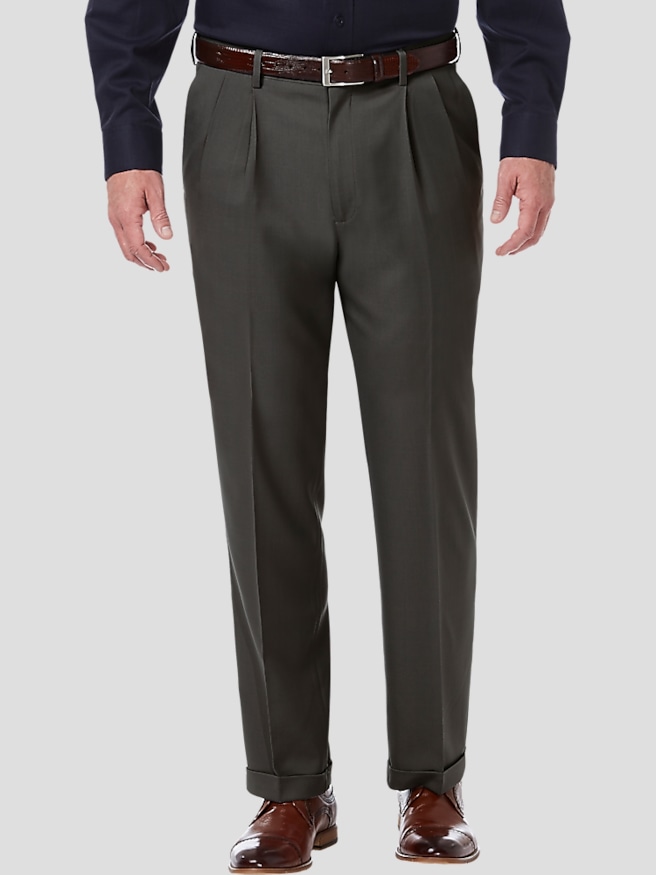
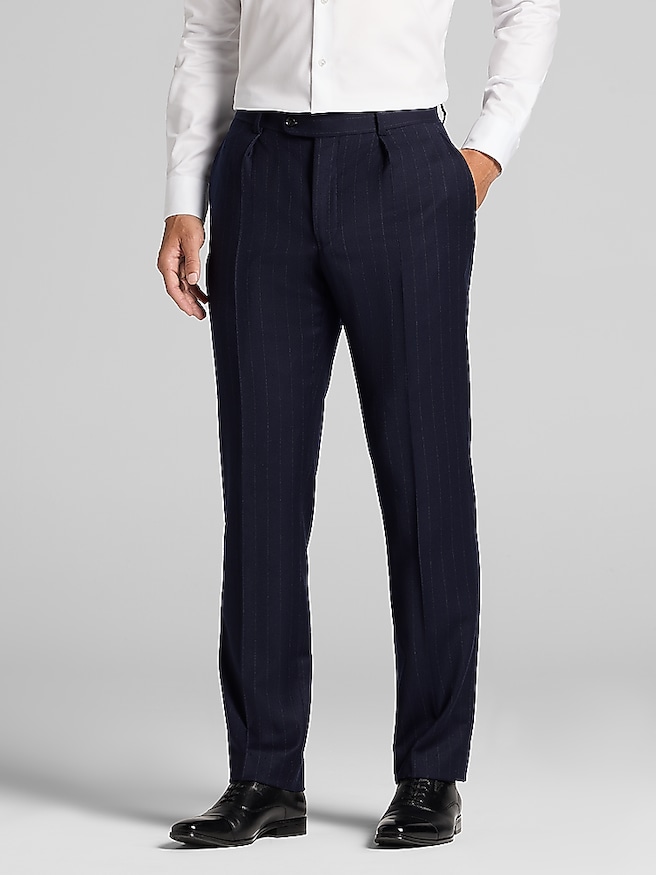
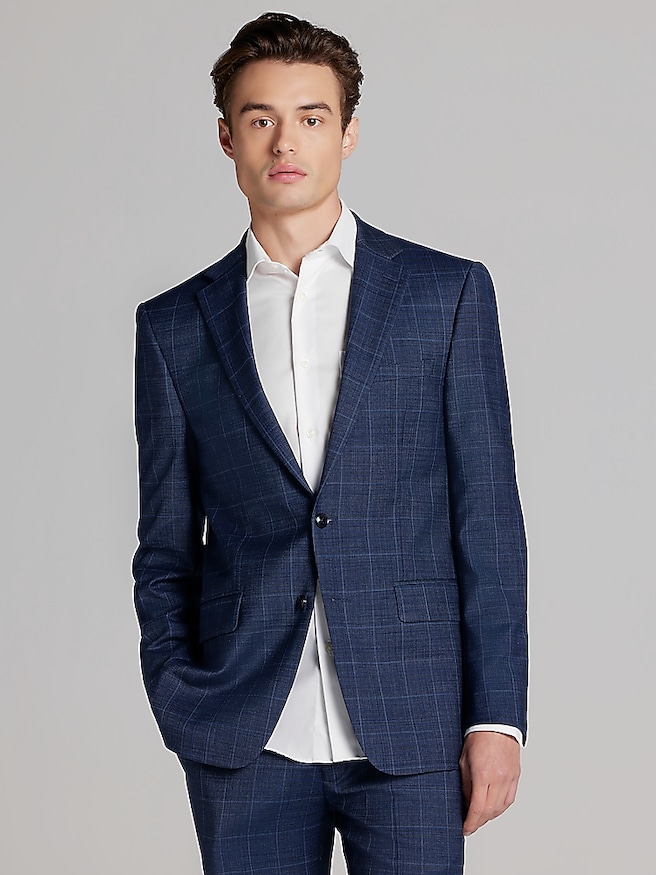
A pleated suit pairs a tailored jacket with matching trousers that have fabric folds secured at the waistband. These folds, called pleats, provide extra room through the front of the hips and upper thighs, allowing the trousers to expand naturally when the wearer sits, walks, or climbs stairs. The result is a dressy silhouette with a little more ease where movement matters, without requiring an oversized fit throughout the suit. Pleats are distinct from the pressed crease that runs down each trouser leg: the pleat controls fullness near the waist, while the crease helps define the leg’s vertical line. Single-pleated trousers have one fold on each side of the front; double-pleated trousers have two, creating a more pronounced tailored detail. Forward pleats face toward the fly, while reverse pleats face toward the pockets. Either arrangement can look refined when the waist, rise, and leg proportions work together. Pleated suits have a long association with classic tailoring, but their character depends as much on the overall cut as on the folds themselves. A softly shaped jacket and a fuller trouser leg create a relaxed, traditional impression, while a defined jacket and gently tapered trousers can feel more streamlined. Neither approach needs to look exaggerated. For someone who spends a workday moving between a desk, a conference room, and an evening dinner, the additional ease can be especially useful. Pleated tailoring also suits wedding guests, members of a wedding party, and anyone who prefers trousers that do not cling across the upper legs. Navy, charcoal, and gray lend themselves to business and formal social settings, while subtle stripes or checks add visual texture. The strongest impression comes from continuity: a jacket and trousers in matching fabric, a clean shoulder line, and pleats that fall neatly rather than pulling open while standing. That combination gives pleated suits their distinctive balance of structure and comfortable movement.
Fabric influences how clearly the pleats hold their shape and how smoothly the trousers fall from the waistband. Wool is a familiar choice for tailored suits because its natural resilience helps the cloth recover from ordinary creasing, while its drape supports a clean line through the jacket and trousers. The same qualities associated with Pleated Wool Pants matter in a matching suit: enough body to keep the folds defined, a surface suited to the occasion, and comfortable movement through the leg. Fabric weight, weave, and finishing all contribute to that effect. A smooth worsted wool can create a crisp, polished appearance, while a more textured cloth gives the tailoring a softer visual character. Wool blends may incorporate other fibers to influence stretch, feel, or resistance to everyday wear, but the fiber label alone does not describe the entire garment. Construction, lining, and the way the fabric hangs are just as important. A small amount of stretch can complement a good fit, though it should not have to compensate for a waistband or thigh that is too tight. Likewise, a lining should lie smoothly without catching at the knee or restricting the stride. For frequent wear, neatly finished seams, secure buttons, and clean stitching around pockets and belt loops are useful details to examine. Areas that experience repeated friction, including the seat, inner thighs, and trouser hems, benefit from appropriate room and careful maintenance. A very fine cloth may feel exceptionally smooth, but fineness by itself is not a guarantee of greater durability. The intended use matters: a suit worn regularly for client meetings has a different routine from one brought out for ceremonies and special dinners. In either case, fabric that falls cleanly over the body allows the pleats to perform their purpose instead of looking like added bulk. A subtle texture or restrained pattern can also add depth without competing with the shape of the tailoring.
Fit determines whether pleated trousers look composed throughout the day. The waistband should sit securely at the rise intended by the cut, without needing a tightly cinched belt to hold it in place. When the wearer stands naturally, the pleats should generally rest closed; persistent spreading can indicate that more room is needed through the waist or hips. Sitting should not create sharp pulling across the lap, and the pockets should lie reasonably flat rather than flare outward. A higher rise can give the pleats more length to fall and can help maintain a continuous line beneath a buttoned jacket, although the best proportion depends on the wearer and the suit’s design. Through the lower leg, enough width to move freely keeps the silhouette consistent with the ease above. An extremely narrow taper can make fuller thighs look disconnected from the hem. Trouser length deserves similar attention: a modest break creates a traditional finish, while a cleaner, shorter break gives the shoes more definition. Cuffed hems can add visual weight to the bottom of the trousers, but plain hems are equally appropriate when the proportions are right. A dress shirt tucked smoothly into the waistband keeps the pleats visible, and a restrained belt or compatible suspenders can finish the waist without unnecessary bulk. Leather oxfords or derbies suit more formal occasions, while loafers can work with less formal styling. For gifting, accurate measurements and knowledge of the recipient’s preferred rise and leg shape are more useful than relying on jacket size alone. Tailoring can refine sleeve length, trouser length, and some aspects of fit, but a sound starting fit remains essential. After wear, a shaped jacket hanger and a proper trouser hanger help preserve the silhouette. Empty pockets, gently brush away surface debris, and allow the suit to air before returning it to the closet. Follow the care label for cleaning, and leave stubborn stains or lost pleat definition to a professional cleaner familiar with tailored clothing. Avoid repeatedly pressing the same area with excessive heat; careful care protects both the fabric surface and the crisp folds that distinguish a pleated suit.