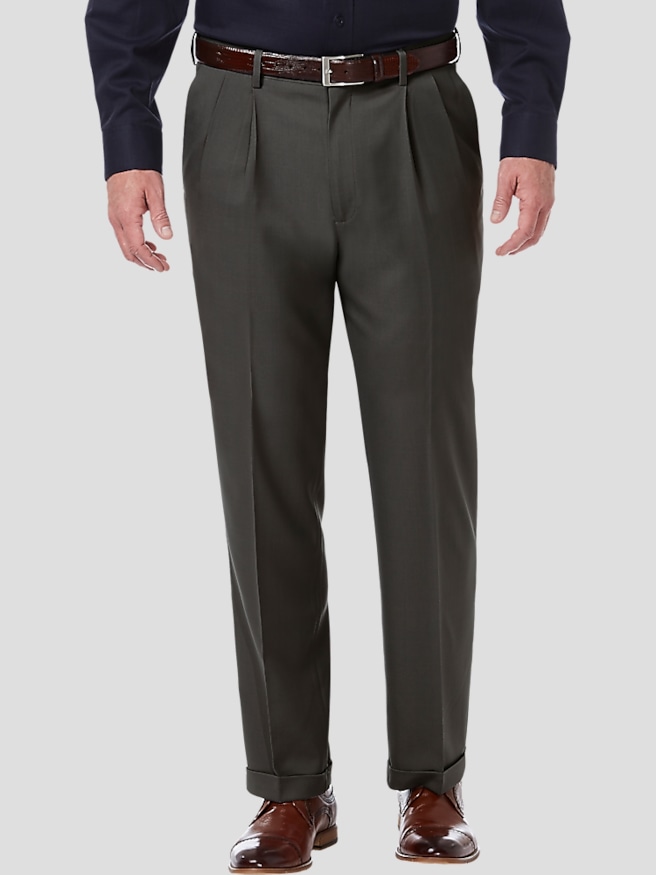
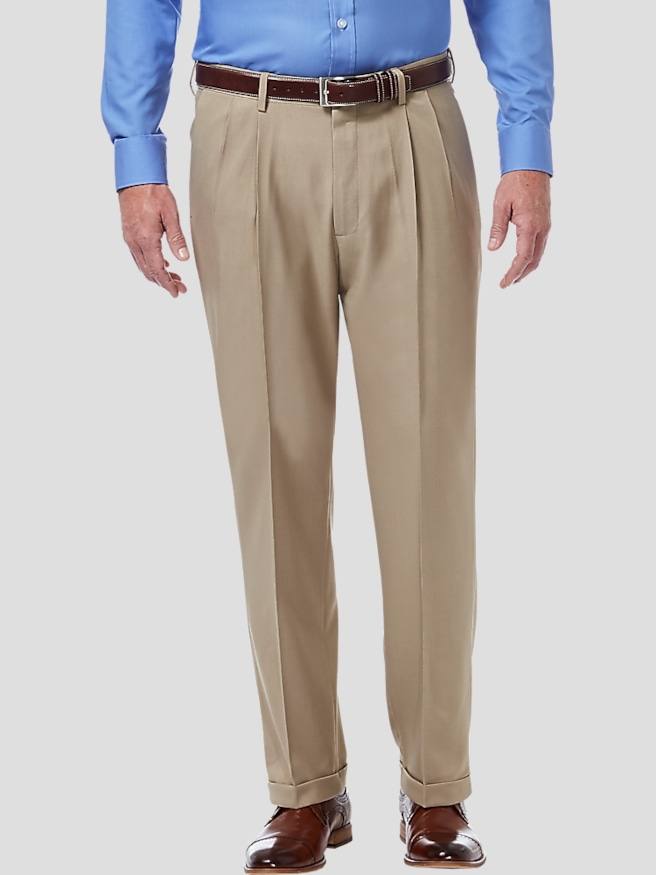
Men's pleated pants combine a tailored appearance with extra room through the hips and upper thighs, making them a practical choice for work, dress occasions, and polished everyday outfits. Pleats are folds of fabric secured at the front waistband that can open slightly with movement, giving the trousers shape without requiring a close fit through the seat. That construction can feel especially comfortable through a day that includes sitting at a desk, walking between meetings, and heading out to dinner. Single-pleat pants have one fold on each side of the front, creating a relatively restrained silhouette; double-pleat pants have two folds on each side for a fuller shape. Forward pleats face inward toward the fly, while reverse pleats face outward toward the pockets. Both can look refined, with the overall effect shaped as much by the rise, leg width, and fabric as by the direction of the folds. A pleat is also distinct from a pressed crease: the pleat adds fabric near the waist, while the crease creates a crisp line down the leg. Fit matters more than choosing a particular pleat style. The waistband should sit securely without digging in, and the front folds should generally lie closed when standing naturally rather than pulling open from tension. Enough room through the seat and thigh helps the fabric hang cleanly instead of catching or bunching. A tapered leg gives pleated trousers a narrower finish below the knee, while straight and wider legs maintain more of the fullness from the upper portion. Neither approach is limited to one body type. For someone with muscular thighs, pleats can provide useful space without making the entire trouser oversized; for someone who prefers an easy silhouette, they offer a deliberate alternative to tightly fitted pants. Mid-rise and higher-rise shapes can also create a clean transition between a tucked shirt and the waistband, particularly when worn with a jacket.
Fabric gives men's pleated trousers much of their character, influencing how the folds hold their shape, how the legs drape, and how dressed up the finished outfit feels. Fine wool often falls smoothly and supports a defined crease, making it well suited to business clothing and dressier combinations. Wool blends vary by composition, with some incorporating fibers that contribute resilience, softness, or stretch. Cotton twill usually has a more substantial, casual texture that works naturally with an Oxford shirt, knit polo, or unstructured sport coat. Linen has a relaxed surface and develops visible wrinkles, so its appeal is more about an easy drape than a perfectly crisp finish. Fabrics containing a small amount of stretch can add flexibility, but stretch does not replace sufficient room through the waist and seat. Fabric weight also affects the silhouette: a fluid cloth creates softer movement, while a firmer cloth gives the pleats and legs more structure. Color offers another way to define the intended use. Charcoal and navy lend themselves to office outfits, while tan, olive, and shades of gray can bridge dressier and casual wardrobes. For a dark, understated foundation, men's black pleated pants can pair with a white dress shirt, a textured knit, or a contrasting jacket. The outfit reads differently depending on those surrounding pieces: a tucked dress shirt and polished leather shoes emphasize the trousers' tailoring, while a fine-gauge sweater and loafers create a less formal impression. At a wedding reception, pleated dress pants can complement a sport coat when the dress code permits separates; for a business presentation, a restrained color and clean crease keep the look composed. A tucked shirt makes the waistband and pleats visible, allowing those details to contribute to the outfit rather than disappearing beneath a long shirt hem. Simple belts and proportionate shoes help maintain that balance without competing with the folds at the front.
Construction, length, and care determine how well pleated pants continue to look after repeated wear. A neatly finished waistband, smooth pocket openings, secure stitching, and an even hem are useful details to consider, particularly for trousers intended for regular office use. Pockets should lie flat when empty, and the closure should fasten without pulling the fabric across the front. Durability depends on the cloth, construction, fit, and maintenance together; a heavier fabric is not automatically the longest-lasting choice. Fit that allows comfortable movement helps avoid unnecessary strain at seams, while rotating pants between wears gives the fabric time to relax. Hem length should suit the leg shape and the shoes most often worn with the trousers. A slight break, where the front hem rests lightly on the shoe, creates a traditional finish; little or no break gives a cleaner outline, especially with a tapered leg. Excess length can collect around the ankle and obscure an otherwise well-balanced shape. Cuffs add visual weight at the hem and can complement fuller legs, while plain hems provide a simpler finish. Care instructions should always follow the garment label rather than a general rule for every pleated style. Some cotton and blended fabrics allow machine washing, while other trousers require professional cleaning. When washing is permitted, the recommended cycle and drying method help protect the fabric and preserve the fit. For pressing, use the appropriate heat setting and a pressing cloth when needed to reduce the risk of shine. Preserve the intended folds at the waistband rather than pressing them flat, and avoid creating an extra crease beside the established leg crease. Hanging trousers neatly after wear can also reduce avoidable wrinkles. As a gift, pleated pants are most useful when the recipient's waist size, inseam, preferred rise, and usual leg shape are known. A person who wears tailored clothing for client meetings, celebrations, or dinners may appreciate their combination of ease and structure. The strongest choice reflects how that person actually dresses: comfortable enough for a long seated event, polished enough for an important introduction, and proportioned to work with the shirts, jackets, and shoes already in the wardrobe.