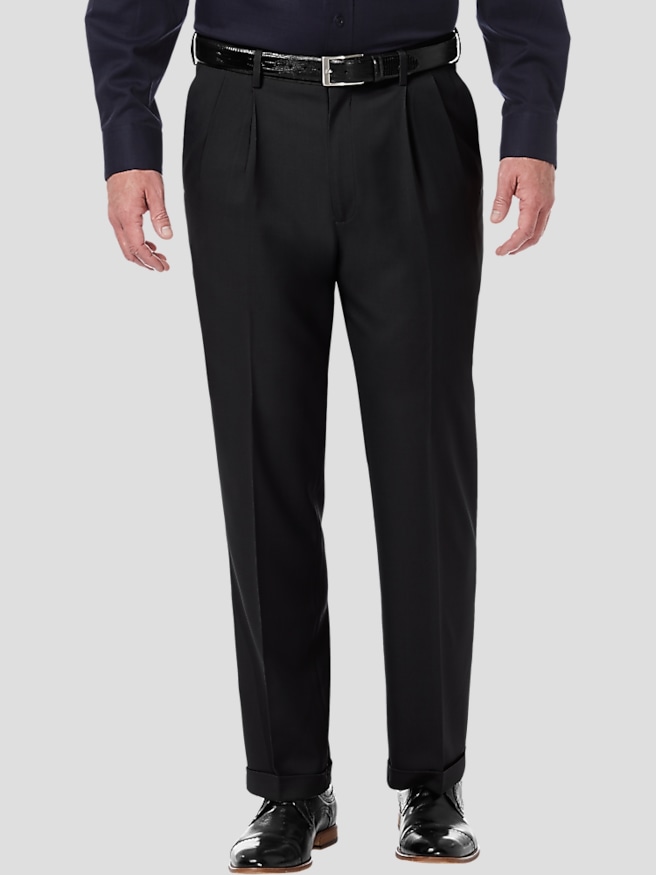
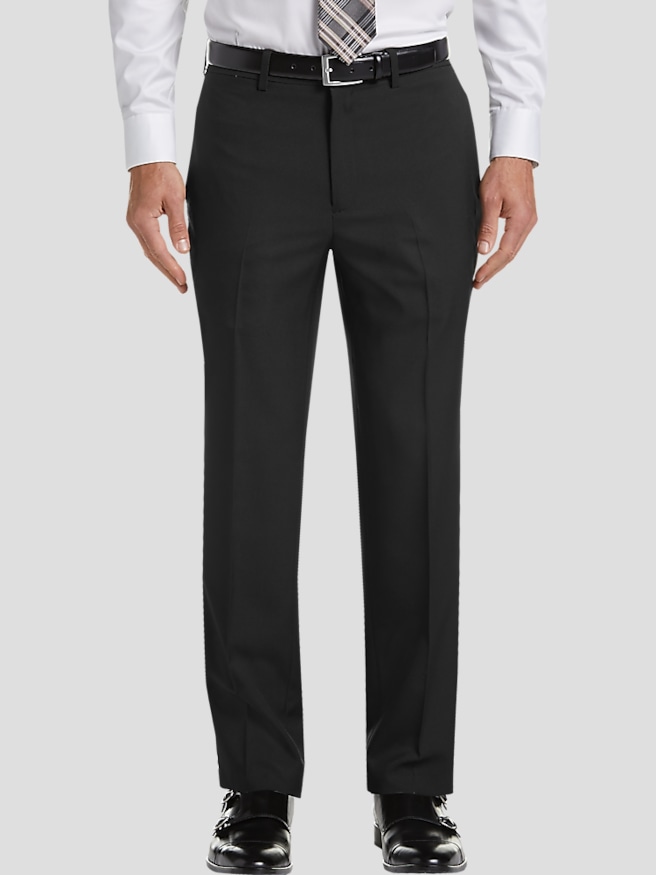
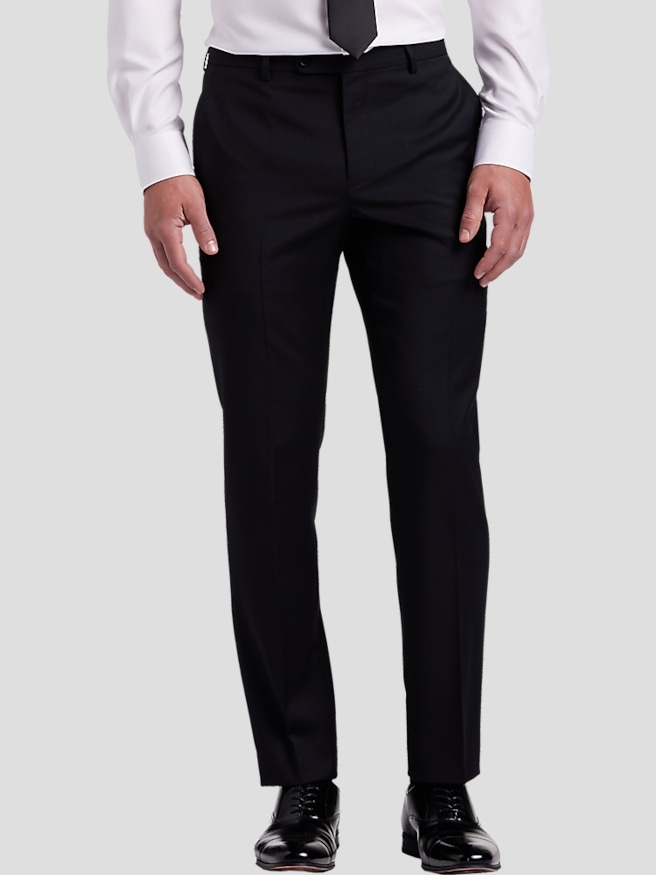
Men’s black pleated pants bring a tailored look to a wardrobe without depending on bold color or elaborate details. Their defining feature is the folded fabric at the front of the waistband, which adds room through the upper leg and gives the trousers a distinctive shape. That extra fabric can make a noticeable difference when sitting through a long meeting, stepping into a car, or spending an evening moving between a dinner table and a reception floor. A single pleat creates a relatively restrained front, while double pleats introduce more fullness and a more pronounced drape. Neither construction has to look oversized: the overall effect depends on the rise, the width through the thigh, and how the leg narrows toward the ankle. Black gives these details a clean backdrop and works easily with white, pale blue, gray, burgundy, and other familiar shirt colors. For an office setting, a tucked dress shirt and leather shoes keep the combination straightforward. A fine-gauge knit polo or a simple sweater can make the same silhouette feel less formal without losing its polish. With a sport coat, black pleated trousers offer a useful foundation for business dinners, theater outings, and celebrations where a full suit is not expected. They can also work for wedding guests when the invitation calls for dressy separates, though a black-tie dress code generally calls for a tuxedo rather than ordinary dress pants. The appeal extends beyond any one age group or style preference. Someone who likes traditional tailoring may appreciate the fuller drape, while someone building a more modern wardrobe may prefer a gently tapered leg with a clean hem. For anyone accustomed to flat-front trousers, pleats offer another way to balance ease of movement with a defined waist. The result is a category of pants that can feel composed and comfortable at once, whether the day involves a presentation, a graduation ceremony, or dinner at a favorite restaurant.
Fabric and fit determine much of how black pleated pants look after several hours of wear. Wool is valued for its drape and resilience, with many woven wool fabrics allowing the pleats and leg creases to hold a crisp shape without appearing rigid. Wool blends can combine that tailored appearance with other performance characteristics, depending on the fibers and construction. Polyester blends often resist wrinkling, while a small amount of elastane can provide stretch for reaching, bending, and sitting. Cotton offers a different texture and a somewhat more relaxed appearance, although it may show creases more readily. Fabric weight and weave matter as much as fiber content: a fluid cloth falls differently from a dense, structured weave, and a brushed surface reflects light differently from a smooth finish. In black, those distinctions can be subtle on a hanger but clear across the thigh and knee when worn. A good fit lets the pleats lie neatly while standing, with enough room for them to open naturally in motion. If they remain pulled apart at rest, the waist, seat, or upper thigh may need more room; choosing a larger waist alone is not always the best solution. The rise should also suit where the pants will sit. A mid- or higher-rise cut can support the pleated shape and help a tucked shirt stay in place, while a lower rise changes both the proportions and the feel at the waist. Through the seat, the fabric should follow the body without gripping or collecting in deep folds. Below the knee, a straight leg emphasizes a traditional line, while a taper brings the silhouette closer to the ankle. Hem length finishes the proportions. A slight break over the shoe creates a familiar dress-trouser look, while little or no break highlights a narrower leg. Cuffs add visual weight at the hem and complement many pleated cuts; a plain hem offers a simpler finish. Trying the pants with the intended shoes makes these choices easier to judge, especially when tailoring the length.
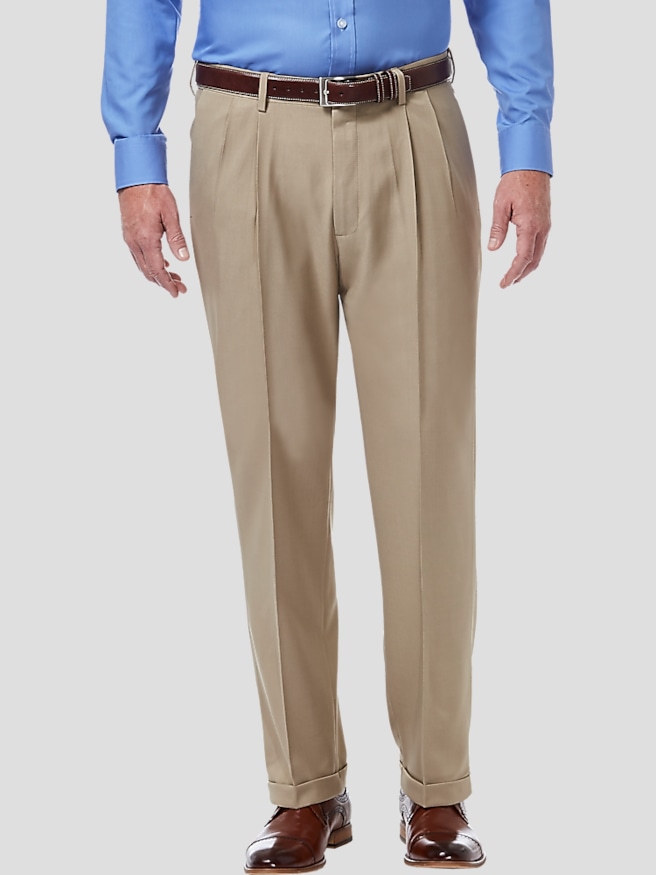
The details around black pleated pants can make an outfit feel considered rather than merely formal. A belt should sit comfortably at the waistband without needing to pull excess fabric into bunches, and a restrained buckle keeps attention on the shape of the trousers. Black leather loafers, lace-up dress shoes, or streamlined boots create a continuous line beneath the hem. Socks close to the trouser color maintain that line when seated, while a subtle pattern can add personality without competing with the rest of the outfit. Shirt proportions deserve attention, too: a neatly tucked shirt shows the waistband and pleats, whereas a long, loose top can obscure the tailoring that makes this style distinctive. For a more relaxed combination, a knit top that ends near the waistband keeps the balance clear. Black is especially useful when a wardrobe already includes textured jackets or patterned shirts, since it gives those pieces a quiet foundation. For another neutral with a lighter visual effect, men’s pleated khaki pants offer a complementary direction within the same tailored silhouette. Whichever fabric and cut suit the occasion, consistent care helps preserve the appearance over time. The care label should determine whether the pants are machine washable or require professional cleaning; similar-looking fabrics can have very different requirements. For washable styles, following the recommended water temperature and drying method helps protect both the fit and the depth of the black color. A garment brush or lint roller can remove visible fibers, which tend to stand out against dark cloth. After wear, hanging trousers neatly along their leg creases helps limit unnecessary wrinkling. Pressing should respect the original pleat direction, and a pressing cloth can help prevent unwanted shine when ironing is permitted. Secure stitching, a smooth zipper, and a firmly attached waistband closure also contribute to lasting wear. As a gift, pleated trousers are most practical when the recipient’s waist, inseam, and preferred rise are known. Those details turn a thoughtful wardrobe addition into something comfortable enough for regular use, not just an occasional appearance.