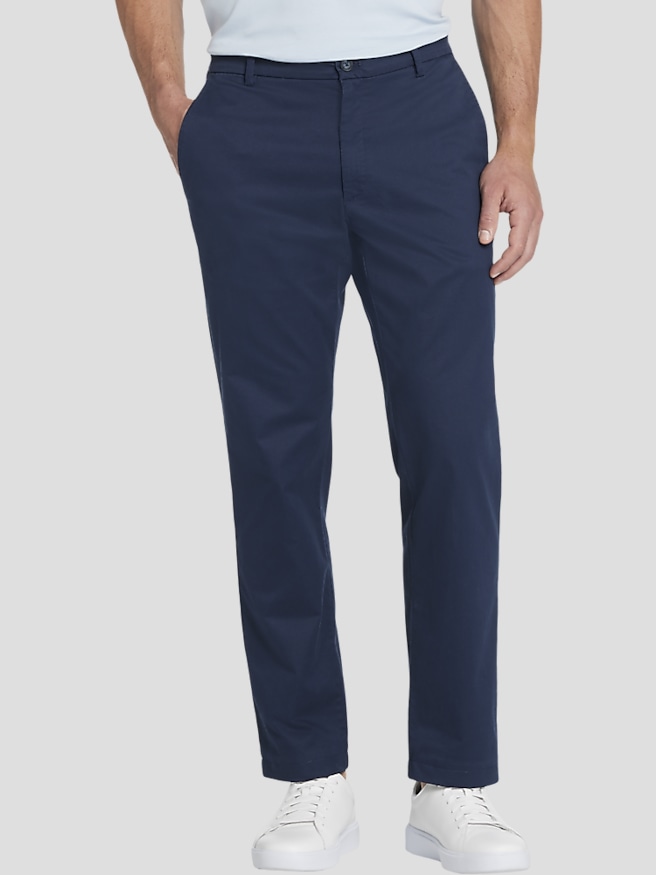
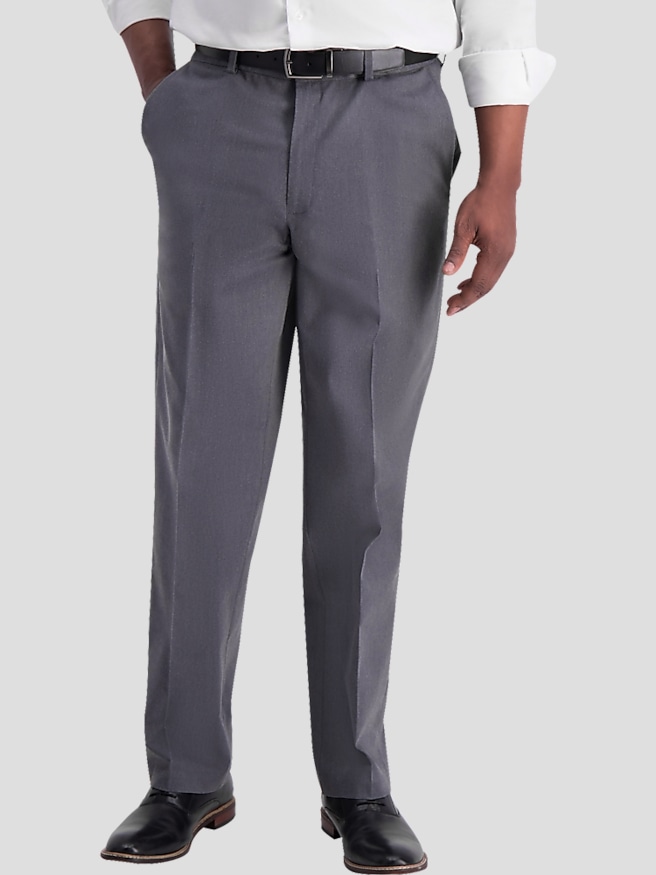
Men's pleated khaki pants combine a classic tailored appearance with added ease through the hips and thighs. The pleats are folds of fabric secured at the waistband, creating room that can open with movement rather than pulling tightly across the front of the pants. That construction makes pleated khakis a practical choice for desk work, extended periods of sitting, and occasions that involve moving between a meeting room, a restaurant, and a drive home. The overall fit still depends on the cut, rise, and fabric; pleats alone do not make a pair loose or relaxed. Khaki describes the color rather than a single material, with shades ranging from light sand to deeper tan. These neutral tones work naturally with navy, white, light blue, olive, and burgundy, giving pleated pants a place alongside everything from an Oxford shirt to a fine-knit polo. Cotton twill is a familiar fabric for khakis, recognizable by its subtle diagonal weave and substantial feel. Cotton-rich blends can combine that familiar texture with other qualities, such as improved shape retention or easier care. A small amount of stretch may provide additional give when sitting or bending, while the pleats supply room through the design itself. Neither feature replaces a proper fit, but together they can support comfortable movement without an overly casual appearance. Wrinkle-resistant finishes and moisture-management properties are additional considerations when those features are specified for the garment. They are not inherent to all khaki pants, and their performance depends on the fabric and care requirements. For everyday wear, the appeal is straightforward: a neutral pair of pants with enough structure to look intentional and enough flexibility to fit into a varied routine. A tucked-in button-down highlights the waistband and pleat detail, while a simple leather belt and loafers complete an outfit suited to a business-casual office or a dinner reservation. Worn with a knit shirt and clean, understated sneakers, the same general style feels less formal without losing its neat appearance.
The shape of pleated khakis comes from the relationship between the waistband, rise, seat, and leg—not just the number of folds at the front. Single pleats create a relatively restrained detail, while double pleats introduce more fabric at the waist and often a fuller appearance through the upper leg. Either can look balanced when the pants sit at their intended position and the pleats lie smoothly while standing. Pleats that pull open at rest may indicate that the waist, seat, or thighs need more room. Excess fabric bunching below the waistband can point to a mismatch in size or cut rather than a problem with pleats themselves. For someone with fuller thighs, a cut with adequate room through the seat and upper leg can feel more natural than sizing up in a narrower silhouette. A classic fit generally emphasizes ease, while a more tailored shape may narrow toward the ankle for a cleaner outline. Actual proportions vary, so fit descriptions and garment measurements matter more than the label alone. The rise also changes how pleated pants look and feel. A higher rise can create a longer leg line and a defined transition between a tucked shirt and the trousers; a lower rise places that transition farther down the body. At the hem, a slight break offers a traditional finish over lace-up shoes, while little or no break gives a more streamlined look. Cuffs add visual weight at the bottom of the leg, whereas a plain hem keeps the finish understated. These details help distinguish pants for a presentation or family celebration from those intended primarily for casual daily wear. Pleated khakis are especially useful where a dress code calls for something neater than jeans but does not require a suit. They can also make a thoughtful gift for a graduate starting an office job or someone refreshing a business-casual wardrobe, particularly when the recipient's waist size, inseam, and preferred fit are known.
Long-term satisfaction with pleated khaki pants depends as much on construction and care as on the first impression in the fitting room. Even stitching, securely attached buttons, a smoothly operating zipper, and well-finished pocket openings are useful details to consider in pants intended for repeated wear. Fabric weight influences the way the legs hang: a more substantial twill can provide a defined drape, while a lighter fabric may feel softer and less structured. Stretch recovery matters, too, because comfortable give is most useful when the fabric also returns toward its original shape after movement. Pocket placement and pocket-bag depth can affect everyday comfort, particularly for someone who carries keys or a wallet. Bulky contents may distort the front of the pants and interrupt the clean line of the pleats, even when the fit is otherwise right. Care requirements vary by fiber blend and finish, so the sewn-in label is the best reference for washing, drying, and pressing. Some cotton and cotton-blend khakis are machine washable, while other constructions require professional cleaning. Excessive dryer heat can contribute to shrinkage or wear, and removing washable pants promptly after the recommended cycle can help limit deep wrinkles. When pressing is permitted, following the existing pleat and crease preserves the intended shape without introducing competing lines. Hanging pants neatly between wears also helps maintain their appearance. Wrinkle-resistant does not mean wrinkle-proof, especially after hours of sitting or being folded into a bag. For a broader look at this versatile color family, Men's Khaki Pants provides context beyond the pleated silhouette. Within that family, pleated styles stand apart for the way they combine room at the front with a tailored finish. Their strongest role is in a wardrobe built around repeatable combinations: a blue shirt for an office day, a textured sport coat for a gathering, or a polo for an informal meal. With suitable proportions and consistent care, pleated khakis can remain a dependable foundation for polished everyday dressing.