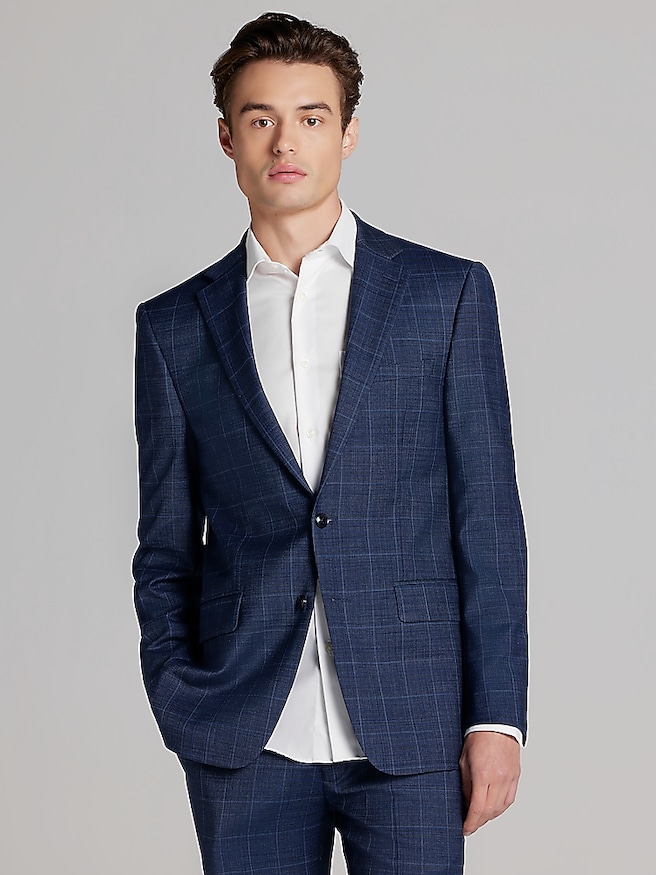
Patterned suits add visual interest to tailored clothing through stripes, checks, plaids, and other repeating designs. Their character depends as much on contrast and scale as on the pattern itself: a narrow navy stripe can look nearly solid across a conference table, while a broad windowpane check remains distinct from the other side of a room. That range makes patterned suits useful for business attire, weddings, dinner events, and occasions that call for a more expressive alternative to a solid suit. Pinstripes feature fine vertical lines and have a longstanding association with business dressing. Chalk stripes have a softer, broader appearance, while windowpane patterns form an open grid with more space between the lines. Glen plaid combines small checks and intersecting lines for a layered effect that can feel understated in closely related shades. Houndstooth brings a broken-check design, often appearing as subtle texture when rendered on a small scale. Color changes the impression, too. Charcoal with a faint gray check offers a restrained look for presentations or client meetings; blue with a more visible overcheck adds personality to a celebration without relying on a bright overall color. A patterned suit does not have to be bold to feel distinctive. Tonal designs reward a closer look and can be especially versatile when the same suit needs to work for several kinds of events. More pronounced patterns put the tailoring front and center and usually benefit from quieter accessories. The invitation or workplace dress code still matters: a patterned business suit is not a substitute for a tuxedo when black tie is specified. For less prescriptive occasions, pattern provides room for individual taste while preserving the clean outline of a coordinated jacket and trousers. The most wearable choice often reflects the setting in which it will spend the most time, whether that means regular office wear or a handful of meaningful celebrations.
Fabric and fit shape how a patterned suit looks in motion, not just on a hanger. Wool is valued for its drape, resilience, and ability to recover from ordinary wrinkles, although the weight and weave affect the finished feel. Worsted wool can give stripes and checks a crisp appearance, while more textured weaves soften the pattern’s edges. Wool blends may incorporate other fibers to influence stretch, wrinkle resistance, texture, or ease of care; the fiber label gives a clearer picture than appearance alone. Cotton tends to have a more relaxed structure and can develop visible creases, while linen’s characteristic texture and wrinkling create a distinctly less formal impression. Neither fiber automatically makes a suit appropriate for every dress code. A smooth, finely woven cloth and a textured cloth can carry the same check yet produce very different results. Durability also depends on construction, fabric density, friction, and how often the suit is worn. Stretch can make movement more comfortable, but it does not replace the need for enough room through the shoulders, seat, and thighs. A well-fitting jacket rests cleanly at the shoulders, sits close to the shirt collar, and closes without pronounced pulling across the front. Pattern lines can make fit issues easier to notice, particularly when a grid bends sharply around a tight button or the trousers pull across the hips. Slim fits generally follow the body more closely, while roomier cuts allow additional space; neither should restrict sitting, walking, or reaching across a table. Trouser rise, sleeve length, and the amount of break above the shoes all influence the final proportions. Alterations can refine those details, though major changes may affect pockets, balance, or pattern alignment. Where checks meet at prominent seams and pockets, thoughtful alignment contributes to a cohesive appearance. A suit that feels comfortable through an entire ceremony or workday is more useful than one that looks sharp only while standing still.
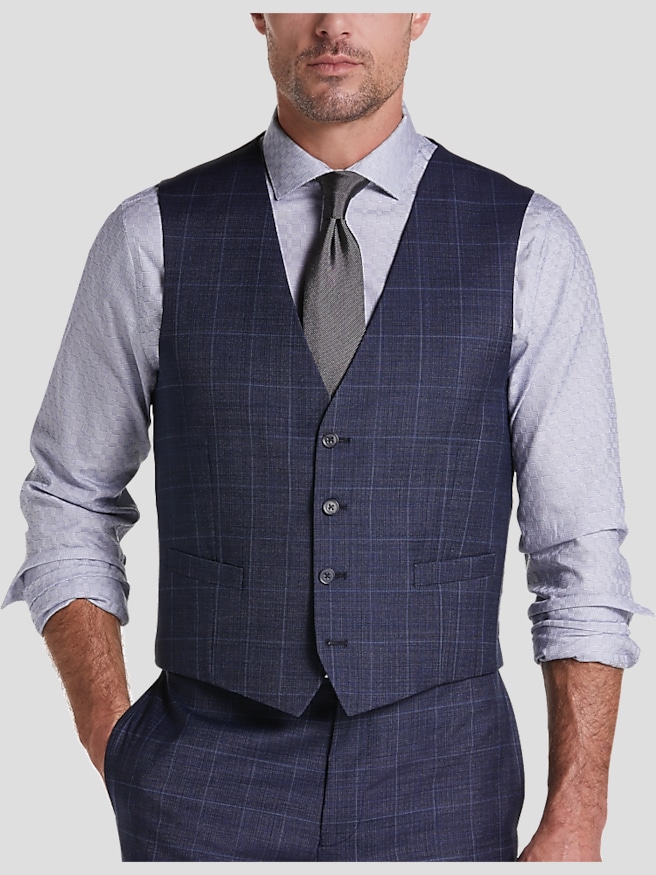
Styling a patterned suit is largely a matter of giving its design enough space to read clearly. A white or pale blue shirt creates a quiet background for stripes and checks, while a solid tie can pick up a secondary color from the fabric without repeating the whole design. Pattern mixing can also work when the sizes are noticeably different: a small geometric tie has a different rhythm from a wide windowpane jacket. Closely sized patterns compete more readily, especially when both have strong contrast. Pocket squares are most effective as a supporting detail rather than an exact match for every other accessory. Smooth leather shoes keep the overall effect polished, with black often pairing naturally with charcoal and brown providing another option with many blue suits. For a three-piece look, a patterned suit vest adds another layer of tailoring; its relationship to the jacket matters, whether the fabrics coordinate or create deliberate contrast. A vest should lie smoothly over the shirt and meet the trouser waistband without leaving an exposed strip of shirt when standing. Beyond styling, consistent care helps preserve both the fabric and the suit’s shape. Following the garment’s care label is essential, particularly for blended fabrics, linings, and structured jackets. A broad, supportive hanger helps the jacket retain its shoulder shape, and trousers benefit from careful hanging that avoids unnecessary folds. Light brushing with an appropriate clothing brush can lift surface dust, while airing the suit between wears helps it feel fresh without unnecessary cleaning. Stains deserve prompt attention from a cleaner familiar with tailored garments rather than vigorous rubbing at home. Pressing or steaming should follow the fabric’s care requirements, since excessive heat or pressure can leave shine or distort construction. For gifting, a patterned suit is most practical when the recipient’s measurements, preferred fit, and likely occasions are known. Subtle checks can suit someone building a versatile tailored wardrobe, while a more visible plaid may appeal to someone who already enjoys expressive dressing. In either case, comfort, careful finishing, and a pattern that feels natural to the wearer give the suit lasting purpose.