Patterned blazers bring visual interest to tailored clothing through checks, stripes, floral motifs, geometric designs, and textured weaves. Unlike a solid jacket, a patterned blazer gives an outfit a focal point, whether that is a fine houndstooth visible up close or a broad windowpane check that stands out across a room. The effect depends as much on contrast and scale as on the motif itself: a small navy-and-blue check can feel understated, while a large black-and-cream plaid creates a stronger impression. Plaid blazers feature intersecting lines in multiple widths or colors; windowpane patterns use widely spaced lines to create an open grid. Houndstooth has a distinctive broken-check shape, and herringbone forms repeating zigzag lines that often read as texture from a distance. Floral and abstract prints offer a more expressive alternative, while jacquard fabrics can incorporate elaborate motifs directly into the weave rather than printing them on the surface. These distinctions make patterned blazers useful for a broad range of settings, from a business-casual office to a dinner reservation, gallery opening, or wedding reception where the dress code allows a separate jacket. A subtle check with solid dress pants can suit a presentation without distracting from it; a bolder geometric design can bring personality to a birthday dinner. Pattern alone does not determine formality. Fabric, construction, color, and the rest of the outfit all contribute, and a blazer should not be assumed to replace a suit or tuxedo when an invitation calls for one. For someone building a tailored wardrobe, a restrained pattern in familiar neutral colors can be easy to repeat with several shirts and pairs of trousers. For someone who already wears solid jackets regularly, a larger motif offers variety without changing the basic shape of an outfit. Patterned blazers can also make thoughtful gifts for graduates, partners, or family members who enjoy dressing for occasions, especially when their jacket size and preferences are already known.
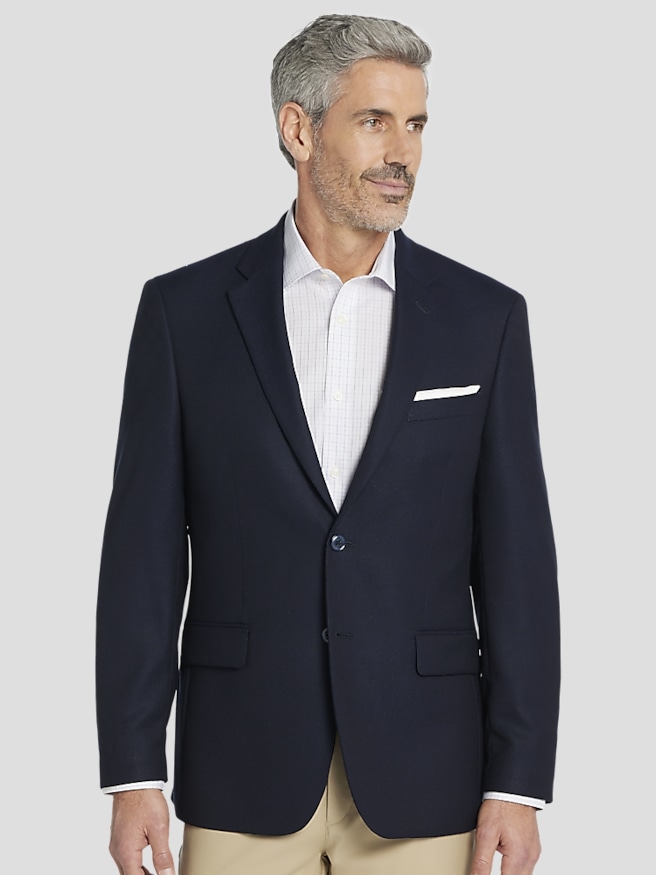
Fabric and construction influence how a patterned blazer looks, moves, and holds up to repeated wear. Wool is valued for its resilience and drape, helping a jacket fall cleanly while allowing many minor wrinkles to relax between wears. Cotton often has a crisper, more casual character, and linen has a distinct texture with natural creasing that becomes part of its appearance. Blended fabrics can balance softness, shape retention, and ease of movement, though performance depends on the full fiber composition and how the cloth is made. A small amount of stretch may make reaching or sitting more comfortable, but it cannot compensate for a jacket that is too tight. Surface texture matters, too: a softly brushed check has a different presence from a smooth woven plaid, and a lustrous jacquard can look dressier than a matte fabric with the same colors. Lining and internal structure affect the feel of the jacket. More structured shoulders create a defined outline, while softer construction follows the body more closely. Fit is especially noticeable with patterns because lines and grids can draw attention to pulling or distortion. The shoulder seams should generally sit near the ends of the shoulders, and the lapels should lie smoothly against the chest rather than bow outward. When the jacket is buttoned as intended, the front should close without pronounced X-shaped wrinkles around the fastening. Enough room through the upper back and arms makes everyday movements, such as taking a seat or reaching across a table, feel less restricted. Jacket length should balance the torso and generally cover the seat, while sleeves can leave a small amount of dress-shirt cuff visible. Slim, tailored, and classic fits describe different silhouettes, but measurements and proportions are more useful than labels alone. Anyone comparing the styling possibilities of designer blazers can apply the same priorities: a balanced shoulder, a clean collar, and fabric that hangs without strain. Sleeve and waist adjustments may refine the result, while shoulder alterations are typically more complex.
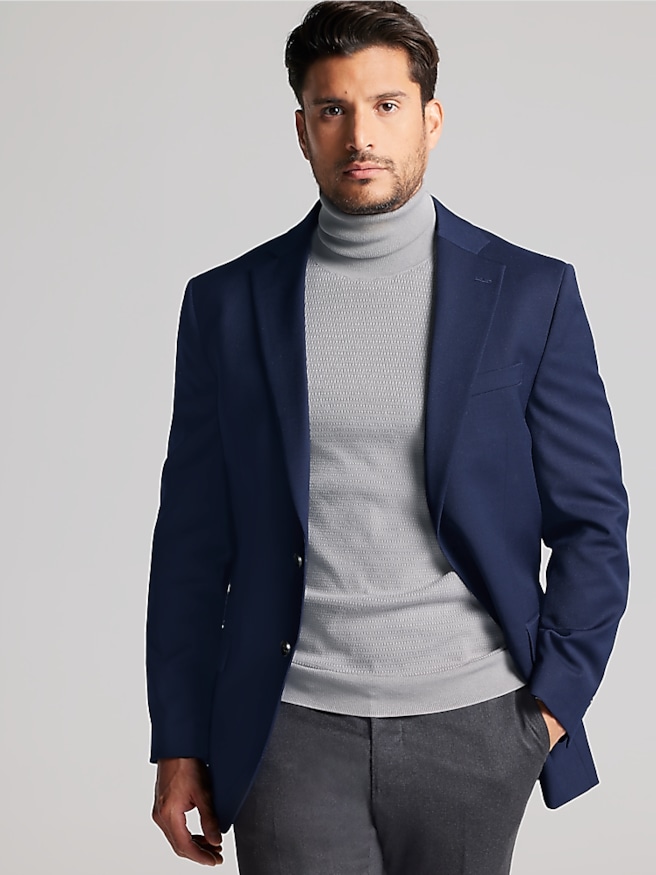
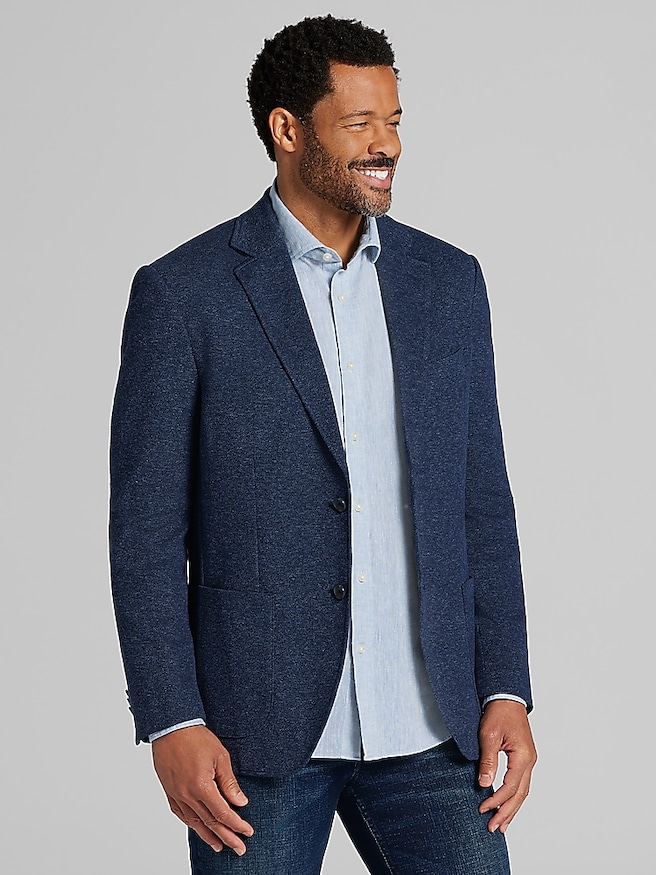
Styling a patterned blazer usually starts with giving the pattern enough space to be seen. A solid shirt or fine-gauge knit creates a quiet background, and trousers in a color drawn from the jacket can connect the outfit without attempting an exact match. A navy windowpane blazer, for example, can sit comfortably alongside a pale blue shirt and gray trousers; a brown check can work with an ivory knit and dark denim when the setting is relaxed. Dark, clean-finished jeans generally create a sharper impression than heavily distressed denim, while pressed wool trousers move the same jacket toward a dressier setting. Shoes help establish that direction as well, with loafers, lace-up dress shoes, or understated sneakers offering distinct levels of polish. Combining patterns is possible, but a noticeable difference in scale helps keep them from competing. A small shirt stripe beneath a larger jacket check can be easier on the eye than two equally sized grids. Ties and pocket squares need not repeat every color in the blazer; one shared tone is often enough. Keeping accessories restrained is particularly useful with floral prints or high-contrast geometric motifs. Regular care preserves both the fabric and the jacket's shape. The care label should take precedence over general advice, since fibers, linings, and internal construction can require different treatment. A broad, shaped hanger supports the shoulders, and enough closet space helps prevent crushed lapels and persistent creases. Emptying the pockets after wear reduces sagging, while gentle brushing with a suitable clothing brush can remove surface dust from appropriate fabrics. Allowing the jacket to air between wears can reduce unnecessary cleaning. Address spills promptly by blotting rather than rubbing, and seek professional guidance for stains or fabrics that require specialist care. Repeated friction from an overloaded shoulder bag can wear the cloth, particularly on raised or textured surfaces. Strong seams, secure buttons, a smooth lining, and a suitable fit all contribute to lasting use. With thoughtful care and a few reliable outfit combinations, a patterned blazer can become a regularly worn part of a wardrobe rather than a jacket saved for just one occasion.