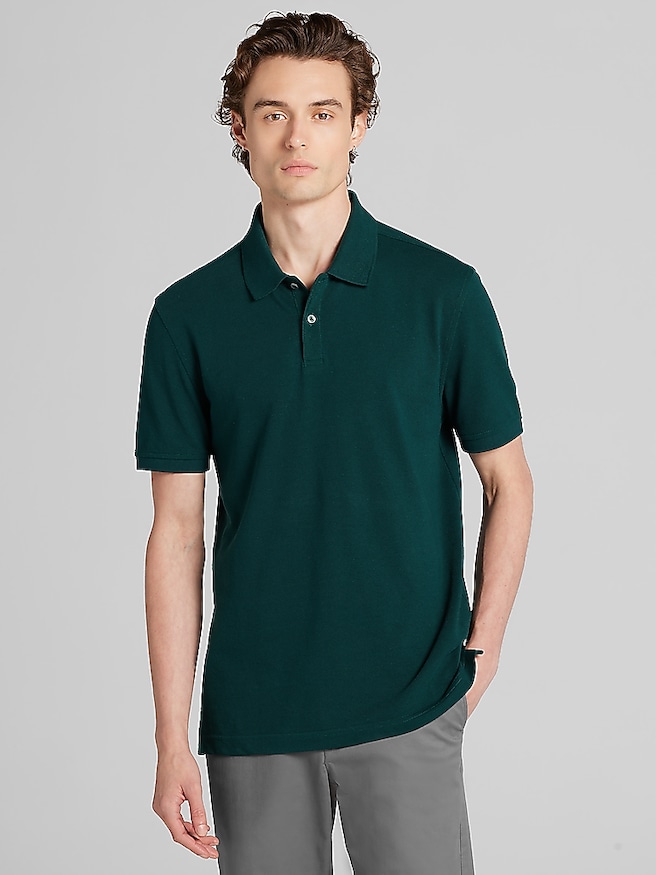
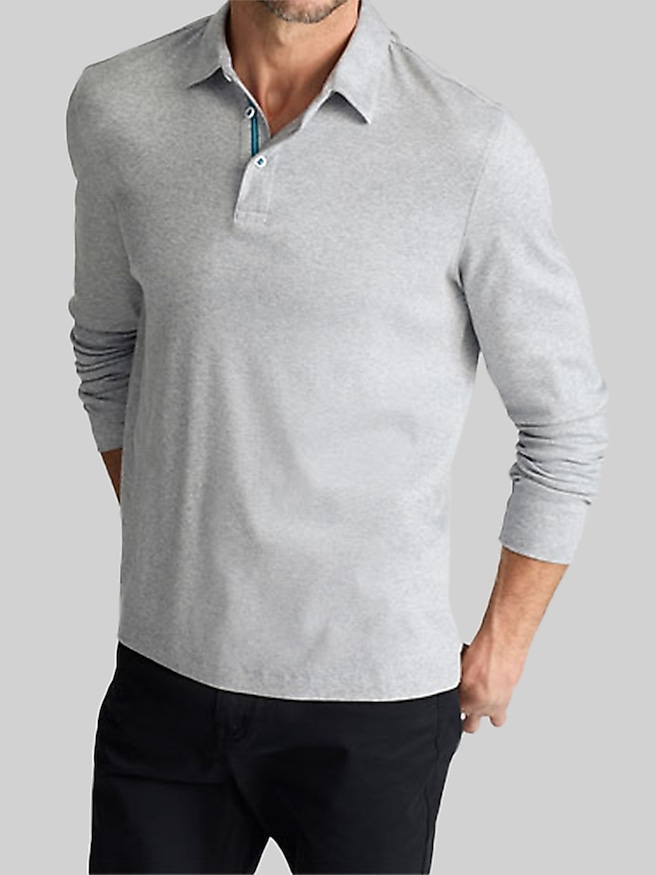
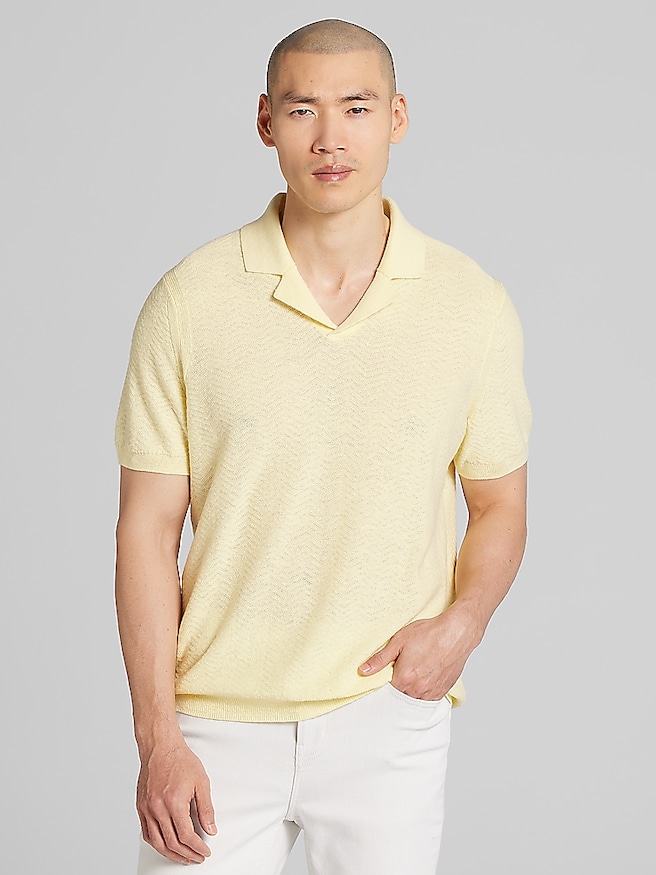
Pique polo shirts bring a little structure to everyday dressing without the formality of a button-front shirt. Their defining feature is the fabric: a textured knit with a small, repeating pattern that can resemble tiny honeycombs, diamonds, or raised cords. That surface gives the shirt visual depth, even in a solid color, and helps distinguish pique from the smoother finish of a jersey polo. A collar and short button placket complete the familiar shape, making it an easy match for chinos, jeans, and relaxed dress trousers. Cotton pique typically has a soft, substantial feel and absorbs moisture, while cotton blends can offer a different balance of softness, shape retention, and drying time. Polyester-rich fabrics may resist wrinkles and dry more quickly, depending on their construction and finish. A small amount of stretch can make reaching, sitting, and moving more comfortable, though fabric composition alone does not determine how a shirt will fit. Knit density, fabric weight, and finishing all affect the result. A lighter pique can feel flexible and drape closer to the body; a more substantial knit may hold a cleaner outline through the chest and torso. Neither is automatically better. The useful distinction is whether the shirt feels right for a desk job, a round of golf, a family gathering, or an ordinary day with several stops along the way. Color changes the impression, too. Navy, gray, and black create straightforward combinations with most pants, while lighter neutrals bring out the texture of the knit. Brighter colors can become the focal point of an otherwise simple outfit. Subtle stripes add variation without requiring elaborate coordination. Fabric weight, texture, and fit are also useful points of comparison when exploring Summer Polo Shirts, since a polo’s appearance alone does not tell the whole story about how it wears. The goal is a collared shirt that feels comfortable against the skin and maintains a balanced shape throughout the day.
Fit makes the difference between a pique polo that looks intentional and one that seems borrowed or restrictive. The shoulder seams should generally sit near the edges of the shoulders, with enough room across the upper back to reach forward comfortably. Through the chest, the fabric should fall smoothly rather than pull outward between the placket buttons. A slim cut follows the torso more closely, while a classic cut usually leaves more ease around the waist; the right choice depends on body shape and preferred silhouette, not just the size on the label. Short sleeves often look balanced when they end around the middle of the upper arm, with an opening that allows movement without flaring dramatically. Sleeve length and width can change the shirt’s proportions as much as the fit through the body. An untucked hem should cover the waistband without extending so far that it shortens the appearance of the legs. For tucked-in wear, enough length to remain secure when sitting or reaching is more useful than an especially abbreviated cut. Side vents can help the hem move comfortably over the hips. In a business-casual setting, a solid pique polo with well-fitting chinos and leather shoes can look composed without becoming overly dressy, provided the workplace permits polos. Dark, clean-finished denim and simple sneakers create a more relaxed combination for dinner or a weekend outing. A polo can also sit neatly beneath an unstructured jacket when the collar rests flat and the body is not so bulky that it bunches at the waist. Leaving one or two placket buttons open usually creates an easy neckline; fastening more buttons produces a tidier finish. For someone who regularly moves between casual appointments, travel, and social plans, this versatility makes the category especially practical. Pique polos can also make thoughtful birthday gifts for dads, brothers, partners, or friends, particularly when the recipient’s usual shirt size, preferred fit, and most-worn colors are already familiar.
Good care helps preserve the qualities that make a pique polo worth wearing repeatedly: an even texture, a comfortable fit, and a collar that lies neatly. The care label should always take priority, because fiber blends, dyes, trims, and fabric treatments can require different handling. Many polos can be machine washed, but water temperature and drying instructions matter, especially with cotton fabrics that may shrink under excessive heat. Washing with similar colors, turning the shirt inside out, and avoiding an overloaded machine can reduce unnecessary rubbing against the textured surface. Stains around the collar or underarms are easier to address before they have been repeatedly washed and dried; use a treatment suitable for the fabric and follow its directions. Chlorine bleach can damage some fibers and alter colors, so it should not be treated as a universal solution. Fabric softener may interfere with certain performance finishes, making the label particularly important for those fabrics. After washing, gently straighten the placket and reshape the collar rather than leaving them folded or twisted. Follow the recommended drying method, and avoid prolonged high heat when it is not specified. If ironing is permitted, use the appropriate setting and light pressure so the knit’s raised texture is not unnecessarily flattened. Folding a polo neatly can help avoid the shoulder bumps that some hangers leave behind; if hanging is preferred, a suitably shaped hanger provides better support. Durability also depends on construction and use. Even stitching, securely attached buttons, and a placket that sits flat are useful details to notice, while repeated friction from rough bag straps or abrasive surfaces can wear the fabric over time. Rotating shirts and treating small snags carefully helps limit concentrated wear. A dependable pique polo does not need complicated styling or elaborate upkeep. Its appeal comes from the combination of tactile fabric, a recognizable silhouette, and enough polish to make everyday outfits feel considered. With suitable care and a fit that allows natural movement, it can become a reliable part of a practical wardrobe.