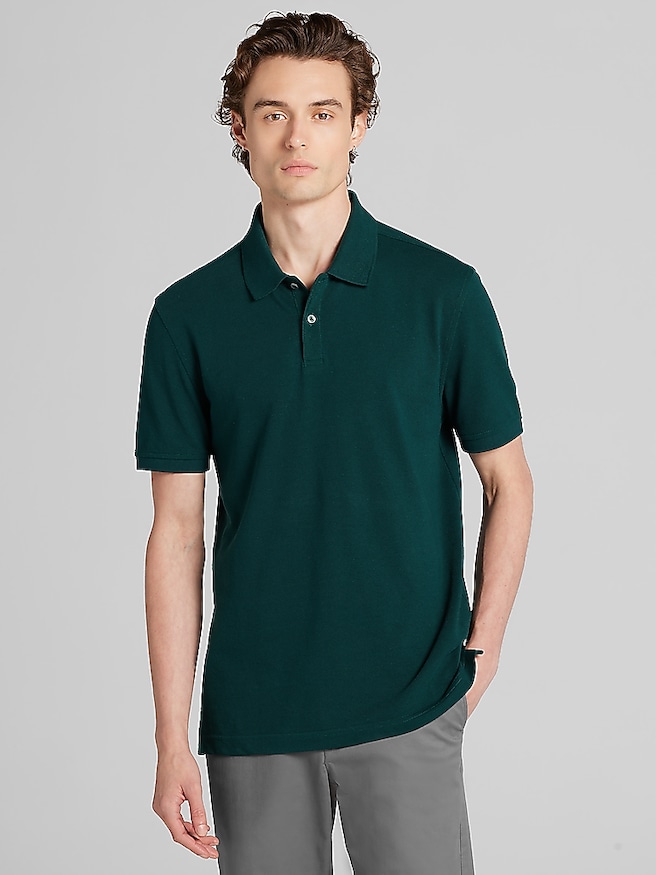
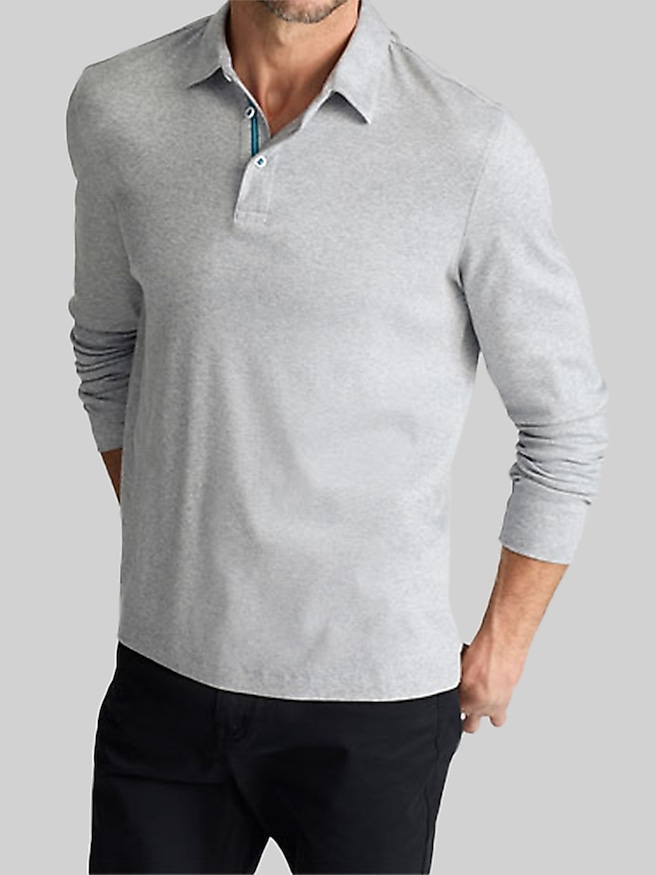
Piqué knit shirts are defined by a subtly raised fabric surface, often resembling tiny honeycomb cells, waffles, or fine geometric ridges. That texture comes from the knit construction rather than a printed pattern, giving the fabric more surface dimension than smooth jersey. The result is a shirt that feels relaxed without looking quite as casual as a basic T-shirt. Piqué is especially familiar in polo shirts, where its textured body complements a fold-over collar, a short button placket, and neatly finished sleeves. The term describes the fabric construction, not a particular fiber blend or a guarantee of performance. Cotton piqué typically has a soft, absorbent feel, while cotton-polyester blends can combine that familiar hand with improved shape retention and quicker drying, depending on the fabric. A small amount of elastane can add stretch for reaching, sitting, and moving comfortably. Breathability also depends on the fabric’s weight, density, and fiber content; an open-looking texture alone does not mean a shirt has moisture-wicking properties. Those properties should be identified in the garment’s fabric information rather than assumed. Weight makes a noticeable difference in how a piqué shirt hangs: a lighter knit tends to drape closer to the body, while a more substantial fabric can give the chest, collar, and hem a firmer outline. The texture also changes how color reads, lending depth to navy, gray, white, and other straightforward shades without requiring a bold pattern. For the classic collared expression of this fabric, Men's Pique Polo Shirts connect an easy knit feel with the familiar details of a polo. Across the category, the appeal is that balance of comfort and definition: enough structure to look considered, with the flexibility expected from a knit shirt. It suits a wardrobe built around pieces that can move between a desk, a lunch table, and an informal evening out.
Fit determines whether that textured fabric looks clean and comfortable or feels restrictive. On a conventional set-in sleeve, the shoulder seam generally sits near the edge of the shoulder rather than dropping noticeably onto the upper arm. Across the chest, the fabric should lie smoothly enough that the button placket stays flat, with room to reach forward without pulling across the back. A slim fit follows the torso more closely, while a classic fit provides additional ease through the chest and waist; neither should depend on stretch to compensate for a size that is too small. Sleeves that finish around the middle of the upper arm give a short-sleeve polo a balanced outline, though sleeve length and cuff shape vary by design. A ribbed cuff should rest comfortably rather than grip tightly or flare away from the arm. Shirt length matters just as much. An untucked hem generally looks most balanced when it covers the waistband without extending far down the thigh, while a shirt intended for tucking needs enough length to stay in place when seated. Side vents can make the hem easier to move in, especially over a trouser waistband. With chinos and loafers, a piqué knit shirt fits naturally into a business-casual setting where polos are appropriate. With straight-leg jeans and clean sneakers, the same fabric feels at home at a casual dinner or a family gathering. Under an unstructured jacket, a collar that lies neatly and a torso without excess fabric help keep the layers from bunching. Piqué still reads as knitwear rather than a formal dress shirt, so workplace expectations and event dress codes remain important. As a gift, this category makes sense for someone who regularly wears polos for work, social plans, or everyday errands. Matching the recipient’s usual fit, preferred sleeve shape, and established wardrobe colors is more useful than choosing an unfamiliar cut simply because the fabric stretches. A well-chosen piqué shirt should feel recognizable from the first wear, not require a new way of dressing.
Care has a direct effect on how well piqué knit shirts retain their shape and textured finish. The sewn-in care label is the best reference because cotton, polyester, stretch fibers, trims, and fabric treatments can call for different washing and drying methods. When machine washing is permitted, turning a shirt inside out and washing it with similar colors can help limit surface abrasion and color transfer. Rough hardware, exposed hook-and-loop fasteners, and heavily textured laundry companions can catch on the knit, so separating those pieces helps protect the surface. Detergent should be used in the recommended amount, and a spill is easier to address before it has been repeatedly washed and dried into the fabric. Excessive heat can contribute to shrinkage in cotton-rich knits and may affect stretch fibers, making the recommended drying method particularly important. Reshaping the collar, smoothing the placket, and straightening the hem while the garment is damp can help it dry more evenly. If tumble drying is allowed, avoiding unnecessary drying time reduces exposure to heat and friction. A folded shirt generally keeps its outline well in a drawer; prolonged hanging on a narrow hanger can leave bumps at the shoulders, especially in a heavier knit. Any ironing or steaming should follow the label, with particular attention to trims and stretch content. Durability is also reflected in construction details: even stitching, securely attached buttons, a stable placket, and a hem that lies flat all support repeated wear. Texture may make small creases less conspicuous, but piqué is not automatically wrinkle-free, snag-proof, or resistant to visible perspiration. Those qualities depend on the individual fabric and any specified finish. For a shirt that sees regular use, easy care and a comfortable fit are as valuable as its first impression. When the fabric, cut, and upkeep suit the wearer’s routine, piqué offers a dependable middle ground between a plain tee and a more structured woven shirt, with enough character to stand on its own.