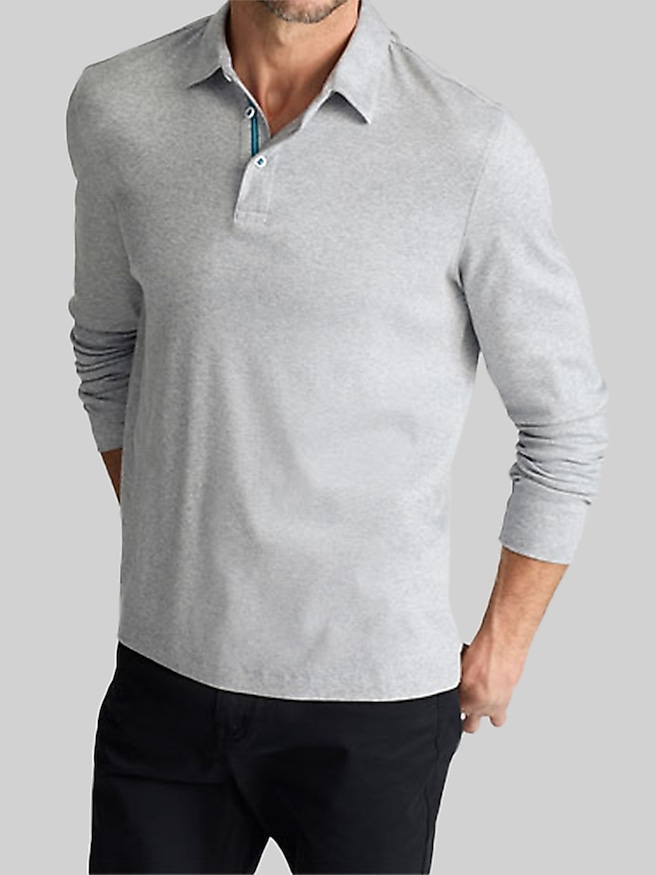
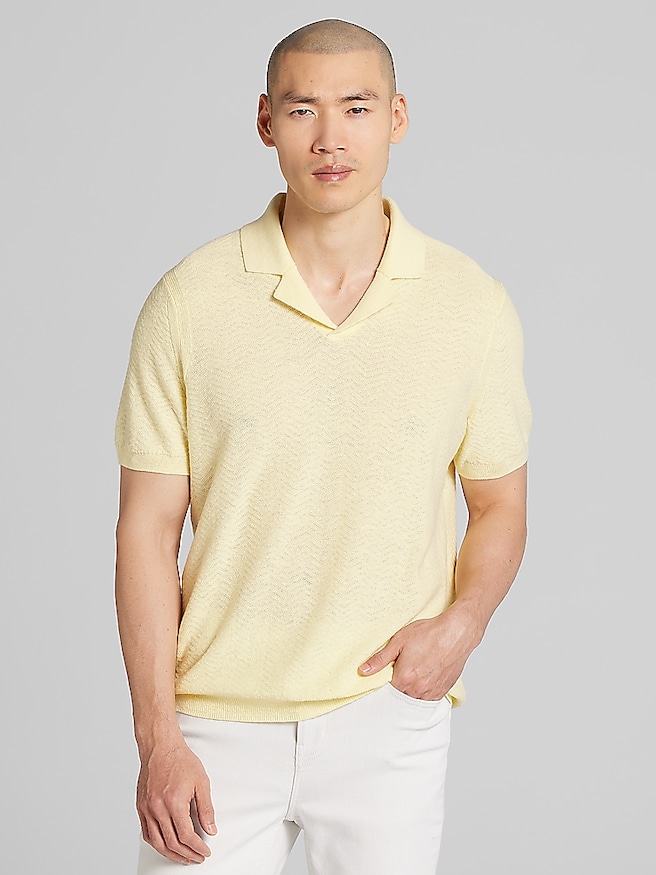
Men's pique polo shirts combine the ease of a knit shirt with the more finished appearance of a collar and button placket. Pique, also spelled piqué, describes the fabric's raised texture rather than a particular fiber: in polo shirts, it is typically a knit with a fine honeycomb, waffle, or pebbled surface. That subtle pattern gives a solid color depth and helps distinguish a pique polo from the flatter, smoother finish of a jersey polo. The result is a shirt that feels at home with chinos at a casual office, dark jeans at dinner, or shorts for an afternoon outdoors. Cotton pique is valued for its breathable feel and ability to absorb moisture, though it can take longer to dry than some synthetic fabrics. Cotton blends may add polyester for easier drying and improved shape retention, while a small amount of elastane can provide stretch through the shoulders and torso. Performance fabrics may offer moisture management, but those benefits depend on the construction and any specified fabric treatments; pique texture alone does not guarantee moisture-wicking performance. Fabric weight matters, too. A lighter knit can feel comfortable beneath a sweater or jacket, while a more substantial knit often has a firmer drape and helps the collar and placket sit neatly. Softness varies with the yarn, finishing process, and fiber quality, so a textured surface does not necessarily mean a coarse feel against the skin. For everyday wear, the appeal lies in that balance of comfort and structure. A pique polo can look composed through a morning commute and an afternoon gathering without feeling as formal as a woven dress shirt. During the cooler months, its texture also works naturally alongside brushed cotton trousers, corduroy, and soft knit layers, adding interest without relying on a bold print.
The fit of a men's pique polo shirt should allow movement while keeping the collar, sleeves, and body in proportion. A useful starting point is a shoulder seam that sits near the edge of the shoulder, with enough room across the upper back to reach forward comfortably. The chest should lie smoothly rather than pulling the placket open, and the fabric around the waist should fall without clinging or forming a wide, boxy fold. Slim fits generally sit closer through the torso, classic fits offer a more straightforward shape, and relaxed fits leave additional room; those labels vary, making actual measurements more useful than the fit name alone. On a short-sleeve polo, a sleeve that ends around mid-bicep often creates a balanced look, though arm length and personal preference both matter. Ribbed sleeve openings should rest comfortably rather than leave marks. Hem length depends on how the shirt will be worn. An untucked polo usually looks tidy when it finishes around the middle of the pants fly, while a shirt intended for tucking needs enough length to stay in place when sitting or reaching. Side vents can give the hem extra ease at the hips, especially when worn untucked. For an office that permits polos, a clean collar, pressed chinos, and leather loafers create a straightforward combination. A tucked hem and simple belt can sharpen the same outfit for a business-casual lunch, provided the setting does not call for more formal clothing. With jeans and understated sneakers, the texture feels easygoing rather than sporty. Under an unstructured jacket, a collar that lies flat and a placket that stays smooth help keep the neckline clean. Those drawn to button-front styling can also explore men's button-up polo shirts for a related take on the collared knit. Neutral shades make outfit combinations simple, while a deeper blue, green, or burgundy can add color beneath a subdued outer layer.
Durability in pique polo shirts depends on more than fabric thickness. Even stitching, neatly finished seams, secure buttons, and a collar that holds its shape all contribute to how a shirt wears over time. Areas that see repeated friction, such as the underarms and the points where a bag strap rests, may show wear before the rest of the garment. A textured knit can also catch on rough surfaces or exposed hook-and-loop fasteners, so keeping those away from the fabric helps protect its finish. Care should always follow the garment label, since cotton, blended fibers, stretch content, and decorative details can call for distinct handling. When the label permits machine washing, turning a polo inside out and washing it with similar colors can help limit surface abrasion and color transfer. Avoiding an overloaded washer gives garments room to move and rinse properly. High dryer heat can shrink cotton and shorten the useful life of stretch fibers, making lower heat or air drying a sensible choice when permitted. Reshaping the collar and smoothing the placket while the shirt is damp can help it dry neatly; laying it flat also avoids the shoulder bumps that some hangers leave in a wet knit. If ironing is allowed, use the recommended setting and avoid pressing so firmly that the raised texture becomes flattened. These small habits are especially worthwhile for a polo worn repeatedly through workdays, weekend errands, and casual get-togethers. For travel, the right fabric blend may simplify care, but wrinkle resistance should be treated as a stated feature rather than assumed from the category. Men's pique polos can also make practical gifts for someone who favors comfortable, collared clothing. Matching a familiar chest measurement, preferred sleeve length, and usual color palette is more reliable than guessing from a size letter alone. Whether worn by a college student heading to a presentation, a professional in a casual workplace, or someone meeting friends for a relaxed meal, a well-fitting pique polo brings useful texture and a polished neckline to everyday dressing.