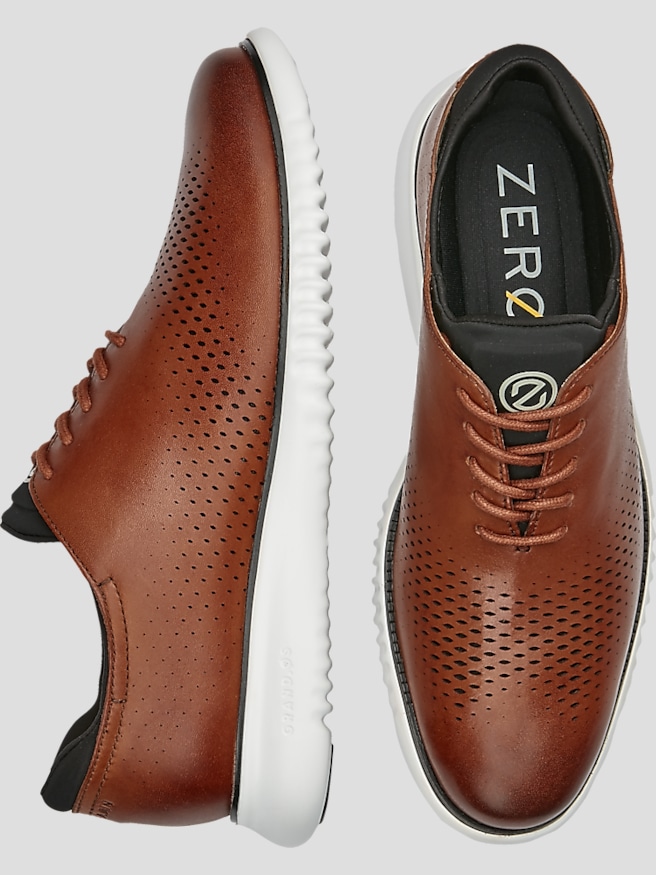
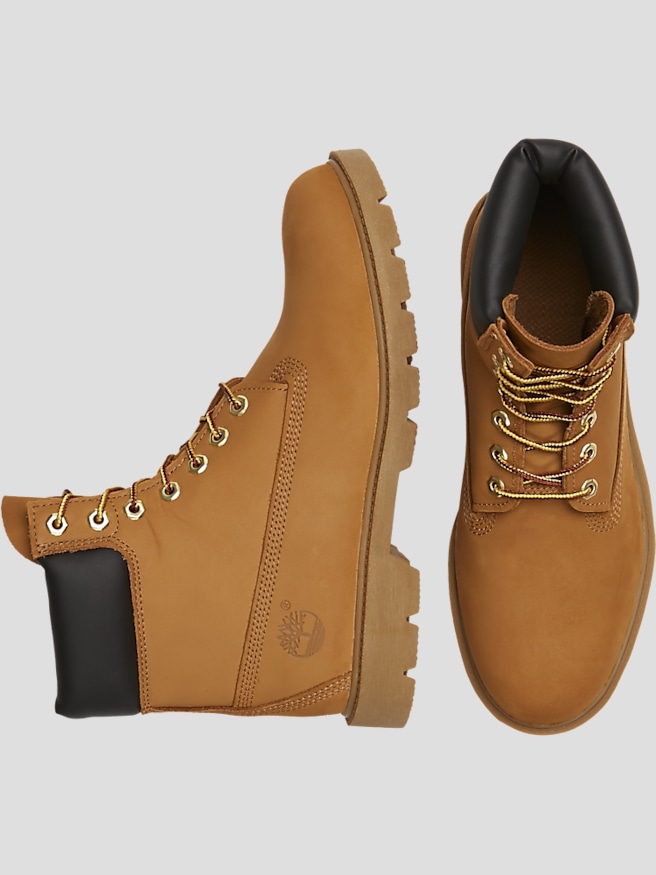
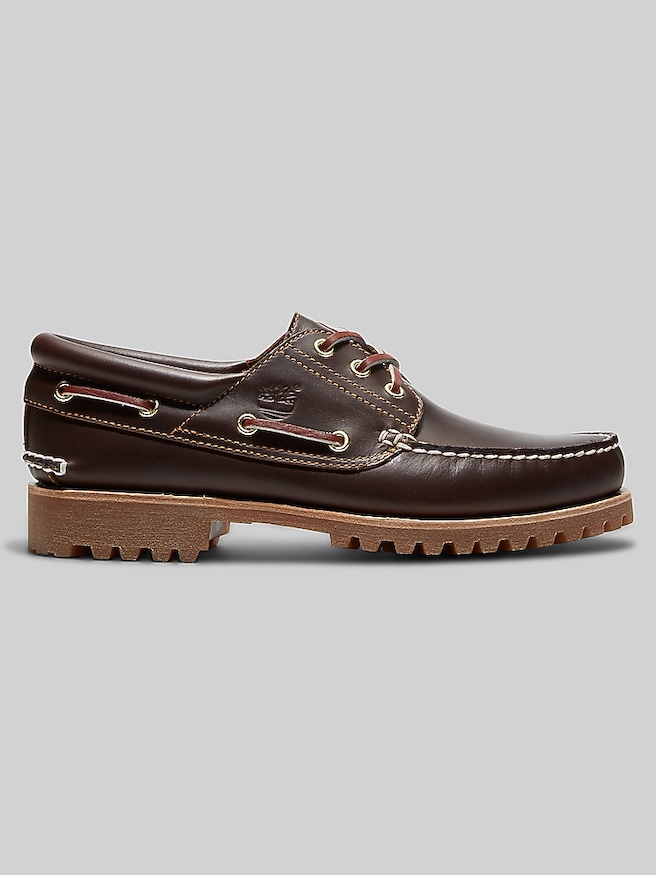
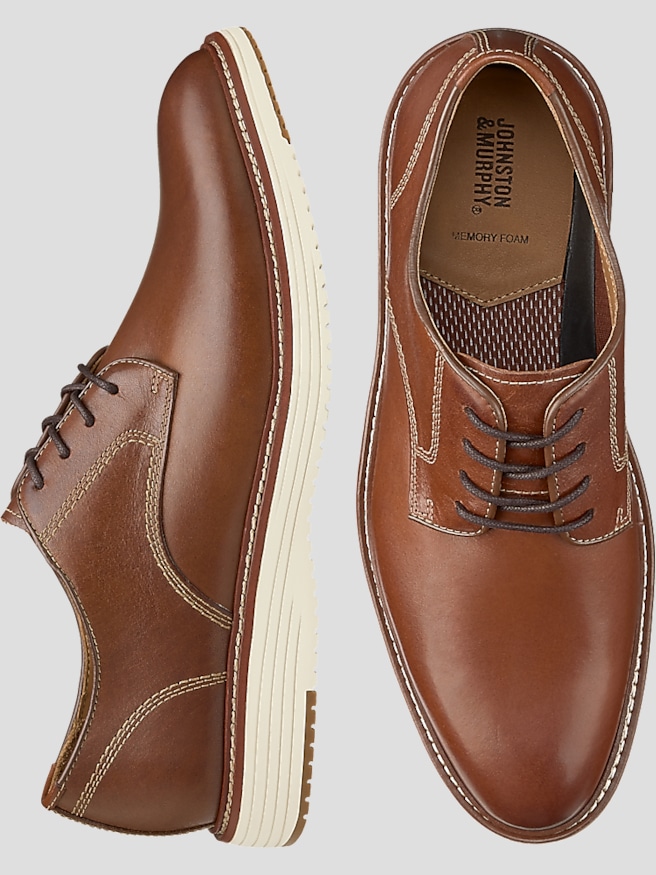
Modern office shoes combine the clean lines of traditional dress footwear with comfort features suited to a full workday. Leather lace-ups, streamlined loafers, and understated dress sneakers can all fit this category; the right choice depends on the workplace and how much walking, standing, and sitting the day involves. In a business-formal setting, a polished oxford with closed lacing creates a smooth profile beneath suit trousers. A derby, recognized by its open lacing, offers a slightly more relaxed appearance and often allows more adjustment across the instep. Brogue detailing adds decorative perforations rather than defining a separate shoe construction, so its formality depends on the overall shape, finish, and amount of ornamentation. For an office where tailored separates are standard, a simple loafer can look composed with wool trousers, chinos, or a blazer. Hybrid dress shoes pair familiar leather uppers with cushioned midsoles or lighter, more flexible outsoles, bringing a less rigid feel to professional footwear. A restrained sole and minimal contrast generally make these designs easier to coordinate with tailoring than bulky athletic shapes. Black leather works especially well with charcoal and gray, while dark brown complements navy, tan, and many earth tones. Smooth finishes tend to appear more formal than textured leather or suede, though a neat silhouette matters just as much as the material. Someone presenting to clients may prefer a classic lace-up, while a designer moving between a desk, studio, and meeting room might favor a low-profile hybrid. Dress codes that allow dark denim and unstructured jackets leave more room for Casual Office Shoes, especially styles with subtle stitching and uncomplicated uppers. The common thread is balance: footwear should look intentional with the clothes above it without drawing attention away from the person wearing them. A gently rounded or almond-shaped toe offers a versatile starting point, and a trouser hem that falls cleanly over the shoe helps the entire outfit look finished.
Materials and construction influence how office shoes feel long after the first meeting ends. Smooth leather can develop character with wear and responds well to appropriate conditioning, but its softness, thickness, and finish vary considerably. Suede has a softer visual texture that pairs naturally with chinos and relaxed tailoring, although its nap needs a separate cleaning approach. Synthetic uppers may offer straightforward maintenance, with breathability and flexibility depending on their composition. Inside the shoe, smooth linings and carefully finished seams help reduce friction, particularly around the heel and across the toes. Cushioning can soften the sensation of each step, but a very soft footbed is not automatically the most comfortable choice for every wearer. A secure heel, adequate toe room, and support that aligns with the foot are equally important. Rubber outsoles often provide useful flexibility and traction on everyday surfaces, while leather soles offer a traditional appearance and feel; actual grip depends on the outsole design and the surface underfoot. Lightweight foam midsoles can reduce heft during a commute, though their long-term feel varies with construction and use. Fit deserves attention beyond the number printed inside. The widest part of the foot should sit comfortably within the widest part of the shoe, without pressure along the sides or toes pushed together. There should be space ahead of the longest toe, while the heel remains secure rather than lifting noticeably with each step. Lace-ups offer adjustment as foot volume changes throughout the day; loafers rely more heavily on the match between the shoe’s shape and the wearer’s instep and heel. Trying shoes with the socks intended for work gives a more realistic impression, and walking on a clean indoor surface can reveal rubbing that is not obvious while seated. Anyone using orthotics should check interior depth and whether the footbed is removable rather than assuming every style will accommodate an insert. New leather may soften, but persistent pinching, numbness, or slipping is a fit issue, not something to accept as a necessary break-in period.
Durability comes from the relationship between materials, construction, care, and the demands placed on the shoes. A pair worn mostly at a desk faces a different workload from footwear used for a long pedestrian commute, frequent travel, or hours spent greeting clients on foot. Secure stitching, neatly finished edges, and a well-attached outsole are useful details to examine, although appearance alone cannot establish how long a shoe will last. Some stitched constructions can be resoled by a qualified cobbler, while many bonded or molded designs have more limited repair options. For regular wear, rotating between pairs gives interior moisture time to dissipate and reduces the strain of wearing the same shoes every day. Cedar shoe trees can help maintain shape and absorb some moisture, especially when used after shoes have had a brief chance to air out. Smooth leather benefits from a soft brush or cloth to remove surface dirt, followed by a suitable conditioner when needed and polish where appropriate to the finish. Suede calls for a suede brush and compatible cleaning products rather than conventional leather cream. Material-specific care directions should take priority, and any treatment is best tested on an inconspicuous area first. Direct heat can damage leather and adhesives, so ordinary air-drying is preferable to placing shoes beside a heater. A shoehorn helps protect the heel counter, and untying laces before removing lace-ups avoids unnecessary stress on the opening. These small habits preserve the details that make professional footwear look sharp: an even finish, a stable heel, and an upper that holds its intended shape. Modern office shoes can also be a practical gift for a graduate beginning a first job, someone preparing for interviews, or a professional stepping into a new role, provided their size, fit preferences, and workplace expectations are known. Whether worn with a full suit or a knit polo and tailored pants, the most useful pair supports the actual routine ahead, from the walk into the building to the final conversation before heading home.