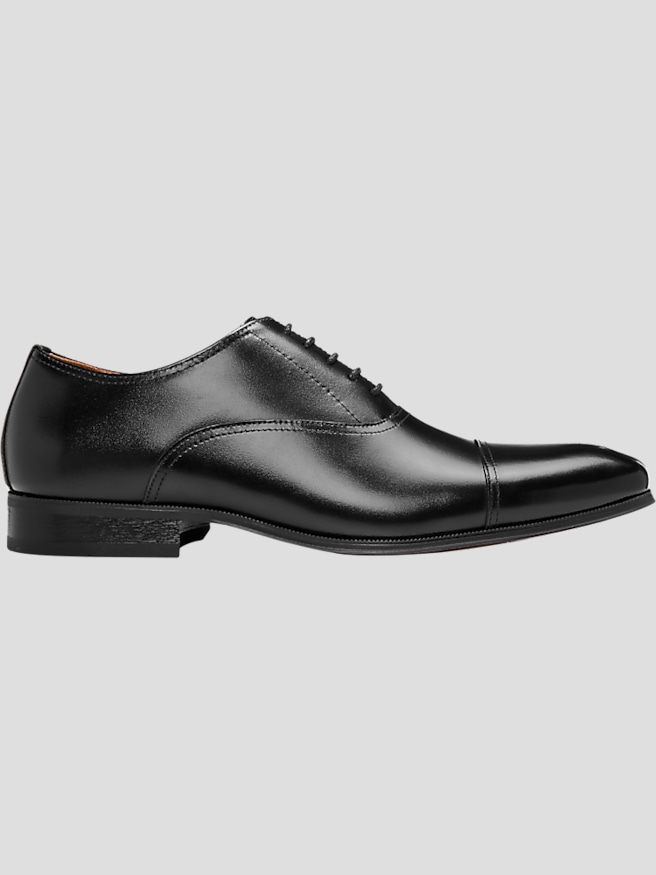
Men’s office shoes bring a finished look to workday clothing, from a suit worn for a client presentation to chinos and a button-down shirt in a business casual setting. The main styles include oxfords, derbies, loafers, and dress shoes with comfort-focused construction, with the best match depending on the workplace dress code and how the day is spent. Oxfords have closed lacing, with the eyelet sections attached beneath the front of the upper, creating a neat profile that works especially well with tailored suits and formal business attire. A simple cap toe adds definition without drawing much attention, while a plain toe keeps the look streamlined. Derbies have open lacing, with the eyelet sections attached on top of the upper, giving them a slightly more relaxed appearance and more adjustability across the instep. They work with dress trousers, sport coats, and polished chino outfits. Loafers offer a slip-on alternative, with penny and tassel details bringing distinct character to the same practical shape. Smooth leather generally looks dressier than textured suede, and a slim silhouette tends to feel more formal than a thick, visibly casual sole. For workplaces where jackets are optional and clean, understated footwear fits the dress code, Men's Office Casual Shoes offer another way to complete an everyday work outfit. Black shoes make a crisp pairing with charcoal or dark gray tailoring, while dark brown leather complements navy, gray, and many earth-toned trousers. Lighter brown shades create more contrast and often feel more relaxed. Matching the general color and finish of a leather belt helps the outfit look considered without requiring an exact shade match. Details such as broguing, apron stitching, and buckles can add personality, but their effect depends on the overall shape and finish. In a conservative office, restrained detailing lets the tailoring take the lead; in a creative workplace, a textured upper or distinctive loafer can provide a little more expression.
Comfort matters just as much as appearance when office shoes need to handle the walk from a parking garage, several hours at a desk, and stretches spent standing in conference rooms. A good fit holds the heel securely without pinching, leaves room for the toes to lie naturally, and supports the foot without pressure across the instep. The widest part of the foot should sit comfortably within the widest part of the shoe, rather than pushing against the sides or sliding forward. Size alone does not tell the whole story: the last, or foot-shaped form used to shape the shoe, determines its proportions, including toe shape, heel width, and instep volume. Lace-up designs allow adjustments as needed, while loafers rely more heavily on the relationship between the heel, instep, and upper to stay in place. The socks worn to work also affect fit, especially when moving between thin dress socks and more substantial everyday pairs. Leather uppers can gradually soften and conform with wear, but a shoe that feels painfully tight should not be expected to become comfortable simply through use. Full-grain leather retains the hide’s natural surface and can develop character over time with proper care. Suede has a soft, textured appearance suited to less formal settings, though it calls for different cleaning methods than smooth leather. Lining, seams, and padding all influence how the interior feels through a long day. Underfoot, cushioning can soften each step, while a supportive footbed and stable sole help keep the shoe from feeling flimsy. Rubber soles often provide flexibility and useful traction; leather soles offer a traditional profile, though grip varies with their finish and condition. Hybrid dress shoes combine tailored-looking uppers with more athletic-inspired cushioning or sole construction, making them a practical option when the office dress code permits a sportier base. For someone who regularly walks between buildings or stands during presentations, moderate weight, secure fit, and a sole that bends comfortably with the foot can be more useful than thick padding alone.
Durability comes from the combination of materials, construction, fit, and regular care rather than from any single detail. Secure stitching, neatly finished edges, and a heel that feels stable are useful signs of careful construction. Some welted shoes can be resoled, depending on their design and condition, while other construction methods emphasize lightness and flexibility. Neither approach makes every shoe equally suitable for every workday; a structured leather lace-up and a flexible business casual loafer serve different preferences and routines. A pair worn repeatedly without time to dry between uses may develop creasing, odor, and interior wear more quickly than a pair rotated with other footwear. Letting shoes rest after wear allows moisture to dissipate, and properly sized shoe trees help support the shape of leather uppers. A shoehorn makes it easier to slip into a snug heel without crushing the back of the shoe, especially with loafers. For smooth leather, wiping away dust before applying a suitable conditioner or polish helps preserve the finish; care products should match the material and be used according to their directions. Suede benefits from a dedicated brush, while heavily finished or synthetic uppers may require a different routine. Shoes should dry naturally away from direct heat, which can damage leather and adhesives. Checking the heels and soles periodically helps catch uneven wear before it noticeably changes the way the shoe sits underfoot. These habits matter for daily commuters, professionals who meet clients, and anyone building a dependable wardrobe for interviews, presentations, or a first office role. Office shoes can also make a thoughtful gift for a graduate or someone starting a new position, particularly when the recipient’s size, preferred fit, and workplace expectations are already known. The most useful choice is one that fits both the person and the routine: polished enough for an important meeting, comfortable enough for ordinary responsibilities, and straightforward to maintain between wears. With the right balance of shape, material, and construction, office footwear becomes a reliable finishing touch rather than something that distracts from the day.