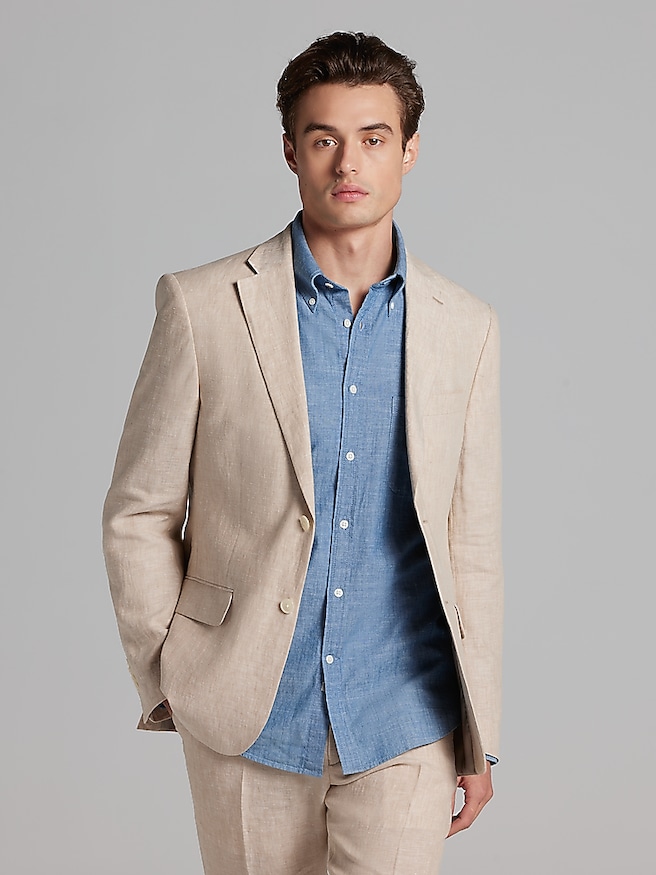
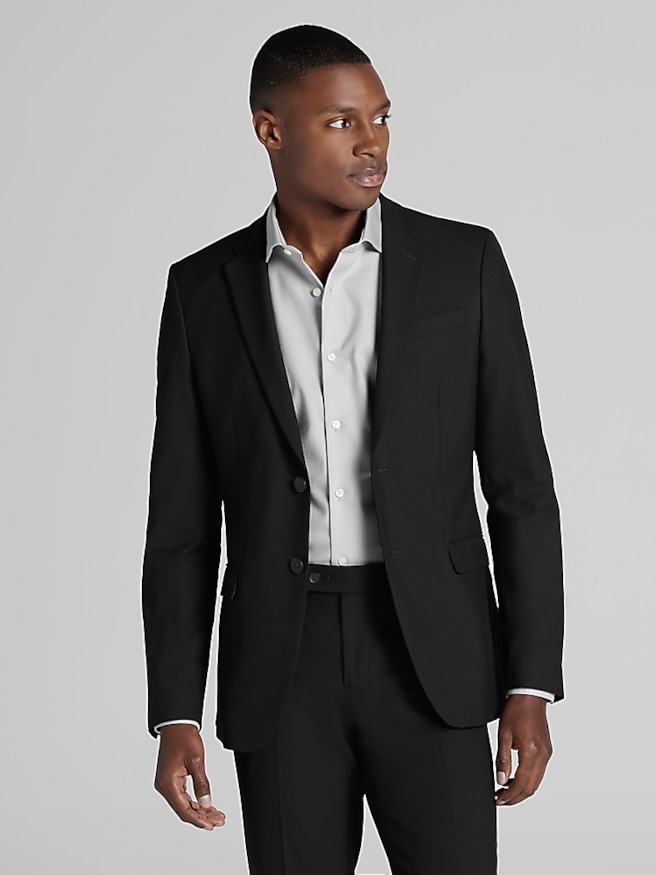
Men's monochrome outfits bring together clothing and accessories in one color or a closely related family of tones, with texture, shape, and subtle shade variations giving each piece definition. The effect can be crisp and tailored or easygoing, depending on the fabrics and proportions involved. An all-black combination creates a strong, uninterrupted line, while navy offers depth without the same stark contrast against the skin. Gray ranges from pale heather to charcoal, allowing visible separation between a shirt, trousers, and jacket while keeping the overall palette cohesive. Brown, olive, cream, and off-white open up other possibilities, especially when the appeal lies in softer contrast rather than an exact head-to-toe match. True single-color dressing uses one hue throughout; tonal dressing takes a broader approach by combining lighter and darker versions of that hue. Both belong naturally within men's monochrome style. A navy knit shirt with dark blue trousers, for example, reads differently from a matching navy suit, even though both rely on a restrained palette. One emphasizes texture and ease; the other emphasizes the clean relationship between jacket and pants. Within the broader world of Men's Outfits, these combinations work across office settings, dinner reservations, gallery visits, and celebrations where the dress code allows them. Darker tones often create a more understated impression, while lighter tones make seams, pockets, and layered edges more noticeable. Neither approach needs a contrasting accent to feel complete. Matte leather, a subtle weave, or a ribbed neckline can provide enough variation on its own. The result depends less on matching every surface perfectly than on making the shades look intentional together. A black shirt and black trousers may have noticeably different undertones, for instance, while clearly distinct textures can make that difference feel considered. For someone who prefers a compact, coordinated wardrobe, monochrome clothing also offers a useful foundation: individual pieces can work together tonally or become neutral anchors in outfits with more color.
Fabric plays an especially visible role when color contrast is limited. Smooth wool trousers beside a textured knit create depth through their surfaces, while cotton jersey paired with a softly structured jacket gives a similar palette a more relaxed character. Fine-gauge knits tend to sit neatly beneath tailoring, and heavier knits create a fuller outline that suits roomier jackets and straightforward trouser shapes. Linen brings a visible weave and natural creasing; brushed fabrics have a softer appearance; and leather introduces a distinct finish at the belt or shoes. These differences help an outfit avoid looking flat without adding patterns or competing colors. Fiber content matters for everyday use, too. Cotton can provide a soft, familiar feel, wool can offer natural resilience and a fluid drape, and fabrics with elastane may allow additional give during sitting and movement. The exact feel depends on the weave, weight, and construction, not just the fiber name on the label. Fit becomes equally noticeable in a monochrome outfit because the eye follows the silhouette with fewer interruptions. A jacket that sits cleanly across the shoulders, sleeves that leave the hands unobstructed, and trousers that fall without excessive bunching help establish a deliberate shape. A close fit should still allow comfortable movement, while a relaxed fit benefits from clear proportions rather than extra fabric everywhere. Fuller trousers can balance a shorter jacket, and a longer overshirt can sit comfortably over a simple, narrower base. For a workday that includes meetings, commuting, and time at a desk, ease through the seat and thighs can matter as much as the view in a mirror. For dinner or an event, a clean neckline and a tidy trouser hem can make a simple tonal combination feel more finished. Matching suit separates require particular attention to fabric and shade if the goal is a uniform appearance. Intentional tonal combinations allow more variation, with noticeable differences in shade or texture creating separation between pieces. In either case, posture and movement should look natural rather than constrained by the clothing.
The finishing details establish how a monochrome outfit fits its setting. A dark shirt worn open at the collar has a different character from the same color palette with a tie, and a knit top beneath a jacket generally reads more relaxed than a crisp dress shirt. Loafers, lace-up dress shoes, boots, and minimal sneakers each change the impression, even when their color stays close to the trousers. The occasion still takes priority: a single-color palette does not replace the requirements of a formal invitation or a workplace dress code. Accessories can remain quiet, with a belt close in color to the shoes and restrained metal details that do not interrupt the overall line. For someone receiving clothing as a gift, familiar colors and known sizing make tonal wardrobe additions easier to integrate, especially when the recipient already favors navy, gray, or black. Long-term appearance depends on care as well as the original combination. Care labels provide the most reliable direction for washing, drying, pressing, and professional cleaning, since two garments with similar appearances may need different treatment. Dark fabrics can show lint and fading clearly, while pale fabrics make small marks more visible. Washing compatible clothing according to its instructions, addressing spots promptly, and avoiding unnecessary heat can help preserve its appearance. Structured jackets generally benefit from supportive hangers; knitwear often keeps its shape better folded than stretched over narrow hanger edges. Shoes also contribute to the effect, with clean surfaces and maintained leather helping an otherwise simple outfit look considered. Durability depends on sound seams, suitable fabric construction, and clothing that accommodates movement without constant strain at pockets, closures, or stress points. A thoughtful monochrome wardrobe is not dependent on perfect color matching every time it is worn. Its lasting appeal comes from comfortable proportions, compatible tones, and textures that remain distinct up close while forming a coherent whole from across the room.