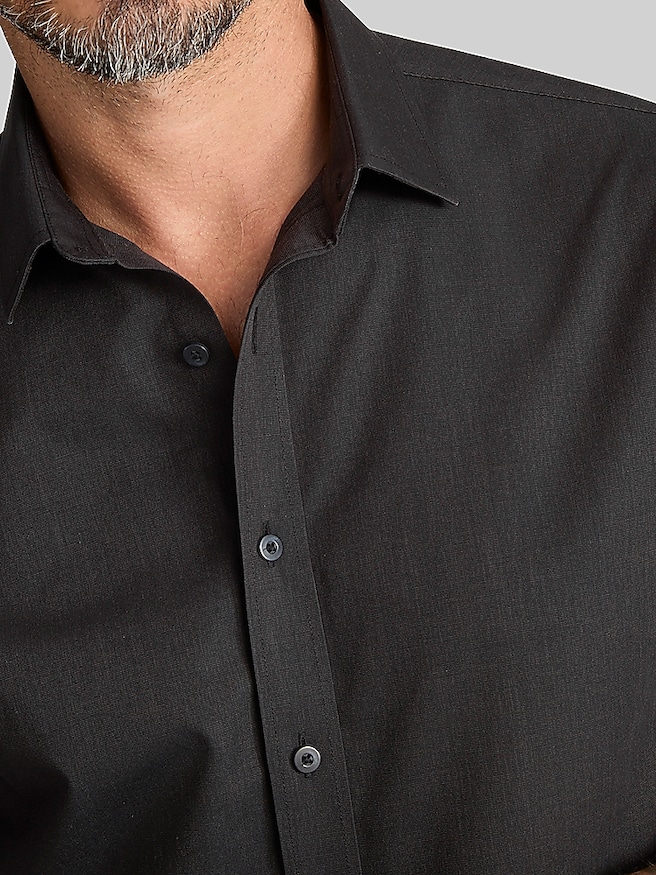
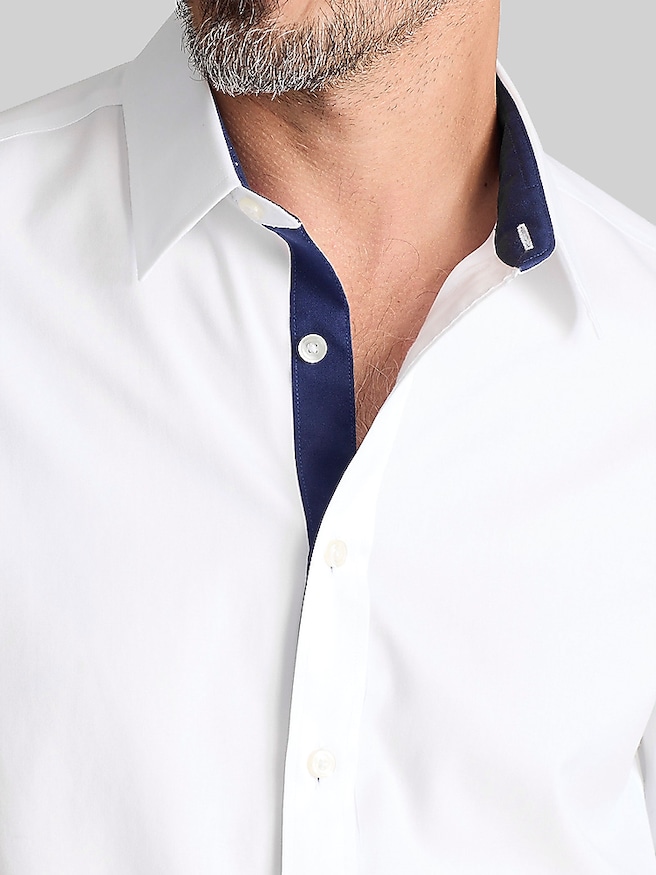
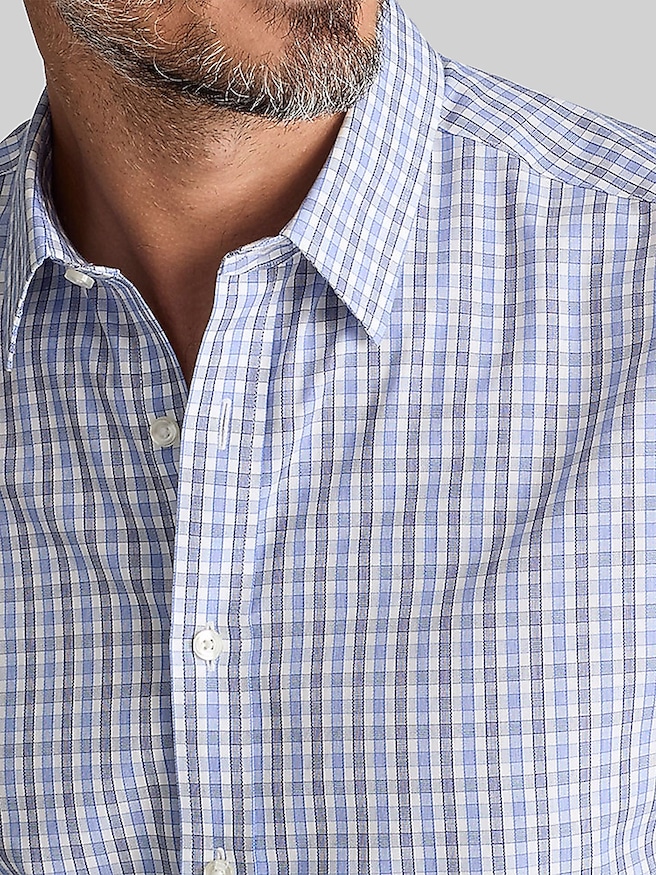
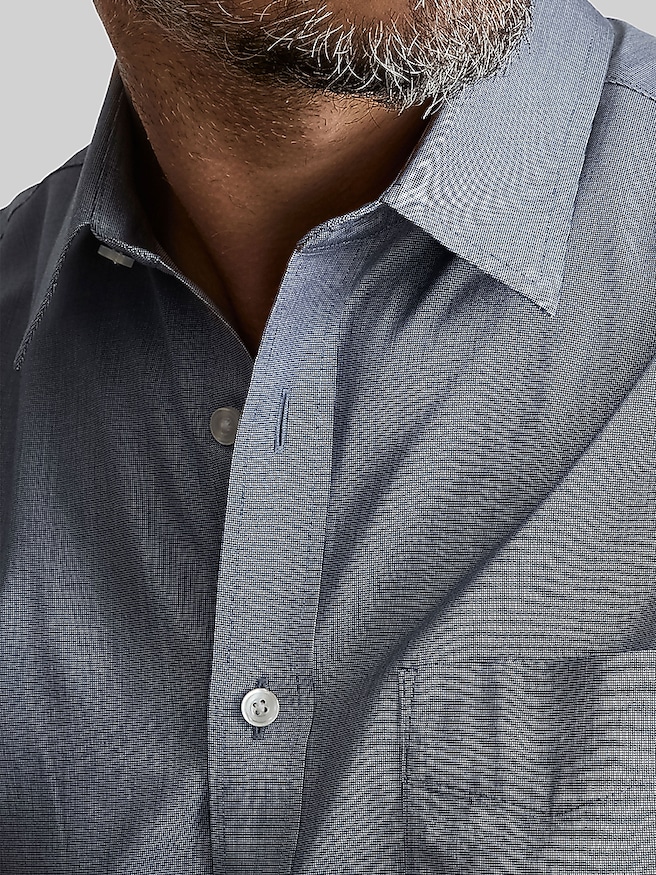
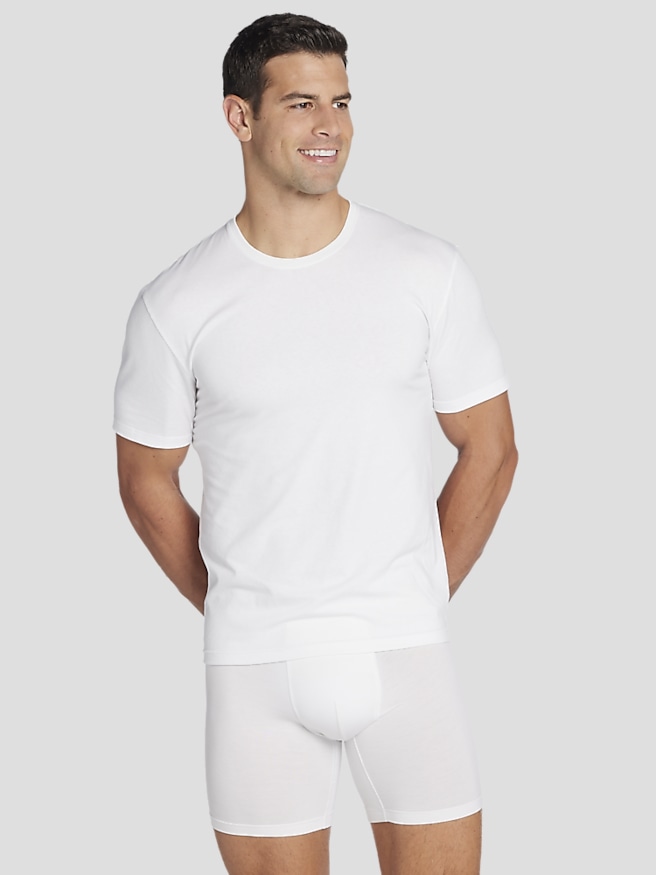
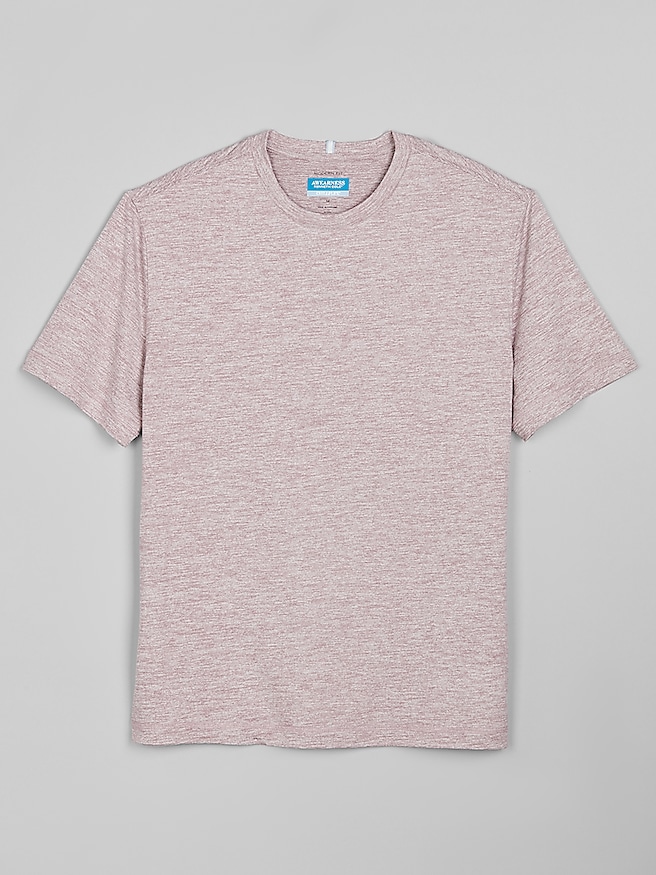
Men’s henley tees are casual knit shirts defined by a collarless neckline and a short button placket, typically with two to five buttons. That small detail gives the familiar T-shirt shape more dimension without making it feel dressed up. With roots in rowing uniforms, the henley carries a practical, athletic character that works just as naturally with faded denim as it does with clean chinos. The neckline is its signature: fastened buttons create a tidy finish, while leaving one or two open softens the look and allows a little more breathing room. Short-sleeve henleys have the easy feel of everyday tees, and long-sleeve versions offer more coverage when the air turns cool. Both can stand alone or sit comfortably beneath another layer, making them useful for everything from a quiet morning at home to a casual dinner out. Fabric has a substantial influence on how a henley looks and feels. Cotton jersey generally has a smooth surface and soft hand, with a familiar T-shirt drape that slips easily under an overshirt. Cotton blends can bring other qualities to the fabric, such as added stretch or improved shape retention, depending on the fiber mix and construction. Waffle knits have a small, textured grid that adds depth and can hold warmth between layers; ribbed knits have vertical channels and natural give. Fabric weight matters as much as texture. A lightweight henley is less bulky beneath a fitted jacket, while a more substantial knit offers a fuller feel for cooler days. Neither weight alone nor a particular fiber guarantees quality, so the construction deserves attention too. Even stitching, neatly finished seams, securely attached buttons, and a placket that lies flat all contribute to a shirt that looks considered rather than simply casual. These details are especially noticeable on solid colors, where the fabric, neckline, and fit do most of the visual work.
A well-fitting men’s henley tee should feel comfortable around the neck, sit smoothly across the shoulders, and leave enough room through the chest and waist for ordinary movement. On a conventional set-in sleeve, the shoulder seam generally rests near the edge of the shoulder rather than pulling inward or dropping far down the arm. The button placket should lie flat without gaping, and the fabric should not form tight horizontal lines across the chest when the shirt is fastened. A slim fit follows the torso more closely and can reduce bulk beneath a sweater or jacket; a regular or relaxed fit leaves more space for movement and a looser silhouette. The best choice depends on personal comfort and how the shirt will be worn, not simply body type. Someone who spends much of the day driving or sitting at a desk may appreciate extra ease through the middle, while someone layering beneath a close-fitting overshirt may prefer a cleaner outline. For an untucked henley, a hem that falls around the middle of the pants fly is a useful reference point, though torso length and pant rise affect where that lands. Enough length to reach overhead without exposing the waistband is practical; excess fabric that gathers around the hips can interfere with the line of a jacket. Long sleeves should generally finish near the wrist, with cuffs that stay comfortable rather than squeeze. Short sleeves can sit around the middle of the upper arm without gripping tightly. Movement provides a better test than standing still: reaching forward, bending the elbows, and sitting down reveal whether the shirt pulls or bunches. A small amount of stretch may help with flexibility, but it cannot compensate for a fit that is too tight. For gifting, the recipient’s usual T-shirt size, preferred sleeve length, and favorite fit offer more useful clues than guessing from appearance alone. A familiar neutral shade can also make a henley easier to work into an established wardrobe.
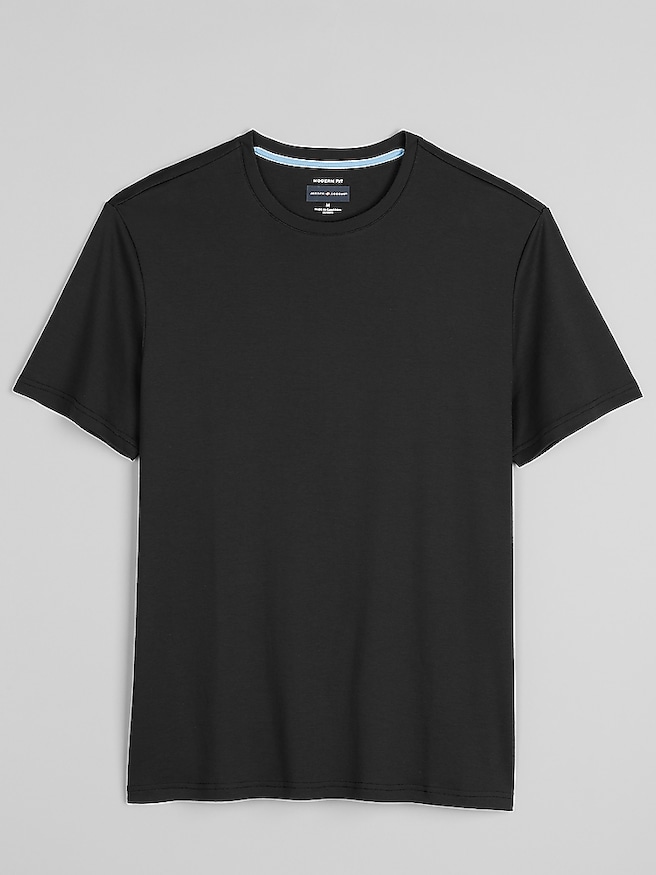
The appeal of men’s henley tees is how readily they fit into everyday outfits without demanding much adjustment. A heather gray long-sleeve henley with dark jeans and leather boots has enough texture for a weekend lunch, while a smooth, solid-color version with chinos and clean sneakers feels pulled together for an informal gathering. Beneath a denim jacket or bomber, the short placket adds interest at the neckline without competing with the outer layer. An unstructured blazer can work too when the setting is genuinely casual, especially with a henley that lies flat and has a clean hem; it does not replace a collared shirt where a dress code calls for one. During the cooler months, a henley also makes a useful layer beneath a flannel shirt, cardigan, or hoodie. Keeping the inner layer relatively smooth helps sleeves move freely and prevents fabric from collecting under the arms. Color can make these combinations feel quieter or more pronounced: navy, charcoal, black, and off-white pair easily with denim and earth tones, while a muted green or burgundy brings color without overwhelming the outfit. For another understated option alongside a button-neck style, men’s black tees offer a simple foundation for many of the same casual combinations. Care helps preserve the details that make a henley look good, particularly the neckline, hem, and placket. Follow the garment’s care label, since cotton, blended fibers, and textured knits can have distinct washing and drying requirements. When permitted, washing with similar colors in cool water and avoiding excessive dryer heat can help limit fading and shrinkage. Reshaping a damp shirt and drying it as directed can help prevent twisting or stretching, while folding heavier knits avoids the shoulder marks that hangers may leave. Checking loose buttons before washing and addressing a small seam opening early can keep minor wear from becoming a larger problem. With suitable care and a comfortable fit, the henley earns its place through repeated wear: soft against the skin, easy to layer, and distinctive enough to give a simple outfit a finished feel.