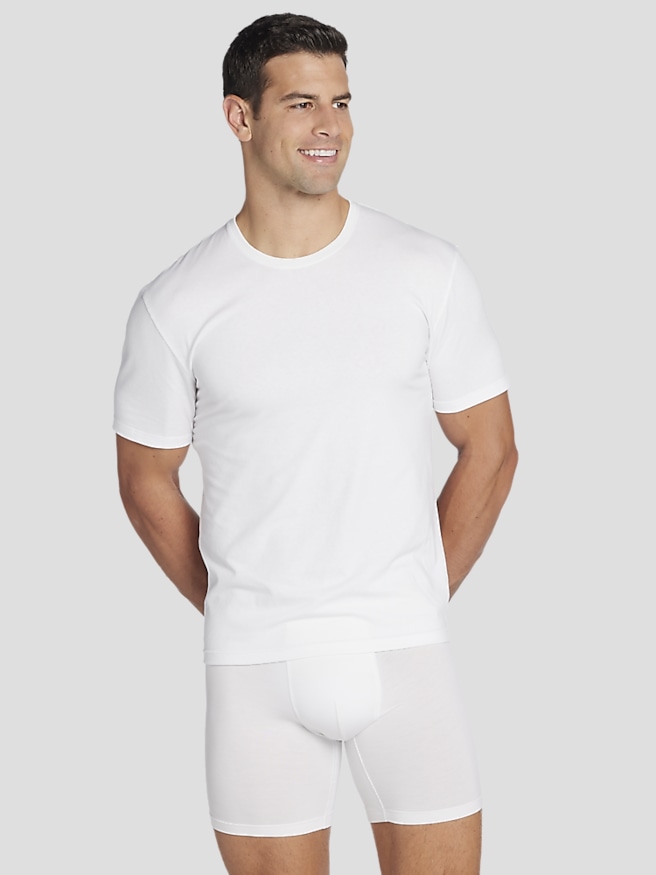
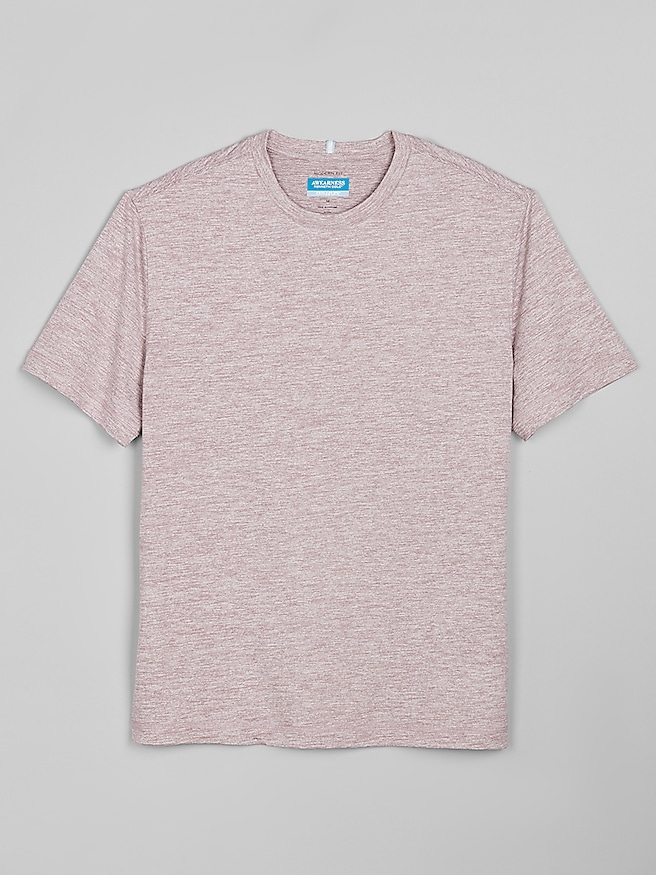
Men’s white tees are everyday essentials that can serve as a clean standalone top, a discreet undershirt, or a simple foundation for a layered outfit. Their appeal comes from a neutral color and an uncomplicated shape: a white T-shirt works with dark denim, tailored chinos, drawstring pants, and casual shorts without competing with the rest of the look. The most useful choice depends on how the shirt will be worn. For a tee worn on its own, fabric with enough substance to provide coverage and maintain a smooth outline often matters more than an exceptionally light feel. For an undershirt, a lighter construction and a close, comfortable fit can help it sit neatly beneath a button-front shirt. Cotton jersey is a familiar choice because its knit structure offers softness, breathability, and a little natural give. Combed cotton uses fibers processed to remove shorter strands, creating a smoother yarn, while ring-spun cotton can contribute to a soft, even fabric surface. Cotton blends offer other practical qualities depending on their composition. Polyester can help a shirt dry faster and retain its shape, while a small amount of elastane adds stretch for movement. Neither fiber content nor weight alone tells the whole story: knit density, finishing, and construction also affect how a tee feels and performs. A dense midweight jersey may provide useful coverage without the substantial feel of a heavyweight knit. White fabric can reveal skin tone, seams, or another layer underneath, so opacity deserves attention when the shirt is intended as the main top. Checking coverage in natural light gives a more realistic impression than judging folded fabric. A smooth, even surface creates a crisp appearance under an open overshirt, while a subtly textured knit gives a simple outfit more depth. These distinctions make white tees useful across a range of routines, from relaxed days at home to travel, casual gatherings, and workplaces where T-shirts fit the dress expectations.
Fit determines whether a men’s white T-shirt looks intentional and feels comfortable throughout the day. In a conventional fit, the shoulder seam generally sits near the edge of the shoulder, the chest has enough room to move without pulling, and the body falls without clinging at the waist. A slim fit follows the torso more closely and can reduce excess fabric beneath another shirt, but it should still allow easy movement when reaching forward or sitting down. A regular fit offers more ease through the chest and midsection, while a relaxed or oversized shape creates a looser silhouette with proportions designed for that effect. Simply choosing a larger size may also change the neckline, sleeve length, and body length in ways that feel less balanced. Sleeves that fall around the middle of the upper arm are a familiar everyday proportion, though a longer or wider sleeve can suit a deliberately roomy cut. For an untucked tee, a hem around the middle of the fly often creates a balanced line; torso length and the rise of the pants will influence where it actually lands. A shirt intended for tucking needs enough length to remain in place during ordinary movement. Neckline choice is equally practical. A crew neck gives a defined frame at the collar and works well beneath an open casual shirt. A V-neck may be less visible beneath an unbuttoned dress-shirt collar, depending on the depth of both openings. White is not always the least noticeable undershirt color beneath a pale dress shirt, however, because contrast against the wearer’s skin can make its edges visible. For casual styling, a white tee with straight-leg jeans and clean sneakers needs little else. Under an unstructured blazer, a smooth neckline and a tidy hem help the combination feel considered, provided the occasion allows it. When a collar better suits the setting, Men's White Polos offer a similarly neutral foundation with a more defined neckline. Both silhouettes pair naturally with chinos, but the tee keeps the overall impression more relaxed.
Care and construction influence how well white tees maintain their appearance through repeated wear. An evenly attached neckband, secure shoulder seams, and flat hems are useful details to examine because twisting, rippling, or a stretched collar can make an otherwise simple shirt look tired. Reinforced shoulder seams can help stabilize an area that takes regular strain, and consistent stitching helps the fabric lie neatly against the body. A heavier fabric is not automatically more durable; yarn quality, knitting, seam construction, and laundering all contribute to longevity. The care label should set the washing and drying routine, particularly for blends or fabrics with special finishes. Washing white tees with other white garments helps reduce the risk of color transfer, while separating them from rough fabrics and exposed fasteners can limit abrasion. Use detergent according to its directions and the size of the load, since excess product may leave residue rather than improve cleaning. Treat spills and marks promptly with a method appropriate for the fabric, and check that a stain has lifted before applying dryer heat, which can make some stains harder to remove. Chlorine bleach is not suitable for every white tee and can damage certain fibers or finishes; any whitening treatment should be compatible with the garment’s care instructions. Lower drying heat, when permitted, can help limit shrinkage and unnecessary stress on the fabric. Reshaping the shirt and laying it flat to dry can also help preserve its outline when that method suits the care label. Folding tees neatly avoids the shoulder bumps that some hangers leave, and putting them away fully dry helps keep stored clothing fresh. For frequent travel, a familiar white tee can simplify packing by working with several pairs of pants and serving more than one role. As a gift, it is most useful when the recipient’s preferred fit, neckline, and fabric feel are known rather than guessed. Someone who wears tees beneath button-front shirts may value a smooth, close-fitting layer, while someone who wears them alone may appreciate more substantial coverage. Matching those everyday habits is what turns a basic white T-shirt into a dependable part of a wardrobe.