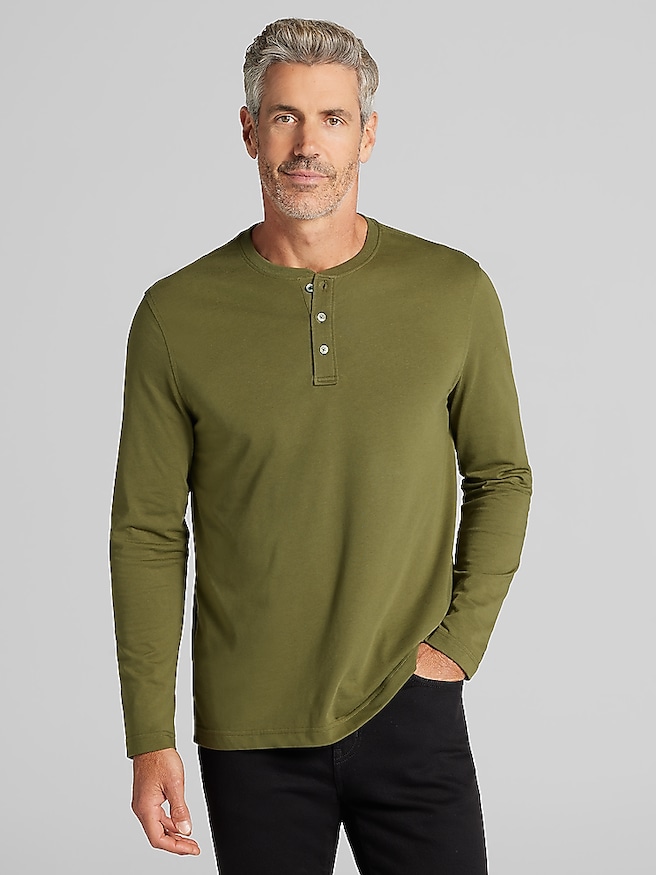
Men's waffle-knit henleys are casual knit shirts defined by a textured, gridlike surface and a short buttoned placket beneath a round, collarless neckline. That combination gives them more dimension than a smooth T-shirt without making them feel dressed up. The small recessed squares in the fabric create the familiar waffle pattern, while the buttons add a useful styling detail: fastened higher, the neckline looks neat and contained; left slightly open, it has a more relaxed feel. Although waffle knit is often associated with thermal-style shirts, the texture alone does not determine fabric weight, thickness, or how a shirt feels against the skin. Those qualities depend on the yarn, fiber blend, and construction. Cotton is a common choice for its softness, breathability, and absorbency, making it comfortable for everyday activities such as working at a desk, meeting friends for lunch, or spending an afternoon on errands. Cotton blends can bring other characteristics to the fabric, including improved shape retention or a lighter feel, depending on their composition. Polyester may contribute resilience and help a fabric dry more quickly, while a small amount of elastane can add stretch and recovery. Knit structure also provides some natural give, so stretch is not determined by fiber content alone. A finer waffle pattern tends to look understated, while a deeper, more pronounced texture creates a more substantial visual effect. Neither is automatically better; the distinction is largely about the feel and appearance that suit the wearer. As part of the broader range of Men's Casual Knit Shirts, waffle-knit henleys offer a middle ground between a basic tee and a lightweight pullover. Their appeal comes from familiar, practical details rather than elaborate decoration: a comfortable neckline, an easy silhouette, and enough surface interest to make a simple outfit feel considered.
Fit has a noticeable effect on both the comfort and appearance of a waffle-knit henley because the fabric's texture can emphasize pulling, bunching, or excess volume. A close fit can create a clean line under an overshirt or casual jacket, but it should still leave room to reach forward, bend an elbow, and sit comfortably. On a conventionally cut shirt, shoulder seams generally sit near the outer edge of the shoulders, while intentionally relaxed designs may place them farther down the arm. Across the chest, the placket should lie reasonably flat rather than pull apart between the buttons. Through the midsection, a little ease lets the waffle pattern keep its shape instead of stretching into a flatter surface. A relaxed fit offers more room through the torso and can work well worn on its own, especially with straight-leg jeans or chinos. Excess fabric is less useful when it gathers beneath another layer, so the intended outfit matters as much as the size on the label. Sleeve length and cuffs deserve similar attention. A long sleeve should allow ordinary arm movement without constantly tugging at the wrist, and a cuff should feel secure without leaving an uncomfortable impression. The hem also changes the overall balance: a length that covers the waistband during normal movement works well untucked, while extra length may be useful for someone who prefers to tuck in a shirt. Checking chest measurements and the relevant size chart is more dependable than assuming every casual shirt fits alike. Styling can remain straightforward. A solid henley with dark denim and clean sneakers creates a relaxed outfit for a casual dinner, while chinos and suede shoes give the same textured neckline a slightly more polished setting. Beneath an open woven shirt, the waffle pattern adds contrast without needing a bold print. The result suits everyday plans where comfort matters but a plain crewneck might feel a little too basic.
Care and construction help determine how well a men's waffle-knit henley holds up to repeated wear. Even stitching, secure buttons, and a neatly finished placket are useful details because the neckline receives regular handling. Ribbed cuffs and neck trim should recover after gentle stretching rather than remain visibly loose, although the amount of recovery varies with the fabric. Waffle knit can catch on rough surfaces, exposed hook-and-loop fasteners, or sharp jewelry, so a little attention during wear and laundering helps protect its raised texture. The care label remains the best source for washing and drying instructions. When machine washing is permitted, turning the shirt inside out and washing it with similar colors can help limit surface abrasion and color transfer. A gentle cycle may be appropriate for some fabrics, but it should not replace the manufacturer's directions. Cotton-containing knits can shrink, particularly with excessive heat, and some blends require their own precautions. Following the specified drying method and reshaping the shirt while damp, when appropriate, helps preserve the intended proportions. Hanging a heavy, wet knit by its shoulders can stretch it, while folding a clean, dry shirt keeps unnecessary weight off the neckline. A pulled thread is best handled carefully rather than tugged, which can disturb neighboring stitches. These everyday habits support a shirt that remains comfortable and presentable through frequent rotation. Waffle-knit henleys can also make thoughtful gifts for someone whose wardrobe centers on denim, casual trousers, and uncomplicated layers. Familiar sizing, a preferred sleeve length, and colors the recipient already wears are more useful starting points than guessing at a completely new style. Charcoal, navy, cream, and muted earth tones are easy to coordinate, while richer colors can bring variety to an otherwise neutral wardrobe. For a partner, sibling, or friend who appreciates clothing that feels relaxed without looking unfinished, the combination of tactile fabric and a buttoned neckline offers lasting everyday usefulness. The strongest choice is one that fits naturally into the wearer's routines, feels comfortable through ordinary movement, and is easy to care for according to its label.