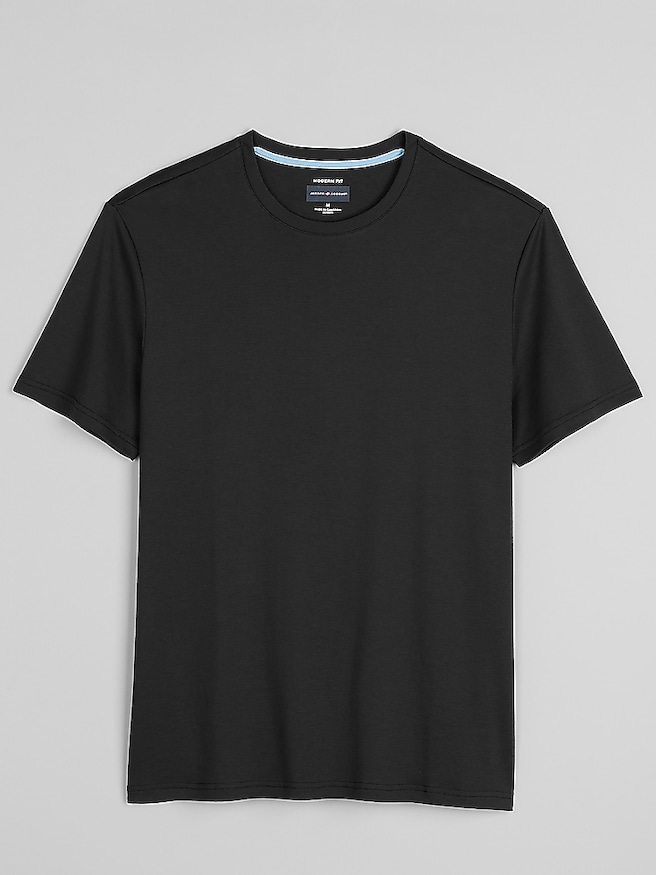
Men’s black tees are everyday foundations that can look relaxed with jeans or more polished beneath an unstructured jacket. Their appeal comes from a simple combination: a dark, neutral color, an uncomplicated shape, and enough versatility to move between casual settings without a complete change of clothes. A black T-shirt with dark denim and leather sneakers suits dinner at a neighborhood restaurant; the same tee with chinos and an open overshirt works for a casual office where the dress code allows it. Black also gives patterned shirts, textured knitwear, and lighter trousers a quiet backdrop, making the overall outfit feel balanced rather than busy. The fabric makes a noticeable difference in how that foundation looks and feels. Cotton is breathable and absorbent, with a familiar softness that suits everyday wear. Combed cotton generally feels smoother because processing removes shorter fibers, while ring-spun cotton uses a spinning method that can produce a finer, softer yarn. Cotton blends may add stretch, improve shape recovery, or shorten drying time, depending on their fiber content and construction. Fabrics containing modal often have a soft hand and fluid drape; polyester blends can feel lighter and dry more quickly than comparable all-cotton fabrics. Moisture-wicking performance, however, depends on the textile’s design and finish rather than the presence of one fiber alone. Fabric weight matters just as much as fiber content. A lightweight black tee slips comfortably beneath a sweater, while a heavier knit usually has more body and holds its outline when worn on its own. Midweight fabrics offer a useful middle ground for indoor wear and layering during the cooler months. None of these qualities makes one fabric universally best. The most useful choice depends on whether the tee needs to feel airy against the skin, fall softly through the torso, or keep a more structured shape through a long day.
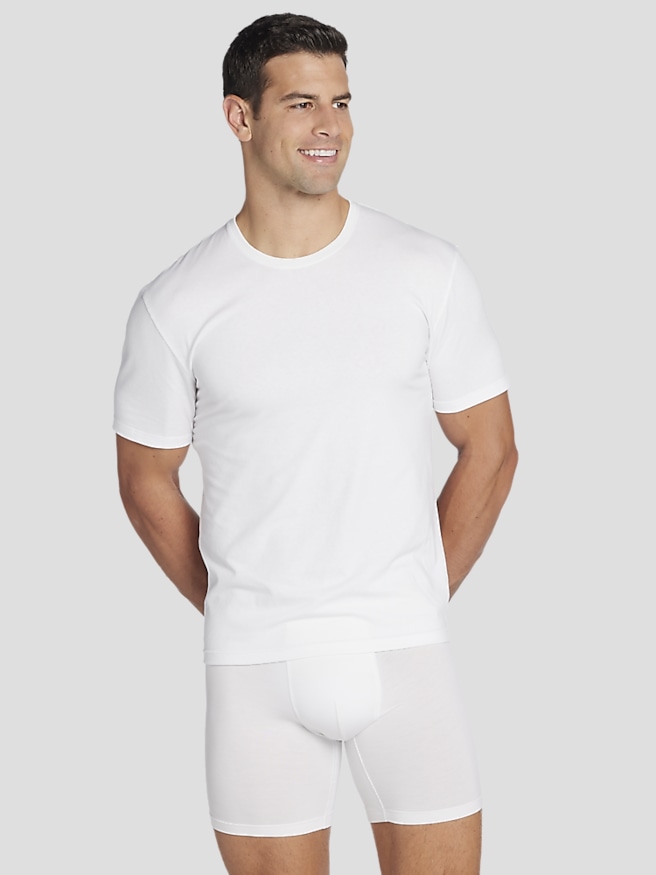
Fit gives men’s black T-shirts much of their character, even when the color and neckline are identical. A slim fit sits closer through the chest and waist, keeping excess fabric from gathering beneath a shirt or jacket. It should still leave room to reach forward, sit comfortably, and move without pulling across the upper back. A regular fit provides a little more space through the torso and often works well as either a standalone top or a base layer. Relaxed and boxier cuts create a looser outline, especially when paired with straight-leg denim or fuller chinos. For a conventional set-in sleeve, the shoulder seam generally sits near the outer edge of the shoulder; a dropped seam is an intentional feature of many relaxed shapes, not necessarily a sizing problem. Sleeve length and width influence the balance, too. A sleeve that follows the upper arm without squeezing it looks neat beneath an overshirt, while a wider sleeve gives a casual outfit more ease. An untucked hem often looks balanced around the middle of the fly, though torso length, trouser rise, and personal preference all affect that proportion. Longer lengths can stay tucked more securely, while shorter, boxier shapes may sit better over higher-rise pants. Crew necks provide a clean frame at the collar and pair naturally with open button-front shirts. V-necks create a more open neckline and may sit below an outer shirt’s opening, depending on the depth of each. Ribbing that lies flat helps either shape look finished. For tonal outfits, texture keeps black from looking flat: a smooth tee against washed denim, a brushed overshirt, or a softly textured cardigan creates subtle contrast. Black fabrics do not always share precisely the same shade, so an intentional contrast in texture can make slight variations feel cohesive. For a lighter foundation under the same casual layers, men’s white tees offer a crisp contrast, while black keeps the overall look darker and more understated.
A well-made black tee earns its place through repeated wear, so construction and care deserve as much attention as its first impression. Even stitching, secure hems, and a smoothly attached neckband are useful signs of careful assembly. Shoulder reinforcement can help stabilize an area that takes stress during dressing and daily movement, while a neckline with good recovery is less likely to look stretched after ordinary use. Heavier fabric is not automatically more durable; yarn quality, knit structure, finishing, and laundering all affect how a shirt holds up. Black also makes certain changes easier to notice, including lint, surface fuzz, and fading along seams. Washing according to the care label is the starting point for preserving both color and fit. When the label permits, turning a tee inside out, using cold water, and washing it with similar dark colors can help limit abrasion and unnecessary color loss. An appropriate amount of detergent helps avoid residue, and keeping rough hardware or hook-and-loop fasteners away from soft knits reduces snagging. High dryer heat can contribute to shrinkage and wear, particularly in cotton fabrics, so a lower-temperature setting or air drying may be preferable when allowed by the care instructions. Preshrunk cotton can still experience some dimensional change; the label remains more useful than a blanket assumption about shrink resistance. Folding tees neatly avoids the shoulder marks that hangers can leave on softer knits, and a lint roller provides a quick finishing touch before heading out. These practical qualities make black tees useful for students, commuters, travelers, and anyone whose week includes a mix of home, casual work, and social plans. For travel, a comfortable tee layers beneath a zip-front knit in a cool terminal and works on its own once indoors. As a gift, a familiar fit and preferred neckline are more reliable starting points than guessing at a new silhouette. The lasting appeal is straightforward: a black tee can be easy to wear without looking like an afterthought, especially when its fabric, proportions, and finish suit the person wearing it.