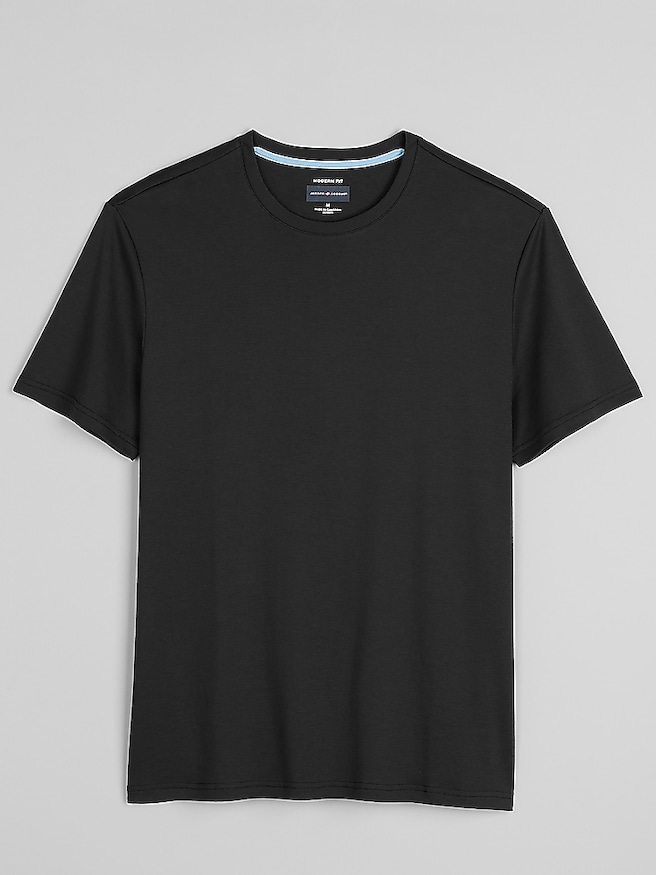
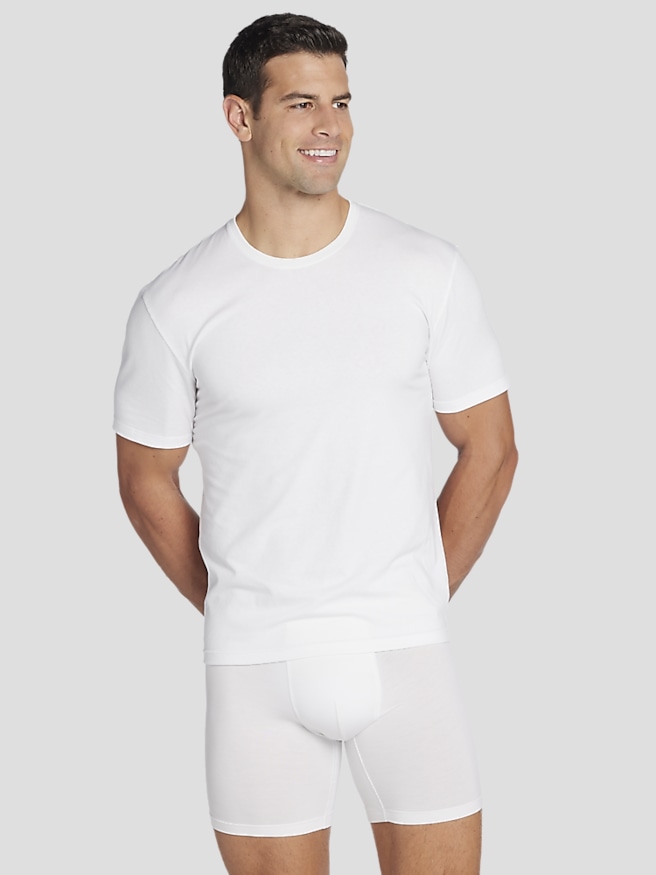
Cool black tees combine a clean silhouette, comfortable fabric, and a deep black finish that pairs naturally with denim, chinos, and tailored trousers. Their appeal comes from simplicity: an uncluttered front, a well-shaped neckline, and proportions that make an everyday outfit feel considered rather than thrown together. Black also creates a consistent visual foundation, whether the rest of the outfit stays tonal or includes lighter pants and textured layers. Fabric makes a noticeable difference in how that foundation looks and feels. Cotton offers softness and breathability, with jersey knits providing the familiar flexibility associated with a favorite T-shirt. Combed cotton has been processed to remove shorter fibers, which can contribute to a smoother surface, while longer cotton fibers can support smoother, stronger yarns. Those details matter, but fiber quality, knit construction, and finishing all contribute to the finished fabric. A lightweight jersey tends to drape closer to the body and fit easily beneath another shirt; a heavier jersey usually brings more structure and a more substantial appearance when worn on its own. Neither weight is automatically better. The useful distinction is whether the tee needs to function as a discreet base layer, a standalone piece, or both. Cotton blends can introduce other practical qualities. Polyester may help a fabric dry faster, while a small amount of elastane adds stretch and can help the knit recover its shape. For active routines, moisture-wicking construction can help move perspiration away from the skin, though that performance depends on the fabric rather than its black color. Surface texture matters, too. A smooth, compact knit tends to look more refined, while slub yarns introduce subtle irregularity and a more casual character. The best match balances softness, opacity, drape, and enough structure for the intended use, without relying on fabric weight alone as a measure of quality.
Fit gives a black tee much of its personality. A close, body-skimming cut creates a streamlined outline beneath an open button-down or casual jacket, while a regular fit leaves comfortable room through the chest and waist without looking oversized. Relaxed cuts offer more space through the torso and sleeves, making proportion especially important: a generous tee often looks more intentional when its hem, shoulder placement, and sleeve length work together. On a traditionally fitted T-shirt, the shoulder seam generally sits near the edge of the shoulder. A dropped seam belongs to a more relaxed design and should be judged as part of that silhouette rather than treated as a fit mistake. Sleeves that follow the upper arm without gripping it give a neat appearance, while wider sleeves create a looser outline. The neckline is another small detail with a large visual effect. A crew neck provides a simple frame for the face and works especially well with an open overshirt; a V-neck changes that frame and can sit less visibly beneath certain shirt openings. A collar that lies flat helps either shape look finished. Length deserves equal attention. An untucked tee needs enough coverage for sitting and reaching without so much extra fabric that it overwhelms the pants beneath it. A tucked tee benefits from enough length to stay secure, particularly with higher-rise trousers. For a casual dinner, a black tee with dark denim and clean leather sneakers keeps the outfit straightforward. With tailored pants and an unstructured blazer, the same general foundation reads more polished, provided the setting allows a T-shirt. Tonal combinations gain depth from texture: smooth jersey against twill, washed denim, or a softly textured jacket keeps an all-black outfit from looking flat. For a more relaxed contrast, a black tee and light neutral chinos give each piece a clear outline without requiring a graphic or prominent logo.
Durability becomes apparent through repeated wear: a neckline that keeps its shape, seams that remain secure, and fabric that continues to hang evenly all contribute to a dependable black tee. Even stitching, tidy seam finishes, and reinforcement at areas that receive frequent tension are useful construction details, although no single feature guarantees longevity. The black finish deserves attention because fading, lint, and detergent residue can be more noticeable against a dark surface. Care begins with the garment’s label, since fiber blends, finishes, and decorative details can require different treatment. When machine washing is permitted, turning a tee inside out helps reduce abrasion on its outer surface, and washing with similar dark colors limits contact with lint-shedding fabrics. Cold water and an appropriate detergent can help preserve color; chlorine bleach can damage both the shade and certain fibers. Excess detergent may leave residue, so using the recommended amount matters more than adding extra. Drying instructions are equally important. Excessive dryer heat can contribute to shrinkage or affect stretch fibers, while prolonged direct sunlight can fade dark fabric. Reshaping a damp tee and drying it as directed helps maintain its intended proportions. Folding neatly also avoids the shoulder bumps that some hangers can leave in soft knits. These everyday details support the versatility that makes cool black tees useful for commuters, students, travelers, and anyone who prefers a straightforward casual wardrobe. A soft tee can make a thoughtful birthday or graduation gift for a brother, partner, or friend, especially when the recipient’s preferred fit and neckline are already familiar. For student-focused outfit ideas, High School Black Tees connects this everyday staple with school-day dressing, always subject to individual dress requirements. Whether worn for a low-key gathering, a long day of errands, or an informal workplace, a well-chosen black tee earns its place through comfortable fabric, balanced proportions, and care that keeps its simple details looking sharp.