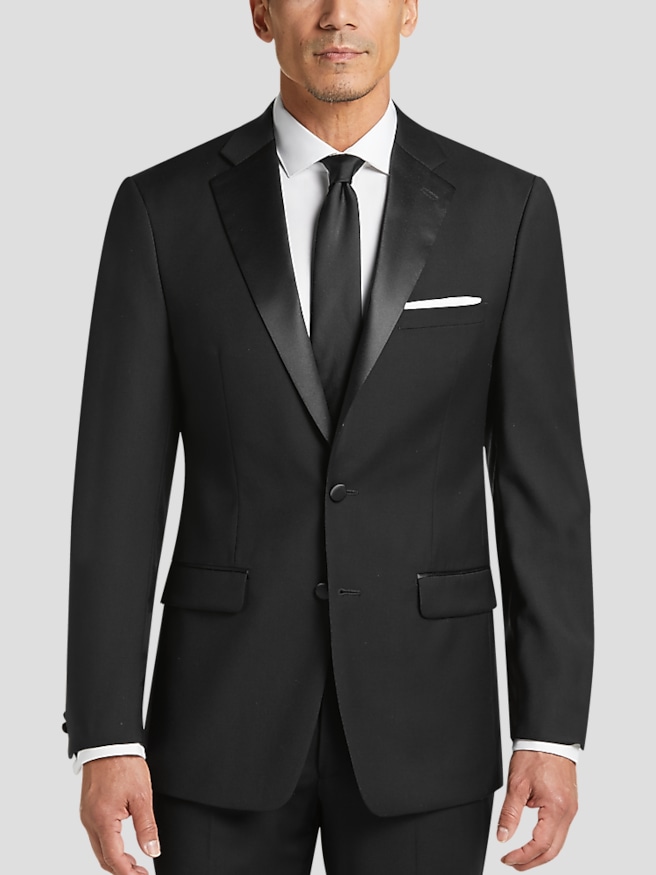
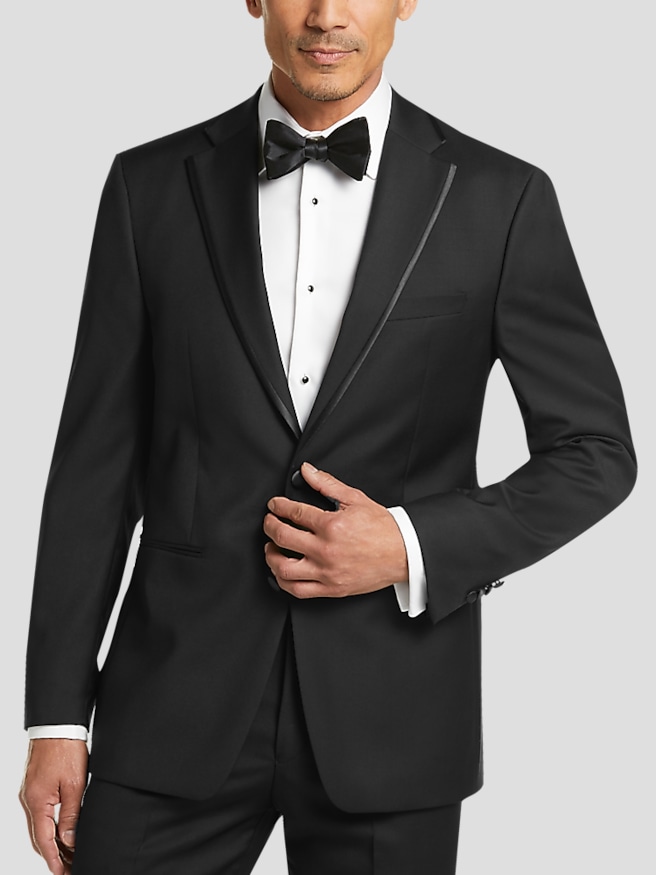
Men’s black tie attire brings a refined, cohesive look to formal celebrations, evening receptions, galas, fundraisers, award ceremonies, and other occasions where a polished dress code matters. The foundation is a well-fitted tuxedo in classic black or deep midnight blue, with satin or grosgrain detailing on the lapels and trouser seams. Peak lapels create a crisp, traditional profile, while a shawl collar offers a smoother, more streamlined appearance. The jacket should sit comfortably across the shoulders, close neatly without pulling, and end around the seat of the trousers for balanced proportions. Matching trousers should feature a formal stripe along the outer seam and sit at the natural waist or slightly lower, depending on the cut. A white formal dress shirt keeps the look sharp and provides contrast against the dark tailoring. Pleated or piqué details, a covered placket or understated studs, and French cuffs are all classic choices for black tie. A black silk bow tie completes the neckline; a self-tied bow tie has a distinctive, subtly irregular shape, while a pre-tied style offers convenience and consistency. The waist should remain clean and uninterrupted, so a belt is not worn with a tuxedo. Instead, choose a low-profile waistcoat or a pleated cummerbund, depending on the formality of the event and the desired silhouette. Black dress shoes should be polished and understated, with patent leather, plain-toe leather, or formal pump styles suited to the occasion. Complete the foundation with fine black dress socks, then add restrained details such as silver-toned cufflinks and a neatly folded white pocket square. These small elements should support the outfit rather than compete with it, allowing the quality of the fit, fabric, and overall presentation to take center stage.
Fit is the detail that makes formalwear feel effortless. Even the finest-looking tuxedo can appear uncomfortable when the jacket sleeves cover the hands, the trouser break is too deep, or the shirt collar sits away from the neck. When selecting men’s black tie attire, consider the event’s stated dress code, the time of day, the venue, and the role you will have during the celebration. A groom, member of a wedding party, host, speaker, or guest may need a slightly different approach to coordination, particularly when multiple people are dressing together. For formal weddings, matching or complementary tuxedos help create a unified wedding-party appearance; explore Men's Black Tie For Wedding Attire for additional ideas suited to that setting. For a gala or evening ceremony, traditional black with a crisp white shirt is a dependable choice that photographs well under warm indoor lighting and remains appropriate from the arrival through the final dance. Midnight blue can offer a subtle alternative, often appearing nearly black in low light while revealing a rich tone in photographs. Suspenders designed for formal trousers can help maintain a smooth fit and are a better choice than a belt, while the waist covering helps keep the shirt and waistband concealed when the jacket is open. Those planning to rent may appreciate the convenience of a coordinated formalwear package, especially for a single occasion or a wedding party with a set color direction. Buying can make sense for men who attend formal events regularly or prefer to build a wardrobe around pieces they can wear again. In either case, allow enough time for alterations, try on the complete outfit with the intended shirt and shoes, and check that every layer moves comfortably when sitting, walking, and raising an arm. A few minutes spent adjusting sleeve length, trouser length, and jacket proportions can turn a formal ensemble from merely correct into one that feels naturally yours.
Men’s black tie attire can also make a thoughtful gift for a graduate beginning a professional career, a partner preparing for milestone celebrations, or a family member who has several formal events ahead. Accessories are especially useful gifts when the recipient already owns a tuxedo or prefers to rent the main pieces. A classic bow tie, French-cuff accessories, formal suspenders, a white pocket square, or polished dress shoes can refresh an existing wardrobe without dictating a complete personal style. For a first formalwear collection, versatile black and white accessories are the easiest to coordinate and can be used for weddings, holiday parties, charity dinners, performances, and celebrations during the cooler months. A gift card or assistance with tailoring can be equally practical, since precise fit often matters more than decorative detail. Men who prefer a modern appearance may choose a slimmer cut, a narrow lapel, or a streamlined shirt, while those drawn to traditional tailoring may favor fuller proportions, peak lapels, and a more structured silhouette. The most successful outfit reflects both the occasion and the wearer: formal enough to honor the invitation, comfortable enough to enjoy the evening, and personal enough to feel confident in photographs and in person. Keep accessories restrained, maintain a polished finish on the shoes, and store formalwear carefully between events so it is ready for the next invitation. With the right combination of fit, proportion, and classic details, black tie attire offers a dependable way to look composed at life’s most memorable gatherings.