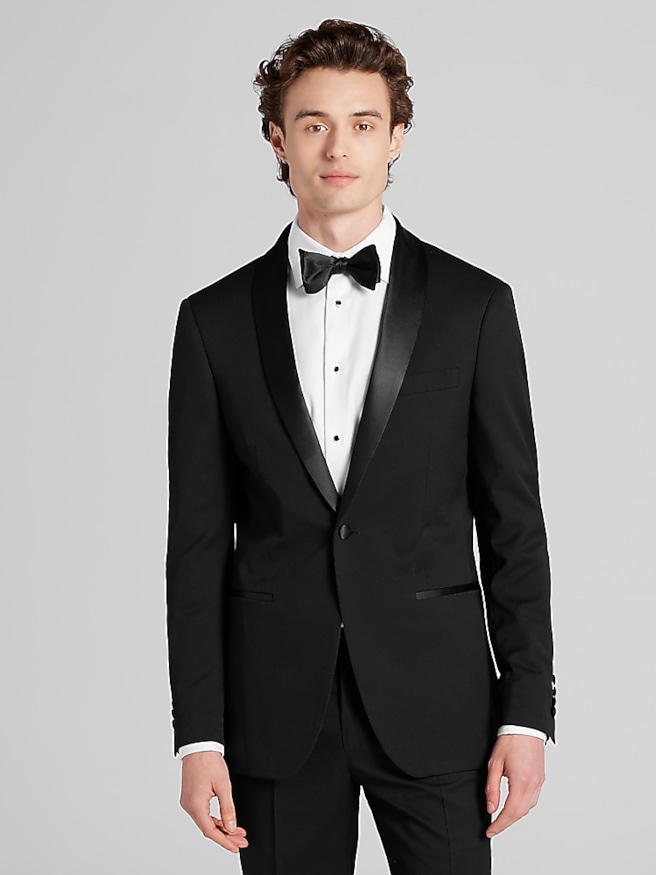
Black tie attire is the traditional dress code for formal evening occasions, especially galas, award ceremonies, elegant weddings, charity dinners, milestone celebrations, and other events where a polished appearance is part of the experience. The foundation is a tuxedo, typically made up of a black or midnight blue dinner jacket and matching trousers. Look for satin or grosgrain detailing on the lapels, buttons, and trouser stripe, as these subtle finishes distinguish a tuxedo from a standard suit and create the clean, continuous line associated with formal dressing. A well-fitted jacket should sit smoothly across the shoulders, close neatly without pulling, and allow comfortable movement when greeting guests or sitting through dinner. Trouser length matters as well; the hem should meet the top of the shoe with a restrained break rather than bunching at the ankle. Under the jacket, a crisp white dress shirt provides the essential contrast. Pleated or pique-front shirts add traditional texture, while a smooth bib-front design offers a streamlined appearance. French cuffs, secured with cufflinks, and formal studs can bring a quiet sense of occasion to the outfit without making it feel overly decorated. Black neckwear is the classic choice, with a self-tied bow tie offering the most authentic finish. Its proportions should complement the wearer’s face and collar rather than overpower them. A matching cummerbund or low-cut waistcoat can complete the waistline, particularly with a single-breasted tuxedo. These pieces help keep the shirt neatly framed and maintain a balanced silhouette throughout an evening of standing, dining, and dancing. Double-breasted jackets generally do not require an additional waist covering because their overlapping front already provides that visual balance.
The finishing details often determine whether black tie attire feels merely formal or genuinely refined. Highly polished black patent leather Oxford shoes are a traditional choice, while other sleek, minimalist black dress shoes may suit a modern interpretation when the invitation allows some flexibility. Socks should be dark and long enough to prevent a gap when seated. A simple black pocket square, understated cufflinks, and a classic watch can add personality while preserving the restraint expected of the dress code. Accessories should work together rather than compete for attention; one memorable detail is usually more effective than several bright or oversized accents. Comfort deserves equal attention. During the cooler months, evening events may involve a walk between venues, photographs outdoors, or time spent waiting for transportation, so a tailored overcoat in a dark neutral shade can provide warmth without disrupting the formal line of the tuxedo. Fit should be considered from every angle, since formal photographs often capture the back, sleeves, and trouser break as much as the front. For someone building a wardrobe, black tie essentials can be useful for recurring invitations and can be mixed with other formal pieces for dressier dinners or ceremonies. They can also make a thoughtful gift for a graduate, a partner preparing for a wedding, or a relative attending a first gala, particularly when the recipient is beginning to assemble a dependable formal wardrobe. When a celebration calls for a less traditional color palette, explore Suit Brown Tie for a distinct direction suited to a more flexible dress code. Whether the occasion is a wedding reception beneath warm lights, an awards evening in a grand hall, or an intimate dinner during the cooler season, carefully chosen black tie attire helps the wearer look composed from the first arrival through the final photograph.