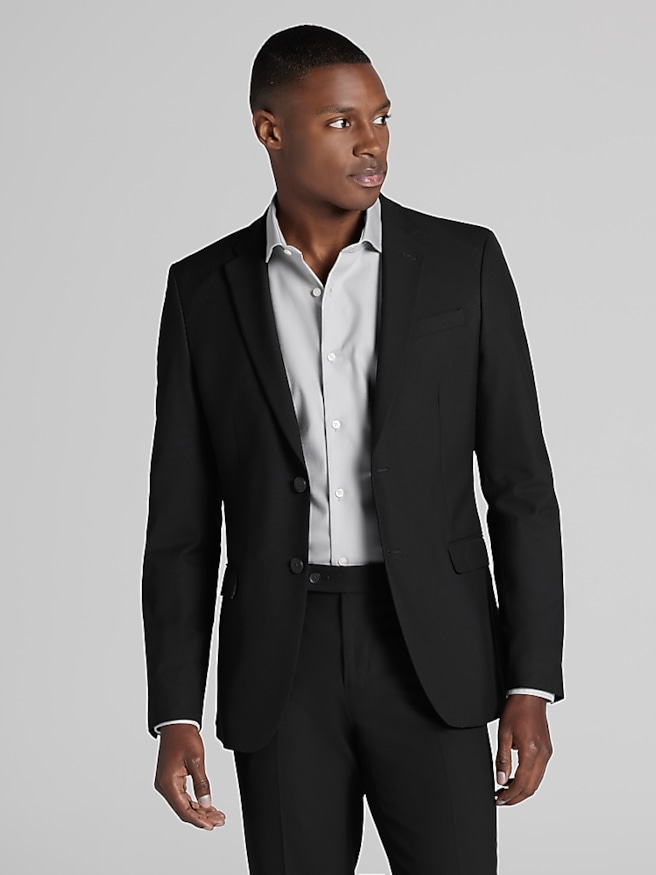
Black tie event attire for men traditionally consists of a black or midnight blue tuxedo, a white formal shirt, a black silk bow tie, and polished black formal shoes. The effect comes from clean proportions and considered details: a smooth lapel against matte wool, a bright shirtfront beneath a dark jacket, and trousers that continue the jacket’s line without interruption. These elements distinguish black tie from an everyday business suit and make it appropriate for formal evening weddings, charity galas, awards ceremonies, and other occasions with a black tie dress code. A tuxedo jacket typically features satin or grosgrain facing on peak lapels or a shawl collar, with matching trousers often finished with a coordinating stripe along the outer seams. Peak lapels create a defined, angular frame across the chest, while a shawl collar curves smoothly toward the jacket’s closure. Both belong comfortably within traditional evening dress. Black offers a familiar, understated foundation; midnight blue provides a similarly formal alternative with depth under evening lighting. A white formal shirt supplies contrast, whether its front features fine pleats, textured piqué, or a clean covered placket. French cuffs accommodate cufflinks, while a shirt designed for studs adds a small repeating detail down the front. A black silk bow tie completes the traditional arrangement without competing with the lapels. For occasions that call for these established combinations, Men's Black Tie Attire centers on the clothing and finishing touches associated with formal evening dressing. The invitation remains the clearest indication of the expected level of formality: black tie calls for a tuxedo, whereas black tie optional generally also permits a dark suit. For a guest entering a candlelit ballroom or a groom standing beneath soft reception lighting, the appeal is the same—a composed silhouette that respects the occasion without relying on conspicuous decoration. Consistency across the jacket, trousers, shirt, and accessories gives the outfit its character, with each surface and proportion contributing to the whole.
Fabric and fit shape how formal attire looks and how comfortably it wears through a full evening. Wool is a traditional tuxedo fabric because it drapes smoothly, breathes, and has natural resilience that helps it recover from light creasing. Fine worsted wool can feel relatively light despite its polished appearance, while wool blends vary in texture, structure, and wrinkle resistance according to their composition. Velvet brings a plush surface to evening jackets and can suit celebrations with room for personal expression, though a matching wool tuxedo remains the more conventional choice for strict black tie. During the cooler months, a substantial formal overcoat adds warmth on the way to the venue without requiring an excessively heavy outfit indoors. Cotton formal shirts offer a crisp appearance and breathable feel, especially useful when an evening moves from a seated dinner to a crowded dance floor. Fabric alone cannot compensate for poor proportions, however. Jacket shoulders should sit cleanly at the natural shoulder, and the collar should rest against the shirt rather than pull away from the neck. A fastened jacket should follow the torso without strained folds across the button, leaving enough ease to sit, shake hands, and lift a glass comfortably. Sleeves usually reveal a small amount of shirt cuff, giving the cufflinks space to show without leaving the wrists exposed. Trousers should sit securely at the intended waist height and fall in a smooth line, with little excess fabric gathering above the shoes. A slim silhouette can look sharp, but close fit should not mean restricted movement; a roomier cut can be equally polished when the shoulders, waist, and length are balanced. For someone whose evening includes a ceremony, photographs, dinner, and dancing, a seated fit check matters as much as the view in a mirror. Careful alterations can refine sleeve length, trouser hems, and waist shaping, helping formal clothing feel settled rather than something that needs constant adjustment. Balanced proportions also keep a tuxedo useful beyond a single occasion, particularly when its styling stays restrained.
Finishing details give black tie its sense of completeness, and their practical roles are as important as their appearance. With a traditional single-breasted tuxedo, a low-cut formal waistcoat or a pleated cummerbund covers the trouser waistband and keeps a band of white shirt from interrupting the outfit at the waist. A cummerbund is conventionally worn with its pleats facing upward; a formal waistcoat should sit low enough to leave the shirtfront visible. Tuxedo trousers commonly use side adjusters or suspenders rather than a belt, preserving a smooth waist beneath the jacket. Black patent leather shoes offer a glossy finish, while well-polished black calfskin Oxfords provide a restrained alternative. Fine black dress socks long enough to cover the calf maintain a continuous dark line when seated. A neatly folded white linen or silk pocket square adds contrast at the chest, and understated cufflinks coordinate easily with shirt studs without turning the outfit into a display of hardware. Small accessories such as cufflinks or a silk bow tie can also make thoughtful gifts for someone preparing for a wedding or attending formal events regularly, especially when their existing shirt style and preferences are known. Long-term durability depends on both construction and care. Secure buttons, tidy stitching, and a lining that allows comfortable movement are useful details to notice, while the garment’s care label should govern cleaning and pressing. After an event, letting a tuxedo air out before storing it helps release moisture; a broad, shaped hanger supports the jacket’s shoulders, and properly hung trousers are less likely to develop unwanted folds. Gentle brushing can remove surface dust, while professional cleaning is best reserved for when the fabric needs it rather than treated as an automatic step after every wearing. Satin and grosgrain facings deserve particular care because excessive heat or pressure can alter their finish. Stored dry with room to breathe, formal clothing can retain its shape and character across many evenings, from a close friend’s wedding to an annual gala.