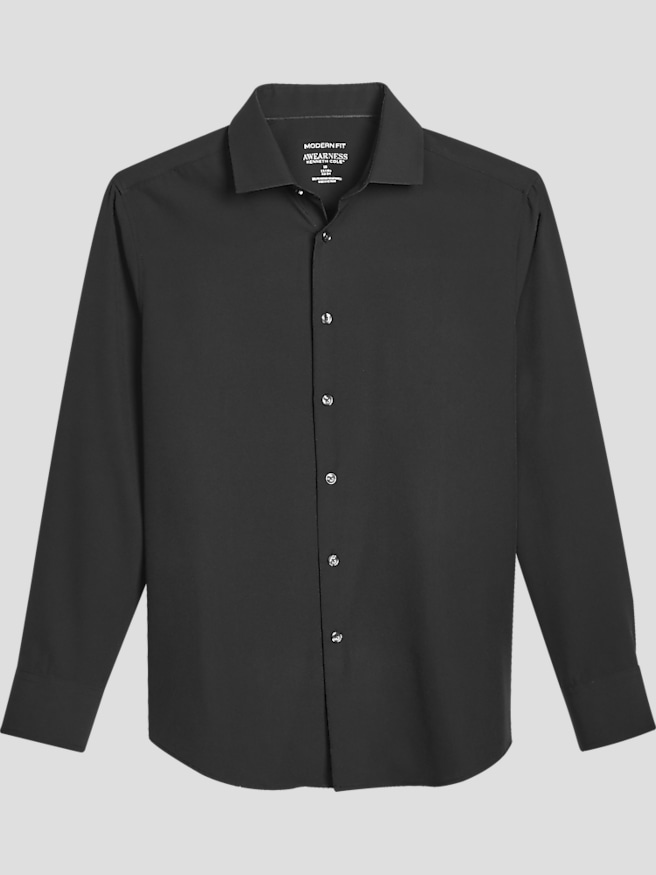
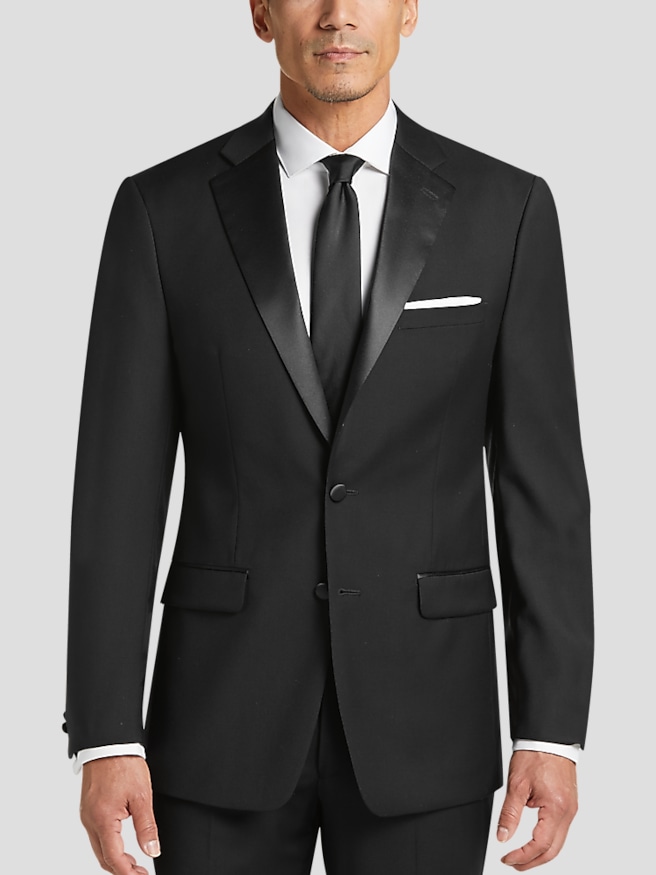
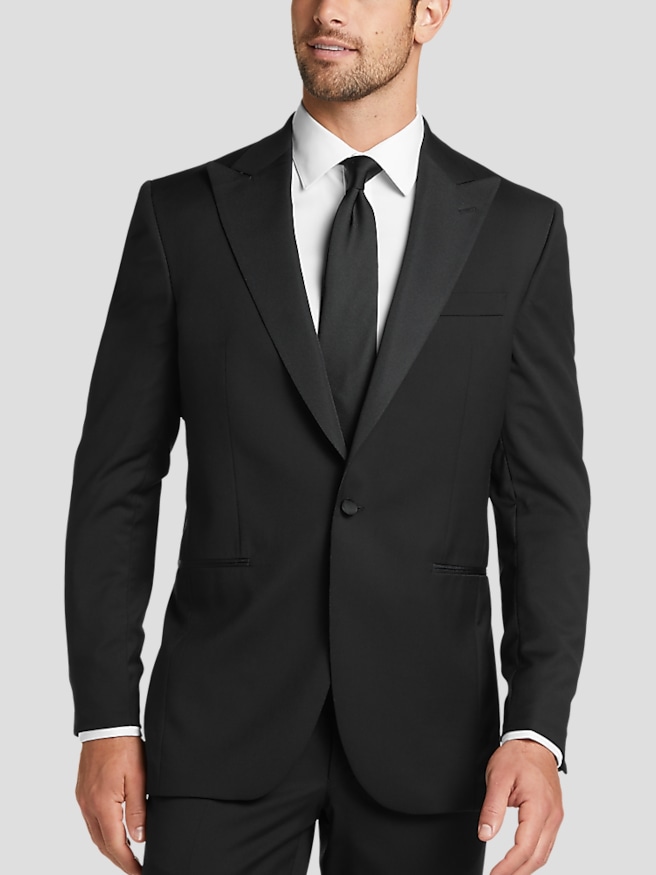
Men's all-black formal attire brings together a black suit or tuxedo, a black dress shirt, coordinated neckwear, and polished black dress shoes for a continuous, monochromatic look. The effect depends less on decoration than on clean tailoring, compatible shades of black, and a balance of matte and lustrous fabrics. A structured jacket gives the outfit definition across the shoulders, while neatly draped trousers carry that line through to the shoes. A black suit offers a restrained foundation for dressy receptions, evening celebrations, and events where tailored clothing is expected. A tuxedo introduces more traditional eveningwear details, such as satin-faced lapels and a coordinating stripe along the trouser seam. An all-black combination is a modern interpretation of formal dressing, however, and does not automatically satisfy every formal dress code. Traditional black tie generally calls for a tuxedo with a white formal shirt, so the invitation and host's expectations remain important. Within an all-black outfit, fabric provides much of the visual interest. Fine wool suiting can create a smooth, softly matte surface that contrasts with silk neckwear or satin lapels. Wool blends may offer added resilience or stretch, depending on their composition, while the weave and fabric weight influence how the clothing hangs and feels during extended wear. A finely woven cotton dress shirt brings a crisp collar and a distinct surface beneath the jacket without introducing another color. Subtle texture can keep the layers visible, especially in photographs where several dark fabrics might otherwise blend together. Matching the depth and undertone of the blacks matters as much as matching the color name: a faded shirt can look disconnected from deeply colored tailoring, and two fabrics labeled black may appear noticeably different under event lighting. The strongest combinations look coordinated without requiring every surface to have exactly the same finish.
Fit gives all-black formalwear its shape, particularly because a single dark palette draws attention to the outline of the clothing. Jacket shoulders should sit cleanly without extending beyond the natural shoulder, and the lapels should rest flat rather than pull away from the chest. With the jacket fastened, pronounced wrinkles radiating from the button often indicate that the body is too tight. A close fit can look sharp, but enough room to sit through dinner, reach for a glass, and move comfortably across a dance floor is essential. Slim, tailored, and more generously cut silhouettes can all work; the better choice follows the wearer's proportions rather than relying on the fit label alone. Sleeve length also contributes to a finished appearance, with a small amount of shirt cuff providing separation between the jacket and the hand, even when both fabrics are black. Trousers should rest securely at the waist and fall smoothly through the seat and thigh. A slight break at the shoe creates a traditional finish, while a cleaner hem with little break can suit a more contemporary silhouette. Excess fabric pooling around the ankles interrupts the long line that makes monochromatic dressing effective. Shirt collars should sit comfortably when fastened, with enough structure to frame a tie or bow tie without collapsing beneath the jacket. A black silk bow tie works naturally with tuxedo details, while a black necktie can complement a suit; its width should feel proportionate to the lapels. Smooth leather lace-ups offer a restrained finish, and patent leather introduces the reflective surface often associated with eveningwear. Black dress socks maintain continuity when seated. Accessories are most effective when they support the tailoring: understated cuff links, a neatly arranged pocket square, or a dress watch can add definition without competing with the outfit. A vest adds another tailored layer, provided it lies flat and meets the trouser waistband without exposing the shirt between them.
All-black formal clothing earns its place through repeat wear, whether it is intended for a milestone celebration, a formal dinner, or several events with similar dress expectations. For ceremony and reception settings, Men's Formal All-Black For Wedding offers a wedding-focused way to explore the look. Wedding-party clothing benefits from consistency in fabric finish and silhouette, especially when several people will stand together for portraits. Guests have more room for individual texture and accessories, subject to the couple's requested dress code. For anyone building a formal wardrobe, construction and care deserve attention alongside appearance. A jacket lining that allows comfortable movement, secure buttons, tidy seams, and trousers that retain their shape all contribute to dependable wear. Stretch can help with movement, but it does not replace the correct size or well-executed alterations. Dark fabrics also make lint, dust, and surface wear easy to notice, so a clean garment brush or suitable lint roller can make a meaningful difference before an event. Care instructions should govern cleaning methods, since wool tailoring, cotton shirting, silk accessories, and satin trim may require different treatment. Professional cleaning is appropriate when specified, while shirts should be washed and pressed according to their labels. Excessive heat can leave unwanted shine on dark fabric, making careful pressing particularly important. Between events, jackets benefit from shaped hangers that support the shoulders, and trousers should hang neatly to reduce creasing. Clothing should be clean and fully dry before storage, with breathable protection helping keep dust off the fabric. Shoes need similar attention: removing surface dirt, using care products suited to the leather, and allowing them to dry naturally helps preserve their finish. For gifting, black neckwear or understated cuff links can be practical choices when the recipient's style is known; tailored clothing requires more precise measurements and often alterations. With compatible fabrics, comfortable proportions, and thoughtful upkeep, all-black formal attire can remain a reliable option for occasions that call for a polished, coordinated appearance.